
Volume 11, Issue 2 (June 2026)
J Environ Health Sustain Dev 2026, 11(2): 3022-3031 |
Back to browse issues page



Download citation:
BibTeX | RIS | EndNote | Medlars | ProCite | Reference Manager | RefWorks
Send citation to:


BibTeX | RIS | EndNote | Medlars | ProCite | Reference Manager | RefWorks
Send citation to:
Lookzadeh B, Rahaei Z, Ghaneian M T, Jambarsang S, Gholami M, Pakdel S. Household Wastewater Management in Arid Urban Areas: Assessing Behavioral Practices and Systemic Barriers in Yazd, Iran. J Environ Health Sustain Dev 2026; 11 (2) :3022-3031
URL: http://jehsd.ssu.ac.ir/article-1-1081-en.html
URL: http://jehsd.ssu.ac.ir/article-1-1081-en.html
Behnaz Lookzadeh 
 , Zohreh Rahaei
  , Mohammad Taghi Ghaneian , Sara Jambarsang , Maryam Gholami * , Siavash Pakdel
, Zohreh Rahaei , Mohammad Taghi Ghaneian , Sara Jambarsang , Maryam Gholami * , Siavash Pakdel
Genetics and Environmental Hazards Research Center, Abarkouh School of Medical Sciences, Shahid Sadoughi University of Medical Sciences, Yazd, Iran & Environmental Sciences and Technology Research Center, Department of Environmental Health Engineering, School of Public Health, Shahid Sadoughi University of Medical Sciences, Yazd, Iran
Keywords: Wastewater Management, Water Scarcity, Conservation of Water Resources, Behavior, Sustainable Development Goals, Yazd, Iran.
Full-Text [PDF 408 kb]
(189 Downloads)
| Abstract (HTML) (414 Views)
Discussion
This study investigated household wastewater management behaviors, knowledge, and perceived barriers among women in Yazd, Iran, a water-scarce urban setting facing increasing pressure on limited water resources and inadequate sewerage infrastructure. The findings demonstrated that household wastewater management behaviors were more strongly influenced by structural and practical constraints than by knowledge alone. In particular, infrastructural limitations, financial barriers, and limited access to water-efficient technologies emerged as major determinants of wastewater-related behaviors.
An important finding of this study was the limited access to centralized sewerage infrastructure in rural areas. More than half of the surveyed households (60.3%) lacked formal access to a centralized sewerage system. Although previous studies in Iran have emphasized water scarcity and domestic water consumption patterns, insufficient attention has been paid to the behavioral implications of limited access to sewerage. In arid urban environments, inadequate sewage compromise environmental sustainability and reduce public motivation to engage in water conservation and wastewater management practices. Households that perceive wastewater disposal systems as inefficient or inaccessible may be less willing to adopt conservation-oriented behavior or invest in water-saving technologies. This finding underscores the importance of integrating behavioral interventions with infrastructural development in water-scarce areas.
The participants in the present study demonstrated a moderate level of knowledge regarding wastewater management. Similar to previous studies conducted in water-scarce settings 10, most participants were aware of the environmental and health consequences of improper wastewater disposal. However, important gaps have been identified in practical conservation knowledge and technical concepts related to water reuse. In particular, only a minority of participants correctly understood the amount of water that could be saved by reducing shower duration, and their familiarity with the concept of greywater was also limited.
This finding is particularly important because greywater generated from kitchens, bathrooms, and laundry sources generally contains lower levels of contaminants than black water and can therefore be reused more safely for non-potable applications, such as landscape irrigation 11. Previous research has shown that separating greywater from traditional sewage systems can substantially reduce the financial burden associated with the construction and maintenance of centralized wastewater infrastructure 11. Therefore, increasing public awareness of greywater reuse may represent a practical and cost-effective strategy for reducing household water demand in arid urban environments such as Yazd.
Despite moderate knowledge levels, self-reported wastewater management behaviors remained suboptimal. The use of water-saving devices, such as low-flow showerheads and dual-flush toilets, was particularly limited, with only 23% of participants reporting the adoption of these technologies. In addition, water reuse practices were infrequently reported. These findings are consistent with evidence from other water-scarce regions. For example, subsidy programs implemented in Saudi Arabia significantly increased the adoption of water-efficient fixtures and contributed to substantial reductions in domestic water consumption 12. Similarly, a life-cycle assessment study conducted in Brazil demonstrated that water-efficient faucets reduced household water use considerably; however, the high initial installation costs limited widespread adoption in the absence of governmental support 13. Comparable results were also observed in the United States, where incentive programs implemented by the Miami-Dade Water and Sewer Department encouraged households to install high-efficiency water fixtures and achieved substantial annual water savings 14.
The findings of the present study strongly support these earlier observations. More than 60% of the participants identified the high cost of water-saving equipment as a major barrier to adopting conservation technologies. This consistency across different geographical and climatic contexts suggests that financial barriers represent a common obstacle to household-level water conservation behaviors. Consequently, subsidy programs and financial incentives may constitute transferable and effective policy interventions for improving domestic water efficiency in water-scarce regions.
Another important finding was the strong negative relationship between perceived barriers and wastewater management behavior. Perceived barriers showed a significant inverse correlation with self-reported behaviors (r = −0.625, p < 0.001), while knowledge showed no statistically significant association with behavior (r = 0.021, p = 0.647). This suggests that increasing awareness alone may not be sufficient to improve household wastewater management practices. In practical terms, households may possess adequate environmental awareness but may still be unable or unwilling to adopt water-saving practices because of limited infrastructure, low water pressure, or financial constraints.
The present study also has important implications for achieving Sustainable Development Goal (SDG) 6, particularly in arid urban regions. The findings are relevant to SDG 6.1 through the promotion of household water conservation behaviors that may reduce pressure on freshwater resources. They are also directly related to SDG 6.2, as the lack of sewerage access among a substantial proportion of households highlights a sanitation gap requiring infrastructural investment. Furthermore, the findings indirectly contribute to SDG 6.3 because improper disposal of food waste, oils, detergents, and household chemicals into sewage systems may increase pollutant loads entering wastewater streams. Although the present study did not directly measure wastewater quality parameters such as BOD, COD, nutrients, or emerging contaminants, the identified behavioral patterns may still influence wastewater quantity and pollution generation at the household level.
From a policy perspective, the findings suggest that effective wastewater management strategies in water-scarce cities should combine infrastructural improvements with behavioral interventions. Expanding sewerage network coverage, improving water pressure in residential areas, and providing financial subsidies for water-efficient technologies may help reduce the structural barriers to conservation behavior. In addition, educational campaigns should focus more specifically on practical wastewater management concepts, particularly greywater reuse and household pollution prevention practices rather than relying solely on general environmental awareness messages.
Several limitations should be considered when interpreting the findings of this study First, the cross-sectional design limits the ability to establish causal relationships between the variables. Second, all behaviors were self-reported and may therefore have been influenced by social desirability bias. Third, this study focused exclusively on women, and the behaviors of other family members were not evaluated. Fourth, this study did not include direct measurements of wastewater quality characteristics or laboratory analyses of the effluent samples. Therefore, the findings should be interpreted as behavioral and perceptual determinants potentially related to wastewater quantity and pollution generation, rather than direct assessments of wastewater quality. Future studies should combine behavioral assessments with physicochemical analyses of household wastewater to better evaluate the relationship between domestic practices and the actual characteristics of wastewater. Finally, the generalizability of the findings may be limited to arid and water-scarce urban settings in Iran.
Conclusion
This study demonstrated that perceived structural barriers, particularly high equipment costs, inadequate infrastructure, and low water pressure, were more strongly associated with household wastewater management behavior than knowledge alone. Although participants generally exhibited moderate awareness of the environmental and health aspects of wastewater management, this knowledge did not necessarily translate into effective conservation behaviors.
The findings highlight the need for integrated policy approaches that combine infrastructure improvements, financial support mechanisms, and targeted educational interventions. Expanding sewerage coverage, improving access to water-efficient technologies through subsidy programs, and increasing public awareness of greywater reuse and pollution prevention may collectively improve household wastewater management practices in arid urban regions. Addressing these structural and behavioral barriers is likely to play an important role in supporting progress toward SDG 6 and improving sustainable urban water management in water-scarce environments.
Acknowledgment
The authors would like to thank Shahid Sadoughi University of Medical Sciences and
Yazd Water and Wastewater Company.
Conflict of interests
The authors declare no conflicts of interest.
Funding
This research received funding and support from the School of Public Health, Shahid Sadoughi University of Medical Sciences, Yazd, Iran, and the Yazd Water and Wastewater Company.
Ethical Considerations
To adhere to ethical guidelines, the objectives and procedures of the study were clearly explained to all participants prior to their participation. Informed consent was obtained from all participants before data collection, and they were assured that all collected information would remain confidential and used solely for research purposes.
Code of Ethics
This study was authorized by the Ethics Committee of Shahid Sadoughi University of Medical Sciences, IR.SSU.SPH.REC.1399.183.
Authors' Contributions
All authors were involved in the study conception and design. Data collection was carried out by Behnaz Lookzadeh, Zohreh Rahaei, Maryam Gholami, Mohammad Taghi Ghaneian and Siavash Pakdel. Data analysis was performed by Sara Jambarsang and Behnaz Lookzadeh. The initial manuscript draft was prepared by Behnaz Lookzadeh and Maryam Gholami. All authors critically reviewed and provided feedback on earlier drafts and have read and approved the final version of the manuscript.
This is an Open-Access article distributed in accordance with the terms of the Creative Commons Attribution (CC BY 4.0) license, which permits others to distribute, remix, adapt, and build upon this work for commercial use.
References
1. Almasi A hA aA, daregqhi A, mahmoodi M. Estimation of water consumption per capita, production of wastewater per capita and oxygen concentration required for its biodegradation based on income and air temperature variables in Kermanshah. Iranian Journal of Health and Environment. 2009;1(3):103-10.
2. Abdul-azeez B, Mohd H, Ismail SJIJSTR. Household practice of domestic wastewater management: comparative analysis of two urban neighborhoods in suleja, Nigeria. Int J Sci Technol Res (New Delhi). 2020;9(04):2807-16.
3. Obaideen K, Shehata N, Sayed ET, et al. The role of wastewater treatment in achieving sustainable development goals (SDGs) and sustainability guideline. Energy Nexus. 2022;7:100112.
4. Hussien WeA, Memon FA, Savic DA. Assessing and modelling the influence of household characteristics on per capita water consumption. Water Resources Management. 2016; 30(9): 2931-55.
5. Ramsey E, Berglund EZ, Goyal RJW. The impact of demographic factors, beliefs, and social influences on residential water consumption and implications for non-price policies in urban India. Water. 2017;9(11):844.
6. Anang Z, Yusop Z, Sharma A, et al. Socioeconomic Factors Affecting Water Conservation in Household Consumption in Johor Bahru and Kuala Terengganu Districts of Malaysia. International Journal of Sustainable Development and Planning. 2024;19(9):3321-38.
7. Babazadeh V, Saboktakin G-AJJoEE, Development S. Social Capital and Awareness of Sustainable Development (Case Study: Citizens of Meshgin-Shahr). Journal of Environmental Education and Sustainable Development. 2019;8(1):123-37.
8. Petrescu DC, Petrescu-Mag RM, Manciula DI, et al. Wastewater reflections in consumer mind: evidence from sewage services consumer behaviour. Sustainability. 2018;11(1):123.
9. Geetha D, Tyagi R. Consumer behavior and fascinating challenges on household laundry and dishwashing. Tenside Surfactants Detergents. 2016; 53(6): 568-75.
10. Brati MQ, Ishihara MI, Higashi OJSwrm. Groundwater level reduction and pollution in relation to household water management in Kabul, Afghanistan. Sustain Water Resour Manag. 2019;5(3):1315-25.
11. Eslami H, Ehrampoush MH, Falahzadeh H, et al. Biodegradation and nutrients removal from greywater by an integrated fixed-film activated sludge (IFAS) in different organic loadings rates. AMB Express. 2018;8(1):3.
12. Ouda OK, Shawesh A, Al-Olabi T, et al. Review of domestic water conservation practices in Saudi Arabia. Appl Water Sci. 2013; 3(4):689-99.
13. Kalbusch A, Ghisi EJJoCP. Comparative life-cycle assessment of ordinary and water-saving taps. J Clean Prod. 2016;112:4585-93.
14. Lee M, Tansel B, Balbin M, et al., editors. Residential water use trend shifts by implementation of best management practices for water conservation. World Environmental and Water Resources Congress 2011: Bearing Knowledge for Sustainability; 2011.
Full-Text: (100 Views)
Household Wastewater Management in Arid Urban Areas: Assessing Behavioral Practices and Systemic Barriers in Yazd, Iran
Behnaz Lookzadeh 1, Zohreh Rahaei 2, Mohammad Taghi Ghaneian 1, Sara Jambarsang 3,
Maryam Gholami 4,1*, Siavash Pakdel 5
1 Environmental Sciences and Technology Research Center, Department of Environmental Health Engineering, School of Public Health, Shahid Sadoughi University of Medical Sciences, Yazd, Iran.
2 Department of Health Education and Promotion, School of Public Health, Shahid Sadoughi University of Medical Sciences, Yazd, Iran.
3 Center for Healthcare Data Modeling, Departments of Biostatistics and Epidemiology, School of Public Health, Shahid Sadoughi University of Medical Sciences, Yazd, Iran.
4 Genetics and Environmental Hazards Research Center, Abarkouh School of Medical Sciences, Shahid Sadoughi University of Medical Sciences, Yazd, Iran.
5 Yazd Water and Wastewater Co. Yazd, Iran.
Behnaz Lookzadeh 1, Zohreh Rahaei 2, Mohammad Taghi Ghaneian 1, Sara Jambarsang 3,
Maryam Gholami 4,1*, Siavash Pakdel 5
1 Environmental Sciences and Technology Research Center, Department of Environmental Health Engineering, School of Public Health, Shahid Sadoughi University of Medical Sciences, Yazd, Iran.
2 Department of Health Education and Promotion, School of Public Health, Shahid Sadoughi University of Medical Sciences, Yazd, Iran.
3 Center for Healthcare Data Modeling, Departments of Biostatistics and Epidemiology, School of Public Health, Shahid Sadoughi University of Medical Sciences, Yazd, Iran.
4 Genetics and Environmental Hazards Research Center, Abarkouh School of Medical Sciences, Shahid Sadoughi University of Medical Sciences, Yazd, Iran.
5 Yazd Water and Wastewater Co. Yazd, Iran.
| A R T I C L E I N F O | ABSTRACT | |
| ORIGINAL ARTICLE | Introduction: Rapid urbanization and improving living standards have increased domestic wastewater generation, placing additional pressure on water resources in arid regions. This study investigated the knowledge, practices, and perceived barriers related to household wastewater management among women in Yazd, Iran, a water-scarce city with limited sewerage infrastructure. Material and Methods: A cross-sectional survey was conducted among 491 participants using a validated questionnaire covering demographic characteristics, wastewater management knowledge, self-reported behaviors, and perceived barriers. Descriptive statistics and Pearson ’s correlation analysis were applied to analyze the data. Results: The findings revealed moderate levels of knowledge (6.92 ± 2.27 out of 11) and suboptimal wastewater management behavior (35.8 ± 7.8 out of 60). Although participants demonstrated relatively high awareness of the environmental impact of wastewater, important gaps were identified in practical water conservation knowledge and greywater reuse concepts. The most frequently reported barriers were the high cost of water-saving equipment (60.7%), insufficient water pressure (46.0%), and limited public awareness of water conservation methods (43.6%). Perceived barriers showed a strong negative association with household wastewater management behaviors (r = −0.625, p < 0.001), whereas knowledge alone was not significantly associated with behavior. Conclusion: Improving household wastewater management in arid urban areas requires integrated behavioral and infrastructural interventions. Public education, financial incentives, and expanded sewerage infrastructure could promote sustainable practices and advance Sustainable Development Goal 6 (SDG 6) in water-stressed regions. |
|
Article History: Received: 05 February 2026 Accepted: 20 April 2026 |
||
*Corresponding Author: Maryam Gholami Email: gholami313114@ gmail.com Tel: +98 3532838082 |
||
Keywords: Wastewater Management, Water Scarcity, Conservation of Water Resources, Behavior, Sustainable Development Goals, Yazd, Iran. |
Citation: Lookzadeh B, Rahaei Z, Ghaneian MT, et al. Household Wastewater Management in Arid Urban Areas: Assessing Behavioral Practices and Systemic Barriers in Yazd, Iran. J Environ Health Sustain Dev. 2026; 11(2): 3022-31.
Introduction
Rapid urbanization, population growth, and improved living standards have substantially increased global water demand, particularly for sanitary uses, leading to greater wastewater generation. In response, Sustainable Development Goal 6 (SDG 6) emphasizes improved wastewater management as a key component of sustainable water governance 1-3. Effective wastewater management is essential for protecting public health and community well-being as well as preserving water resources and environmental sustainability. However, achieving SDG 6 targets requires more than technological solutions; it also depends on understanding household-level behavioral, infrastructural, and perceived barriers, particularly in arid urban settings such as Yazd, where such issues remain insufficiently studied.
Residential water consumption is strongly influenced by social, behavioral, and economic factors at both the individual and household levels. Previous studies have shown that educational level, household income, water pricing, and seasonal variation significantly affect domestic water consumption patterns 4-6. Nevertheless, most existing research has focused primarily on water consumption volumes rather than the behavioral and perceptual factors associated with household wastewater management practices.
In addition to the quantity of water consumed, household behaviors may also influence wastewater-related practices and potential pollutant generation 7. Behaviors such as detergent use, disposal habits, and water conservation practices may affect both the volume and pollutant load of domestic wastewater 7. However, it should be noted that the present study did not include direct measurements of wastewater quality parameters, such as BOD, COD, nutrients, or emerging contaminants. Instead, the study focused on self-reported knowledge, behaviors, and perceived barriers as indicators of household preparedness for improved wastewater management.
Previous studies have investigated consumer behavior related to household wastewater management 8 and detergent and cleaning product use 9. However, these studies have mainly been conducted in non-arid or high-income settings, leaving limited evidence regarding wastewater-related behavioral factors in water-scarce regions of Iran.
Yazd Province, located in the arid to semi-arid region of central Iran, faces severe water scarcity. The region’s limited freshwater resources, increasing population, rising domestic wastewater generation, and growing demand for treated wastewater reuse highlight the urgent need for sustainable water management. Although previous studies in the region have examined water consumption and demand management, important knowledge gaps remain regarding household understanding of wastewater management concepts (e.g., greywater and water-saving techniques), self-reported water conservation behaviors, and perceived barriers that may hinder effective wastewater management practices.
This study addresses these gaps by examining household knowledge, behaviors, and perceived barriers related to wastewater management among women in Yazd, Iran. Specifically, objectives of this study were as follows:
Rapid urbanization, population growth, and improved living standards have substantially increased global water demand, particularly for sanitary uses, leading to greater wastewater generation. In response, Sustainable Development Goal 6 (SDG 6) emphasizes improved wastewater management as a key component of sustainable water governance 1-3. Effective wastewater management is essential for protecting public health and community well-being as well as preserving water resources and environmental sustainability. However, achieving SDG 6 targets requires more than technological solutions; it also depends on understanding household-level behavioral, infrastructural, and perceived barriers, particularly in arid urban settings such as Yazd, where such issues remain insufficiently studied.
Residential water consumption is strongly influenced by social, behavioral, and economic factors at both the individual and household levels. Previous studies have shown that educational level, household income, water pricing, and seasonal variation significantly affect domestic water consumption patterns 4-6. Nevertheless, most existing research has focused primarily on water consumption volumes rather than the behavioral and perceptual factors associated with household wastewater management practices.
In addition to the quantity of water consumed, household behaviors may also influence wastewater-related practices and potential pollutant generation 7. Behaviors such as detergent use, disposal habits, and water conservation practices may affect both the volume and pollutant load of domestic wastewater 7. However, it should be noted that the present study did not include direct measurements of wastewater quality parameters, such as BOD, COD, nutrients, or emerging contaminants. Instead, the study focused on self-reported knowledge, behaviors, and perceived barriers as indicators of household preparedness for improved wastewater management.
Previous studies have investigated consumer behavior related to household wastewater management 8 and detergent and cleaning product use 9. However, these studies have mainly been conducted in non-arid or high-income settings, leaving limited evidence regarding wastewater-related behavioral factors in water-scarce regions of Iran.
Yazd Province, located in the arid to semi-arid region of central Iran, faces severe water scarcity. The region’s limited freshwater resources, increasing population, rising domestic wastewater generation, and growing demand for treated wastewater reuse highlight the urgent need for sustainable water management. Although previous studies in the region have examined water consumption and demand management, important knowledge gaps remain regarding household understanding of wastewater management concepts (e.g., greywater and water-saving techniques), self-reported water conservation behaviors, and perceived barriers that may hinder effective wastewater management practices.
This study addresses these gaps by examining household knowledge, behaviors, and perceived barriers related to wastewater management among women in Yazd, Iran. Specifically, objectives of this study were as follows:
- To assess household knowledge, self-reported behaviors, and perceived barriers related to wastewater management.
- To examine the relationship between perceived barriers and wastewater management behavior.
- To identify the major infrastructural and behavioral barriers affecting household wastewater management; and
- To provide evidence-based recommendations for interventions, including public education, infrastructure improvements, and support for water-efficient technologies in alignment with the SDG 6 targets.
Materials and Methods
Study area
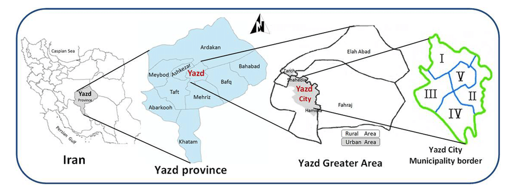
Yazd, the capital of Yazd Province, is located in central Iran (31°39′–32°03′ N, 54°09′–54°50′ E) and covers an area of approximately 2,462 km². The city is bordered by Sadouq and Ardakan counties to the north and west, Bafaq County to the east, and Mehriz, Taft, and Sadouq counties to the south and southwest (Figure 1). Yazd is situated within a closed hydrological basin characterized by limited freshwater resources, heavy reliance on groundwater extraction, and an increasing need for wastewater reuse strategies.
Study area
Yazd, the capital of Yazd Province, is located in central Iran (31°39′–32°03′ N, 54°09′–54°50′ E) and covers an area of approximately 2,462 km². The city is bordered by Sadouq and Ardakan counties to the north and west, Bafaq County to the east, and Mehriz, Taft, and Sadouq counties to the south and southwest (Figure 1). Yazd is situated within a closed hydrological basin characterized by limited freshwater resources, heavy reliance on groundwater extraction, and an increasing need for wastewater reuse strategies.
Figure 1: Study area of Yazd city.
A major infrastructural limitation in the region is the lack of access to centralized sewerage systems for a large proportion of households. Approximately 60% of households reported no access to municipal sewerage network. This limitation was considered when interpreting household behaviors and perceived barriers related to the wastewater management.
Study design and participants
This cross-sectional study was conducted in 2021 among women in Yazd city. Although household water-related decisions may involve multiple family members, women were selected because they are primarily responsible for routine domestic water use activities in the study setting. The exclusion criteria were incomplete questionnaires (≥20% missing responses) and residence in Yazd for less than five years. Convenience sampling was employed. The sample size was calculated using Cochran’s formula, assuming a 50% response distribution, a 5% significance level (α = 0.05), and resulting in a target sample size of 491 participants.
Questionnaire development and content
A researcher-developed questionnaire was designed and validated across four domains: 1) demographic characteristics (age, education, household size, income, housing tenure, and dwelling type); 2) knowledge of wastewater management (11 items), including questions related to water conservation, greywater concepts, detergent use, and the environmental impacts of improper waste disposal; 3) self-reported behaviors related to wastewater quantity and potential pollution (e.g., tap use during dishwashing, food waste disposal, and use of water-saving devices); and 4) perceived barriers to proper wastewater management (e.g., equipment costs, low water pressure, and limited knowledge).
Although some knowledge items assessed factual concepts (e.g., water savings associated with shorter shower duration and the definition of greywater), the questionnaire was designed to evaluate perceived and self-reported knowledge rather than technical expertise, consistent with previous behavioral studies conducted in water-scarce settings.
Validity and reliability
Content validity was confirmed through an expert panel review (CVI > 0.79). Face validity was assessed through pilot testing with 20 housewives who were not included in the final study sample. Reliability was evaluated using internal consistency (Cronbach’s α > 0.79 for all domains) and test–retest reliability (ICC > 0.75 over a 3-week interval).
Statistical analysis
Data were analyzed using SPSS Statistics version 23.0. Descriptive statistics, including frequencies, percentages, means, and standard deviations, were calculated for all variables. Pearson ’s correlation analysis was used to examine bivariate associations between knowledge, perceived barriers, and behavior scores.
Results
Demographic characteristics of participants
A total of 491 women participated in this study. The mean age of the participants was 37.02 ± 11.68 years, and the mean household size was 3.88 ± 1.00 members.
With respect to educational attainment, most participants held a bachelor’s degree (42.4%,
n = 208), followed by a diploma (20.4%, n = 100), a master's degree (18.7%, n = 92), high school education (16.3%, n = 80), and a doctoral degree (2.2%, n = 11). In terms of employment status, nearly half of the participants were housewives (49.5%, n = 243), while 33.2% (n = 163) were employed, 13.2% (n = 65) were self-employed, and 4.1% (n = 20) were manual workers.
Regarding housing characteristics, 64.4% of the respondents (n = 316) resided in detached houses (villas), whereas 35.6% (n = 175) lived in apartments. In addition, 66.4% of participants
(n = 326) owned their homes, while 33.6% (n = 165) were tenants.
Access to wastewater infrastructure
Substantial disparities were observed in access to centralized sewerage infrastructure. Only 31.6% of households (n = 155) reported being connected to the municipal sewerage network, while 8.1% (n = 40) had prepaid for a future connection but had not yet been connected at the time of the survey. Notably, most households (60.3%, n = 296) lacked formal access to centralized sewerage services, highlighting a major infrastructural challenge in the study area.
Household knowledge of wastewater management
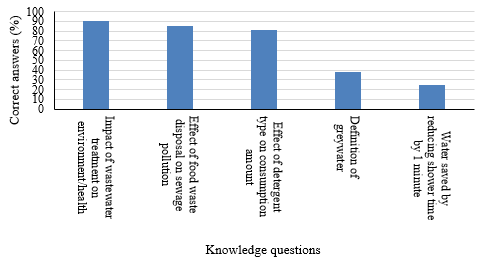
As illustrated in Figure 2, participants demonstrated relatively high knowledge of the environmental and health impacts associated with wastewater management. Most respondents correctly identified the effects of improper food waste disposal on sewage pollution (84.92%) and recognized the influence of detergent type on consumption levels (80.85%). Overall, awareness of the environmental consequences of wastewater was also high (90.2%).
In contrast, knowledge related practical water conservation and greywater management was considerably lower. Only 24.8% of participants correctly identified the amount of water that could be saved by reducing shower duration, and only 37.7% were familiar with the concept of greywater. For the remaining knowledge items, including the impacts of household water purifiers, septic tanks, and water quality on detergent use, the correct response rates ranged from 45.2% to 82.28%. Overall, the findings suggest that while general environmental awareness was relatively strong, technical and practice-oriented knowledge remained limited.
Study design and participants
This cross-sectional study was conducted in 2021 among women in Yazd city. Although household water-related decisions may involve multiple family members, women were selected because they are primarily responsible for routine domestic water use activities in the study setting. The exclusion criteria were incomplete questionnaires (≥20% missing responses) and residence in Yazd for less than five years. Convenience sampling was employed. The sample size was calculated using Cochran’s formula, assuming a 50% response distribution, a 5% significance level (α = 0.05), and resulting in a target sample size of 491 participants.
Questionnaire development and content
A researcher-developed questionnaire was designed and validated across four domains: 1) demographic characteristics (age, education, household size, income, housing tenure, and dwelling type); 2) knowledge of wastewater management (11 items), including questions related to water conservation, greywater concepts, detergent use, and the environmental impacts of improper waste disposal; 3) self-reported behaviors related to wastewater quantity and potential pollution (e.g., tap use during dishwashing, food waste disposal, and use of water-saving devices); and 4) perceived barriers to proper wastewater management (e.g., equipment costs, low water pressure, and limited knowledge).
Although some knowledge items assessed factual concepts (e.g., water savings associated with shorter shower duration and the definition of greywater), the questionnaire was designed to evaluate perceived and self-reported knowledge rather than technical expertise, consistent with previous behavioral studies conducted in water-scarce settings.
Validity and reliability
Content validity was confirmed through an expert panel review (CVI > 0.79). Face validity was assessed through pilot testing with 20 housewives who were not included in the final study sample. Reliability was evaluated using internal consistency (Cronbach’s α > 0.79 for all domains) and test–retest reliability (ICC > 0.75 over a 3-week interval).
Statistical analysis
Data were analyzed using SPSS Statistics version 23.0. Descriptive statistics, including frequencies, percentages, means, and standard deviations, were calculated for all variables. Pearson ’s correlation analysis was used to examine bivariate associations between knowledge, perceived barriers, and behavior scores.
Results
Demographic characteristics of participants
A total of 491 women participated in this study. The mean age of the participants was 37.02 ± 11.68 years, and the mean household size was 3.88 ± 1.00 members.
With respect to educational attainment, most participants held a bachelor’s degree (42.4%,
n = 208), followed by a diploma (20.4%, n = 100), a master's degree (18.7%, n = 92), high school education (16.3%, n = 80), and a doctoral degree (2.2%, n = 11). In terms of employment status, nearly half of the participants were housewives (49.5%, n = 243), while 33.2% (n = 163) were employed, 13.2% (n = 65) were self-employed, and 4.1% (n = 20) were manual workers.
Regarding housing characteristics, 64.4% of the respondents (n = 316) resided in detached houses (villas), whereas 35.6% (n = 175) lived in apartments. In addition, 66.4% of participants
(n = 326) owned their homes, while 33.6% (n = 165) were tenants.
Access to wastewater infrastructure
Substantial disparities were observed in access to centralized sewerage infrastructure. Only 31.6% of households (n = 155) reported being connected to the municipal sewerage network, while 8.1% (n = 40) had prepaid for a future connection but had not yet been connected at the time of the survey. Notably, most households (60.3%, n = 296) lacked formal access to centralized sewerage services, highlighting a major infrastructural challenge in the study area.
Household knowledge of wastewater management
As illustrated in Figure 2, participants demonstrated relatively high knowledge of the environmental and health impacts associated with wastewater management. Most respondents correctly identified the effects of improper food waste disposal on sewage pollution (84.92%) and recognized the influence of detergent type on consumption levels (80.85%). Overall, awareness of the environmental consequences of wastewater was also high (90.2%).
In contrast, knowledge related practical water conservation and greywater management was considerably lower. Only 24.8% of participants correctly identified the amount of water that could be saved by reducing shower duration, and only 37.7% were familiar with the concept of greywater. For the remaining knowledge items, including the impacts of household water purifiers, septic tanks, and water quality on detergent use, the correct response rates ranged from 45.2% to 82.28%. Overall, the findings suggest that while general environmental awareness was relatively strong, technical and practice-oriented knowledge remained limited.
Figure 2: Percentage of correct answers to key knowledge questions about
wastewater management (n = 491).Self-reported household wastewater management behaviors
The mean behavior score was 35.8 ± 7.8 out of a maximum possible score of 60, indicating a moderate level of wastewater management behavior among the participants.
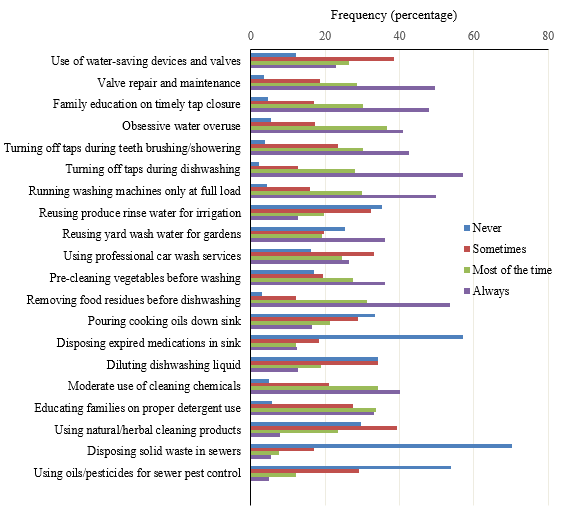
Among the reported practices, turning off the tap during dishwashing was the most common water-conserving behavior, as reported by 57% of respondents. In contrast, behaviors associated with water reuse and adoption of water-efficient technologies were considerably less prevalent. Only 12.8% of participants reported reusing water from washing fruits and vegetables for irrigation purposes, while 23.0% reported using water-saving devices in their households. The distribution of reported behaviors is presented in Figure 3.
Perceived barriers to wastewater management
The mean perceived barrier score was 29.67 ± 7.8 out of a maximum possible score of 48, reflecting a moderate-to-high level of perceived obstacles to effective wastewater management.
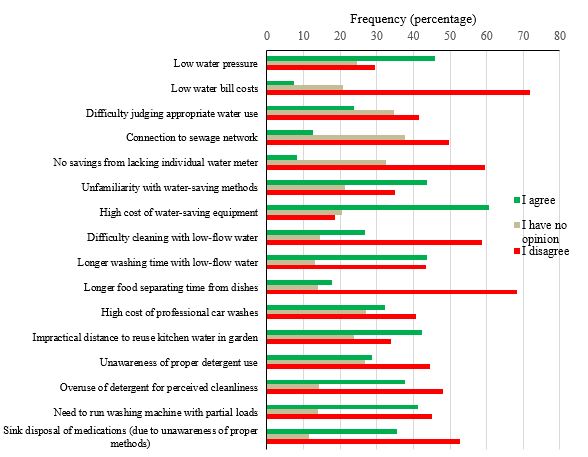
The most frequently reported barriers were the high cost of water-saving equipment (60.7%), insufficient water pressure (46.0%), and limited public awareness of water conservation methods (43.6%). The frequency distribution of the perceived barriers is presented in Figure 4.
The mean behavior score was 35.8 ± 7.8 out of a maximum possible score of 60, indicating a moderate level of wastewater management behavior among the participants.
Among the reported practices, turning off the tap during dishwashing was the most common water-conserving behavior, as reported by 57% of respondents. In contrast, behaviors associated with water reuse and adoption of water-efficient technologies were considerably less prevalent. Only 12.8% of participants reported reusing water from washing fruits and vegetables for irrigation purposes, while 23.0% reported using water-saving devices in their households. The distribution of reported behaviors is presented in Figure 3.
Perceived barriers to wastewater management
The mean perceived barrier score was 29.67 ± 7.8 out of a maximum possible score of 48, reflecting a moderate-to-high level of perceived obstacles to effective wastewater management.
The most frequently reported barriers were the high cost of water-saving equipment (60.7%), insufficient water pressure (46.0%), and limited public awareness of water conservation methods (43.6%). The frequency distribution of the perceived barriers is presented in Figure 4.
Figure 3: Frequency distribution of household behaviors affecting household wastewater management
behaviors (n = 491).
Figure 4: Frequency distribution of perceived barriers affecting household wastewater management
behaviors (n = 491).
Correlation analysis
Table 1 summarizes the descriptive statistics and correlations among knowledge, perceived barriers, and wastewater management behaviors. Pearson ’s correlation analysis revealed a strong and statistically significant negative association between perceived barriers and wastewater management behaviors (r = − 0.625, p < 0.001), suggesting that higher levels of perceived barriers were associated with poorer household wastewater management practices. In contrast, knowledge scores were not significantly associated with behavior scores (r = 0.021, p = 0.647).
These findings indicate that structural and practical barriers may exert a greater influence on household wastewater management behaviors than knowledge alone.
Table 1 summarizes the descriptive statistics and correlations among knowledge, perceived barriers, and wastewater management behaviors. Pearson ’s correlation analysis revealed a strong and statistically significant negative association between perceived barriers and wastewater management behaviors (r = − 0.625, p < 0.001), suggesting that higher levels of perceived barriers were associated with poorer household wastewater management practices. In contrast, knowledge scores were not significantly associated with behavior scores (r = 0.021, p = 0.647).
These findings indicate that structural and practical barriers may exert a greater influence on household wastewater management behaviors than knowledge alone.
Table 1: Descriptive statistics and correlation of study variables with behavior score
| Variable | Possible score range | Mean ± SD | Correlation with behavior (r) | p-value |
| Knowledge | 0-11 | 6.92 ± 2.27 | 0.021 | 0.647 |
| Perceived barriers | 1-48 | 29.67 ± 7.8 | -0.625 | < 0.001 |
| Behavior | 0-60 | 35.8 ± 7.8 | - | - |
Note: Correlation coefficients are Pearson's r. The negative sign for barriers indicates an inverse relationship between the two variables.
Discussion
This study investigated household wastewater management behaviors, knowledge, and perceived barriers among women in Yazd, Iran, a water-scarce urban setting facing increasing pressure on limited water resources and inadequate sewerage infrastructure. The findings demonstrated that household wastewater management behaviors were more strongly influenced by structural and practical constraints than by knowledge alone. In particular, infrastructural limitations, financial barriers, and limited access to water-efficient technologies emerged as major determinants of wastewater-related behaviors.
An important finding of this study was the limited access to centralized sewerage infrastructure in rural areas. More than half of the surveyed households (60.3%) lacked formal access to a centralized sewerage system. Although previous studies in Iran have emphasized water scarcity and domestic water consumption patterns, insufficient attention has been paid to the behavioral implications of limited access to sewerage. In arid urban environments, inadequate sewage compromise environmental sustainability and reduce public motivation to engage in water conservation and wastewater management practices. Households that perceive wastewater disposal systems as inefficient or inaccessible may be less willing to adopt conservation-oriented behavior or invest in water-saving technologies. This finding underscores the importance of integrating behavioral interventions with infrastructural development in water-scarce areas.
The participants in the present study demonstrated a moderate level of knowledge regarding wastewater management. Similar to previous studies conducted in water-scarce settings 10, most participants were aware of the environmental and health consequences of improper wastewater disposal. However, important gaps have been identified in practical conservation knowledge and technical concepts related to water reuse. In particular, only a minority of participants correctly understood the amount of water that could be saved by reducing shower duration, and their familiarity with the concept of greywater was also limited.
This finding is particularly important because greywater generated from kitchens, bathrooms, and laundry sources generally contains lower levels of contaminants than black water and can therefore be reused more safely for non-potable applications, such as landscape irrigation 11. Previous research has shown that separating greywater from traditional sewage systems can substantially reduce the financial burden associated with the construction and maintenance of centralized wastewater infrastructure 11. Therefore, increasing public awareness of greywater reuse may represent a practical and cost-effective strategy for reducing household water demand in arid urban environments such as Yazd.
Despite moderate knowledge levels, self-reported wastewater management behaviors remained suboptimal. The use of water-saving devices, such as low-flow showerheads and dual-flush toilets, was particularly limited, with only 23% of participants reporting the adoption of these technologies. In addition, water reuse practices were infrequently reported. These findings are consistent with evidence from other water-scarce regions. For example, subsidy programs implemented in Saudi Arabia significantly increased the adoption of water-efficient fixtures and contributed to substantial reductions in domestic water consumption 12. Similarly, a life-cycle assessment study conducted in Brazil demonstrated that water-efficient faucets reduced household water use considerably; however, the high initial installation costs limited widespread adoption in the absence of governmental support 13. Comparable results were also observed in the United States, where incentive programs implemented by the Miami-Dade Water and Sewer Department encouraged households to install high-efficiency water fixtures and achieved substantial annual water savings 14.
The findings of the present study strongly support these earlier observations. More than 60% of the participants identified the high cost of water-saving equipment as a major barrier to adopting conservation technologies. This consistency across different geographical and climatic contexts suggests that financial barriers represent a common obstacle to household-level water conservation behaviors. Consequently, subsidy programs and financial incentives may constitute transferable and effective policy interventions for improving domestic water efficiency in water-scarce regions.
Another important finding was the strong negative relationship between perceived barriers and wastewater management behavior. Perceived barriers showed a significant inverse correlation with self-reported behaviors (r = −0.625, p < 0.001), while knowledge showed no statistically significant association with behavior (r = 0.021, p = 0.647). This suggests that increasing awareness alone may not be sufficient to improve household wastewater management practices. In practical terms, households may possess adequate environmental awareness but may still be unable or unwilling to adopt water-saving practices because of limited infrastructure, low water pressure, or financial constraints.
The present study also has important implications for achieving Sustainable Development Goal (SDG) 6, particularly in arid urban regions. The findings are relevant to SDG 6.1 through the promotion of household water conservation behaviors that may reduce pressure on freshwater resources. They are also directly related to SDG 6.2, as the lack of sewerage access among a substantial proportion of households highlights a sanitation gap requiring infrastructural investment. Furthermore, the findings indirectly contribute to SDG 6.3 because improper disposal of food waste, oils, detergents, and household chemicals into sewage systems may increase pollutant loads entering wastewater streams. Although the present study did not directly measure wastewater quality parameters such as BOD, COD, nutrients, or emerging contaminants, the identified behavioral patterns may still influence wastewater quantity and pollution generation at the household level.
From a policy perspective, the findings suggest that effective wastewater management strategies in water-scarce cities should combine infrastructural improvements with behavioral interventions. Expanding sewerage network coverage, improving water pressure in residential areas, and providing financial subsidies for water-efficient technologies may help reduce the structural barriers to conservation behavior. In addition, educational campaigns should focus more specifically on practical wastewater management concepts, particularly greywater reuse and household pollution prevention practices rather than relying solely on general environmental awareness messages.
Several limitations should be considered when interpreting the findings of this study First, the cross-sectional design limits the ability to establish causal relationships between the variables. Second, all behaviors were self-reported and may therefore have been influenced by social desirability bias. Third, this study focused exclusively on women, and the behaviors of other family members were not evaluated. Fourth, this study did not include direct measurements of wastewater quality characteristics or laboratory analyses of the effluent samples. Therefore, the findings should be interpreted as behavioral and perceptual determinants potentially related to wastewater quantity and pollution generation, rather than direct assessments of wastewater quality. Future studies should combine behavioral assessments with physicochemical analyses of household wastewater to better evaluate the relationship between domestic practices and the actual characteristics of wastewater. Finally, the generalizability of the findings may be limited to arid and water-scarce urban settings in Iran.
Conclusion
This study demonstrated that perceived structural barriers, particularly high equipment costs, inadequate infrastructure, and low water pressure, were more strongly associated with household wastewater management behavior than knowledge alone. Although participants generally exhibited moderate awareness of the environmental and health aspects of wastewater management, this knowledge did not necessarily translate into effective conservation behaviors.
The findings highlight the need for integrated policy approaches that combine infrastructure improvements, financial support mechanisms, and targeted educational interventions. Expanding sewerage coverage, improving access to water-efficient technologies through subsidy programs, and increasing public awareness of greywater reuse and pollution prevention may collectively improve household wastewater management practices in arid urban regions. Addressing these structural and behavioral barriers is likely to play an important role in supporting progress toward SDG 6 and improving sustainable urban water management in water-scarce environments.
Acknowledgment
The authors would like to thank Shahid Sadoughi University of Medical Sciences and
Yazd Water and Wastewater Company.
Conflict of interests
The authors declare no conflicts of interest.
Funding
This research received funding and support from the School of Public Health, Shahid Sadoughi University of Medical Sciences, Yazd, Iran, and the Yazd Water and Wastewater Company.
Ethical Considerations
To adhere to ethical guidelines, the objectives and procedures of the study were clearly explained to all participants prior to their participation. Informed consent was obtained from all participants before data collection, and they were assured that all collected information would remain confidential and used solely for research purposes.
Code of Ethics
This study was authorized by the Ethics Committee of Shahid Sadoughi University of Medical Sciences, IR.SSU.SPH.REC.1399.183.
Authors' Contributions
All authors were involved in the study conception and design. Data collection was carried out by Behnaz Lookzadeh, Zohreh Rahaei, Maryam Gholami, Mohammad Taghi Ghaneian and Siavash Pakdel. Data analysis was performed by Sara Jambarsang and Behnaz Lookzadeh. The initial manuscript draft was prepared by Behnaz Lookzadeh and Maryam Gholami. All authors critically reviewed and provided feedback on earlier drafts and have read and approved the final version of the manuscript.
This is an Open-Access article distributed in accordance with the terms of the Creative Commons Attribution (CC BY 4.0) license, which permits others to distribute, remix, adapt, and build upon this work for commercial use.
References
1. Almasi A hA aA, daregqhi A, mahmoodi M. Estimation of water consumption per capita, production of wastewater per capita and oxygen concentration required for its biodegradation based on income and air temperature variables in Kermanshah. Iranian Journal of Health and Environment. 2009;1(3):103-10.
2. Abdul-azeez B, Mohd H, Ismail SJIJSTR. Household practice of domestic wastewater management: comparative analysis of two urban neighborhoods in suleja, Nigeria. Int J Sci Technol Res (New Delhi). 2020;9(04):2807-16.
3. Obaideen K, Shehata N, Sayed ET, et al. The role of wastewater treatment in achieving sustainable development goals (SDGs) and sustainability guideline. Energy Nexus. 2022;7:100112.
4. Hussien WeA, Memon FA, Savic DA. Assessing and modelling the influence of household characteristics on per capita water consumption. Water Resources Management. 2016; 30(9): 2931-55.
5. Ramsey E, Berglund EZ, Goyal RJW. The impact of demographic factors, beliefs, and social influences on residential water consumption and implications for non-price policies in urban India. Water. 2017;9(11):844.
6. Anang Z, Yusop Z, Sharma A, et al. Socioeconomic Factors Affecting Water Conservation in Household Consumption in Johor Bahru and Kuala Terengganu Districts of Malaysia. International Journal of Sustainable Development and Planning. 2024;19(9):3321-38.
7. Babazadeh V, Saboktakin G-AJJoEE, Development S. Social Capital and Awareness of Sustainable Development (Case Study: Citizens of Meshgin-Shahr). Journal of Environmental Education and Sustainable Development. 2019;8(1):123-37.
8. Petrescu DC, Petrescu-Mag RM, Manciula DI, et al. Wastewater reflections in consumer mind: evidence from sewage services consumer behaviour. Sustainability. 2018;11(1):123.
9. Geetha D, Tyagi R. Consumer behavior and fascinating challenges on household laundry and dishwashing. Tenside Surfactants Detergents. 2016; 53(6): 568-75.
10. Brati MQ, Ishihara MI, Higashi OJSwrm. Groundwater level reduction and pollution in relation to household water management in Kabul, Afghanistan. Sustain Water Resour Manag. 2019;5(3):1315-25.
11. Eslami H, Ehrampoush MH, Falahzadeh H, et al. Biodegradation and nutrients removal from greywater by an integrated fixed-film activated sludge (IFAS) in different organic loadings rates. AMB Express. 2018;8(1):3.
12. Ouda OK, Shawesh A, Al-Olabi T, et al. Review of domestic water conservation practices in Saudi Arabia. Appl Water Sci. 2013; 3(4):689-99.
13. Kalbusch A, Ghisi EJJoCP. Comparative life-cycle assessment of ordinary and water-saving taps. J Clean Prod. 2016;112:4585-93.
14. Lee M, Tansel B, Balbin M, et al., editors. Residential water use trend shifts by implementation of best management practices for water conservation. World Environmental and Water Resources Congress 2011: Bearing Knowledge for Sustainability; 2011.
Type of Study: Original articles |
Subject:
Water quality and wastewater treatment and reuse
Received: 2026/02/5 | Accepted: 2026/04/20 | Published: 2026/06/20
Received: 2026/02/5 | Accepted: 2026/04/20 | Published: 2026/06/20
Send email to the article author
| Rights and permissions | |
 |
This work is licensed under a Creative Commons Attribution-NonCommercial 4.0 International License. |