

Volume 11, Issue 2 (June 2026)
J Environ Health Sustain Dev 2026, 11(2): 3032-3050 |
Back to browse issues page



Download citation:
BibTeX | RIS | EndNote | Medlars | ProCite | Reference Manager | RefWorks
Send citation to:


BibTeX | RIS | EndNote | Medlars | ProCite | Reference Manager | RefWorks
Send citation to:
Behnami A, Pourakbar M, Zoroufchi Benis K, Farzadkia M, Rezaei Kalantari R, Yeganeh M, et al . Pre Treatment of PFOA Laden Synthetic Wastewater Via UV/Peroxydisulfate, UV/Peroxymonosulfate, and UV/Sulfite Processes: A Comparative Evaluation. J Environ Health Sustain Dev 2026; 11 (2) :3032-3050
URL: http://jehsd.ssu.ac.ir/article-1-1189-en.html
URL: http://jehsd.ssu.ac.ir/article-1-1189-en.html
Ali Behnami 

 , Mojtaba Pourakbar , Khaled Zoroufchi Benis , Mahdi Farzadkia , Roshanak Rezaei Kalantari , Mojtaba Yeganeh , Ali Esrafili , Mitra Gholami *
, Mojtaba Pourakbar , Khaled Zoroufchi Benis , Mahdi Farzadkia , Roshanak Rezaei Kalantari , Mojtaba Yeganeh , Ali Esrafili , Mitra Gholami *
Department of Environmental Health Engineering, Iran University of Medical Sciences, Tehran, Iran & Research Center for Environmental Health Technology, Iran University of Medical Sciences, Tehran, Iran
Keywords: PFOA, Advanced oxidation processes (AOPs), Ultraviolet/Sulfite, Defluorination, Water remediation, Perfluorinated compounds.
Full-Text [PDF 609 kb]
(244 Downloads)
| Abstract (HTML) (326 Views)

C F -
Transformation product identification
The selected samples were examined using LC-MS/MS to identify the possible transformation products generated during the degradation process. The obtained mass spectra were analyzed to propose likely degradation pathways, with particular emphasis on shorter-chain perfluorinated intermediates (PFIs).
Kinetic analysis
The degradation behavior of PFOA was evaluated using a pseudo-first-order kinetic model, as formulated in Equation 2.

where C0 and Ct represent the concentrations of PFOA at the initial time and at time t, respectively, and Kobs denotes the apparent rate constant (h⁻¹). The rate constants were determined from the slopes of the linear regression plots.
Effect of operational parameters
The effects of major operational parameters on PFOA degradation were systematically evaluated. These parameters included: (i) oxidant/reductant concentration (PS, PMS, and SS) ranging from 0.5-5 mM, (ii) initial pH values between 3 and 11, (iii) initial PFOA concentrations of 0.024-0.36 mM and reaction times of 1–6 h, and (iv) the presence of background ions such asCl - CO 3 2- SO 4 2- H 3 PO 4
Quality assurance and data analysis
All experiments were performed in triplicates, and the results are presented as mean values accompanied by standard deviations. Calibration was routinely performed to maintain analytical reliability and accuracy. Data were analyzed using standard statistical approaches, and linear regression analyses were assessed based on correlation coefficient values (R²).
Results
Degradation Performance of UV/PDS, UV/PMS, and UV/SS Processes
Preliminary control experiments were conducted using PDS alone, PMS alone, SS alone, and UV irradiation alone at 25 °C for 6 h to clarify the individual contributions of the oxidants and UV‑activated species. As illustrated in Figure 1, negligible changes in PFOA concentration were observed in all control experiments, indicating that direct oxidation by PDS or PMS and direct photolysis were ineffective under the tested conditions.
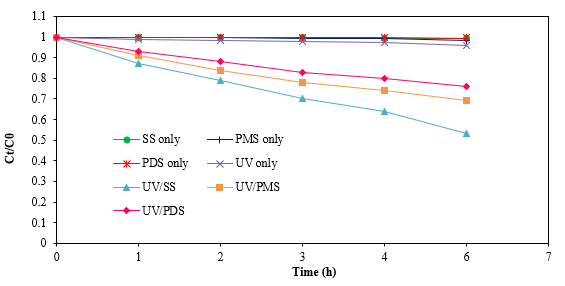
Figure 1: Degradation efficiency of PFOA in UV/SS, UV/PMS, and UV/PDS systems. Reaction conditions: [PFOA]0 = 0.24 mM, [SS]0 = [PMS]0 = [PDS]0 = 1 mM, and pH = 7.
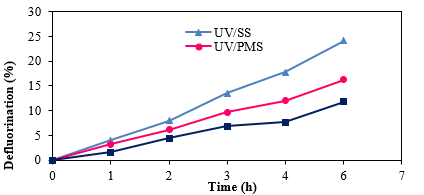
Figure 2: Defluorination rate of PFOA in UV/SS, UV/PMS, and UV/PDS systems. Reaction conditions: [PFOA]0 = 0.24 mM, [SS]0 = [PMS]0 = [PDS]0 = 1 mM, and pH = 7.
Table 1. Kinetic parameters for PFOA defluorination in UV/SS, UV/PMS, and UV/PDS systems based on pseudo-first-order and pseudo-second-order model fitting of fluoride release during 6 h of UV irradiation. The rate constants and R² values indicate the relative defluorination performance of each process.
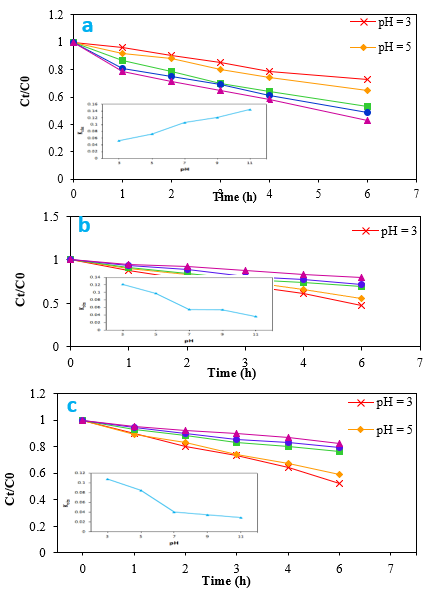
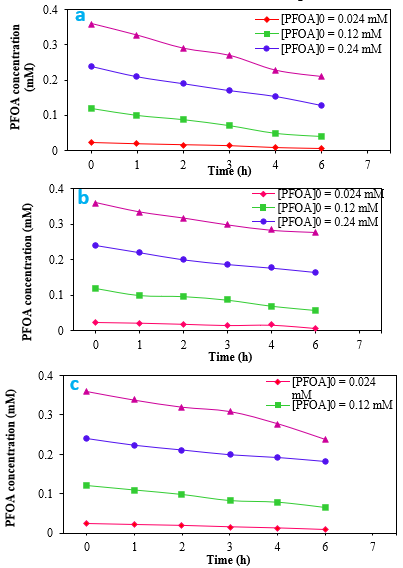
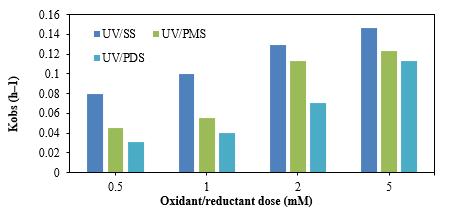
Figure 5. Effect of initial concentrations of SS, PMS, and PDS on the efficiency of UV/SS, UV/PMS, and UV/PDS processes. Inset: Variation of kobs (h‒1) with [SS]0, [PMS]0, and [PDS]0. Reaction conditions: [PFOA]0 = 0.24 mM, reaction time = 6 h, and pH = 7.
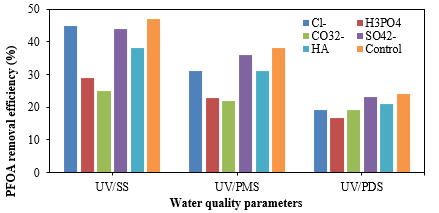
Figure 6. Effect of initial HA and inorganic anions on the percentage removal of PFOA in 6 h. Reaction conditions: [PFOA]0 = 0.24 mM, [SS]0 = [PMS]0 = [PDS]0 = 1 mM, [HA]0 = 10 mg/L, [Cl‒]0 = 25 mM, [H3PO4]0 = 10 mM, [CO32‒]0 = 15 mM, [SO42‒]0 = 5 mM, and pH = 7.
.PNG)
Full-Text: (88 Views)
Pre‑Treatment of PFOA‑Laden Synthetic Wastewater Via UV/Peroxydisulfate, UV/Peroxymonosulfate, and UV/Sulfite Processes: A Comparative Evaluation
Ali Behnami 1, 2, Mojtaba Pourakbar 3, 4, Khaled Zoroufchi Benis 5, Mahdi Farzadkia 1, 2,
Roshanak Rezaei Kalantari 1, 2, Mojtaba Yeganeh 1, 2, Ali Esrafili 1, 2, Mitra Gholami 1, 2 *
1 Department of Environmental Health Engineering, Iran University of Medical Sciences, Tehran, Iran.
2 Research Center for Environmental Health Technology, Iran University of Medical Sciences, Tehran, Iran.
3 Department of Environmental Health Engineering, Maragheh University of Medical Sciences, Maragheh, Iran.
4 Health and Environment Research Center, Tabriz University of Medical Sciences, Tabriz, Iran.
5 Department of Process Engineering and Applied Science, Dalhousie University, Halifax, NS, Canada.
Ali Behnami 1, 2, Mojtaba Pourakbar 3, 4, Khaled Zoroufchi Benis 5, Mahdi Farzadkia 1, 2,
Roshanak Rezaei Kalantari 1, 2, Mojtaba Yeganeh 1, 2, Ali Esrafili 1, 2, Mitra Gholami 1, 2 *
1 Department of Environmental Health Engineering, Iran University of Medical Sciences, Tehran, Iran.
2 Research Center for Environmental Health Technology, Iran University of Medical Sciences, Tehran, Iran.
3 Department of Environmental Health Engineering, Maragheh University of Medical Sciences, Maragheh, Iran.
4 Health and Environment Research Center, Tabriz University of Medical Sciences, Tabriz, Iran.
5 Department of Process Engineering and Applied Science, Dalhousie University, Halifax, NS, Canada.
| A R T I C L E I N F O | ABSTRACT | |
| ORIGINAL ARTICLE | Introduction: Perfluorooctanoic acid (PFOA) is a persistent and toxic contaminant that requires effective degradation and defluorination strategies. Although several UV-based advanced oxidation and reduction processes have been investigated, direct comparisons under identical conditions are limited. In this study, we compared the degradation efficiency, mechanisms, and defluorination potential of three UV-based systems: UV/persulfate (UV/PDS), UV/peroxymonosulfate (UV/PMS), and UV/sulfite (UV/SS). Materials and Methods: PFOA degradation experiments were conducted under 254 nm UV irradiation with an initial PFOA concentration of 0.24 mM and oxidant/reductant dosages of 1.0 mM. Reaction kinetics, transformation products, and fluoride generation were analyzed using LC‑MS/MS and ion chromatography over a 6‑hour treatment period. Results: Direct UV photolysis was ineffective, achieving only 4% removal. Among the tested systems, UV/SS exhibited the highest performance, achieving 47% PFOA removal, compared with 24% and 31% for UV/PDS and UV/PMS, respectively. UV/PDS and UV/PMS primarily proceeded through oxidative radical pathways (sulfate and hydroxyl radicals), resulting in chain shortening and accumulation of shorter-chain perfluorinated carboxylic acids (PFHpA, PFHxA, PFPeA, PFBA, and TFA). In contrast, UV/SS operated through reductive pathways mediated by hydrated electrons, promoting sequential C–F bond cleavage and enhanced defluorination. Conclusion: The UV/SS process demonstrated the greatest potential for PFOA pretreatment due to its ability to achieve true defluorination, whereas oxidative systems mainly transformed PFOA into persistent short-chain intermediates. |
|
Article History: Received: 17 February 2026 Accepted: 20 May 2026 |
||
*Corresponding Author: Mitra Gholami Email: gholamimitra32@gmail.com Tel: +98 2188052248 |
||
Keywords: PFOA, Advanced oxidation processes (AOPs), Ultraviolet/Sulfite, Defluorination, Water remediation, Perfluorinated compounds. |
Citation: Behnami A, Pourakbar M, Zoroufchi Benis Kh, et al. Pre Treatment of PFOA Laden Synthetic Wastewater Via UV/Peroxydisulfate, UV/Peroxymonosulfate, and UV/Sulfite Processes: A Comparative Evaluation. J Environ Health Sustain Dev. 2026; 11(2): 3032-50.
Introduction
Perfluorooctanoic acid (PFOA), a well-known member of the per- and polyfluoroalkyl substance (PFAS) family, is recognized as one of the most persistent human-made contaminants in aquatic environments 1. Its remarkable resistance to degradation is mainly attributed to the extremely strong carbon–fluorine (C–F) bond, with bond dissociation energies reaching 552 kJ/mol 2, together with its linear perfluorinated carbon structure and strong electron-withdrawing characteristics 3. These properties make PFOA highly resistant to conventional physical, chemical, and biological treatment methods 4. Although international regulations have promoted the gradual phase-out of PFOA, its widespread occurrence in the environment remains a major concern due to historical contamination, ongoing industrial releases, and incomplete removal during wastewater treatment 5.
Advanced oxidation processes (AOPs) and advanced reduction processes (ARPs) have attracted significant interest for the degradation of PFAS because they produce highly reactive radical species capable of initiating defluorination under appropriate conditions 6, 7. However, the effectiveness of oxidative and reductive approaches differs considerably because of their distinct reaction mechanisms. Oxidative AOPs, including systems based on peroxydisulfate (PDS) or peroxymonosulfate (PMS) activated by ultraviolet light, generate sulfate radicals (SO 4 -• e aq -
Although UV-driven oxidative and reductive technologies have received increasing attention for PFAS treatment 11, 13-16, few studies have directly compared UV/PDS, UV/PMS, and UV/SS systems under the same experimental conditions. Existing research typically examines either oxidative or reductive radical pathways separately, which limits the ability to accurately assess the relative performance of these approaches in synthetic or real wastewater systems. In addition, factors such as water chemistry, radical scavenging effects, operating conditions, and reaction kinetics can significantly affect degradation efficiency 17; however, these influences are seldom investigated comprehensively across multiple treatment methods.
In engineered wastewater treatment applications, there is an increasing demand for pretreatment methods capable of either significantly lowering PFOA concentrations or transforming the compound into intermediates that are easier to manage 18. Complete mineralization within a single treatment unit is often difficult to achieve because of high energy demands, radical scavenging by coexisting contaminants, and the potential generation of unwanted byproducts 19. Consequently, an effectively designed pretreatment step can be integrated with downstream biological or physicochemical treatment processes to enhance overall PFAS removal while minimizing operational challenges 20. To be effective, such a pretreatment strategy should satisfy several key requirements: (i) efficient degradation of the original PFOA compound, (ii) limited production of toxic or persistent transformation products, and (iii) adaptability to varying wastewater compositions. Although UV/PDS, UV/PMS, and UV/SS have been investigated for the treatment of persistent organic contaminants, direct comparisons of these systems for PFOA degradation under identical experimental conditions remain limited.
This study aims to address this important knowledge gap through a systematic comparison of three UV-based treatment processes. The research differentiates between oxidative radical systems, which produceSO 4 -• e aq -
Materials and Method
Chemicals and reagents
Perfluorooctanoic acid (PFOA, ≥98%) was obtained from Sigma-Aldrich and used as the target contaminant without further purification. Perfluoroheptanoic acid (PFHpA, C6F13COOH, > 99%), perfluorohexanoic acid (PFHxA, C5F11COOH, > 99%), perfluoropentanoic acid (PFPeA, C4F9COOH, > 99%), pentafluoropropionic acid (PFPrA, C2F5COOH, > 99%), heptafluorobutyric acid (PFBA, C3F7COOH, > 99%), and trifloroacetic acid (TFA, CF3COOH, > 99%) were purchased from Agilent. Sodium persulfate (Na₂S₂O₈, PDS), peroxymonosulfate (HS , PMS), and sodium sulfite (Na₂SO₃, SS) (as oxidant and reductant precursors) were all ACS reagent grade and purchased from Merck Company. All remaining chemicals were analytical grade and used without further purification. Ultrapure water with a resistivity of at least 18.2 MΩ·cm was used to prepare all solutions.
Photoreactor setup
Photochemical reductive degradation experiments were performed in a cylindrical quartz batch reactor with a working volume of 1000 mL. A 16 W low-pressure mercury lamp (Philips Co.) emitting UV light at 254 nm was placed axially inside the reactor as the irradiation source. The reactor solution was continuously stirred with a magnetic stirrer to maintain uniform mixing. Throughout the experiments, the reaction temperature was maintained at room temperature (25–27 °C). Before initiating UV irradiation, the reaction mixture was stirred and allowed to equilibrate for 10 minutes.
Experimental procedures
UV/PDS, UV/PMS, and UV/SS processes
Batch experiments were conducted to investigate the degradation of PFOA in UV/PDS, UV/PMS, and UV/SS systems. A PFOA stock solution (0.24 mM) was prepared using ultrapure water and stored at 4 °C in the dark. Working solutions were freshly prepared by diluting the stock to the required concentration. Synthetic wastewater was formulated to represent simplified aqueous conditions and included selected inorganic ions. A simplified synthetic wastewater matrix was prepared using selected inorganic ions and humic acid to evaluate the influence of background constituents on PFOA degradation. Unless otherwise stated, the matrix-effect experiments were conducted at pH 7 with [Cl - CO 3 2- SO 4 2- H 3 PO 4
The experimental design followed a one-factor-at-a-time approach, whereby the effect of each operational parameter was examined individually, while maintaining the remaining variables constant. In a typical run, a predetermined volume of the PFOA working solution (initial concentration of 0.24 mM) was placed in the reactor. Appropriate amounts of PS, PMS, or SS were then added to reach the desired concentrations (0.5–5 mM). The reaction was initiated by turning on the UV lamp. At specific time intervals (1–6 h), 5 mL samples were collected and immediately quenched to halt the reactions. A total of 250 samples were collected and analyzed. The collected samples were subsequently filtered through 0.22 μm membrane filters before being analyzed.
Control experiments
Control experiments were performed to identify the individual effects of each treatment component. These tests included (i) UV irradiation without added reagents (photolysis), (ii) PDS, PMS, or SS under dark conditions without UV exposure, and (iii) blank experiments conducted in the absence of oxidants or reductants. All other experimental parameters were maintained unchanged.
Analytical methods
PFOA quantification
PFOA and its intermediate products formed during degradation were analyzed using high‑performance liquid chromatography coupled with mass spectrometry (HPLC‑MS) (Waters Alliance 2695, Waters, USA) equipped with a Micromass Quattro Micro API mass spectrometer. Separation was carried out on a reverse-phase reverse-phase C18 column (Eurospher, 4.6 × 150 mm, 5 µm) maintained at 35 °C. The mobile phase consisted of water (A) and acetonitrile (B) at a ratio of 40:60, delivered at a flow rate of 0.3 mL/min. The injection volume was 3 μL.
The detection system operated in two modes: (1) multiple-reaction monitoring (MRM) with an electrospray ionization (ESI) source, where the ion source temperature was set to 130 °C and the desolvation temperature to 300 °C; and (2) full‑scan mode with a scanning range of 100–500 (m/z) and a scan time of 5 minutes. Calibration curves were established using external standards over an appropriate concentration range, with correlation coefficients (R²) greater than 0.99.
Fluoride ion analysis
The release of fluoride ions (F ⁻) was monitored to assess the extent of defluorination. Measurements were performed using ion chromatography (IC) with a conductivity detector. Calibration was performed using standard fluoride solutions. The defluorination efficiency was determined by comparing the amount of fluoride released with the theoretical maximum fluoride content in PFOA, as expressed in the Equation 1 21:
Perfluorooctanoic acid (PFOA), a well-known member of the per- and polyfluoroalkyl substance (PFAS) family, is recognized as one of the most persistent human-made contaminants in aquatic environments 1. Its remarkable resistance to degradation is mainly attributed to the extremely strong carbon–fluorine (C–F) bond, with bond dissociation energies reaching 552 kJ/mol 2, together with its linear perfluorinated carbon structure and strong electron-withdrawing characteristics 3. These properties make PFOA highly resistant to conventional physical, chemical, and biological treatment methods 4. Although international regulations have promoted the gradual phase-out of PFOA, its widespread occurrence in the environment remains a major concern due to historical contamination, ongoing industrial releases, and incomplete removal during wastewater treatment 5.
Advanced oxidation processes (AOPs) and advanced reduction processes (ARPs) have attracted significant interest for the degradation of PFAS because they produce highly reactive radical species capable of initiating defluorination under appropriate conditions 6, 7. However, the effectiveness of oxidative and reductive approaches differs considerably because of their distinct reaction mechanisms. Oxidative AOPs, including systems based on peroxydisulfate (PDS) or peroxymonosulfate (PMS) activated by ultraviolet light, generate sulfate radicals (
Although UV-driven oxidative and reductive technologies have received increasing attention for PFAS treatment 11, 13-16, few studies have directly compared UV/PDS, UV/PMS, and UV/SS systems under the same experimental conditions. Existing research typically examines either oxidative or reductive radical pathways separately, which limits the ability to accurately assess the relative performance of these approaches in synthetic or real wastewater systems. In addition, factors such as water chemistry, radical scavenging effects, operating conditions, and reaction kinetics can significantly affect degradation efficiency 17; however, these influences are seldom investigated comprehensively across multiple treatment methods.
In engineered wastewater treatment applications, there is an increasing demand for pretreatment methods capable of either significantly lowering PFOA concentrations or transforming the compound into intermediates that are easier to manage 18. Complete mineralization within a single treatment unit is often difficult to achieve because of high energy demands, radical scavenging by coexisting contaminants, and the potential generation of unwanted byproducts 19. Consequently, an effectively designed pretreatment step can be integrated with downstream biological or physicochemical treatment processes to enhance overall PFAS removal while minimizing operational challenges 20. To be effective, such a pretreatment strategy should satisfy several key requirements: (i) efficient degradation of the original PFOA compound, (ii) limited production of toxic or persistent transformation products, and (iii) adaptability to varying wastewater compositions. Although UV/PDS, UV/PMS, and UV/SS have been investigated for the treatment of persistent organic contaminants, direct comparisons of these systems for PFOA degradation under identical experimental conditions remain limited.
This study aims to address this important knowledge gap through a systematic comparison of three UV-based treatment processes. The research differentiates between oxidative radical systems, which produce
Materials and Method
Chemicals and reagents
Perfluorooctanoic acid (PFOA, ≥98%) was obtained from Sigma-Aldrich and used as the target contaminant without further purification. Perfluoroheptanoic acid (PFHpA, C6F13COOH, > 99%), perfluorohexanoic acid (PFHxA, C5F11COOH, > 99%), perfluoropentanoic acid (PFPeA, C4F9COOH, > 99%), pentafluoropropionic acid (PFPrA, C2F5COOH, > 99%), heptafluorobutyric acid (PFBA, C3F7COOH, > 99%), and trifloroacetic acid (TFA, CF3COOH, > 99%) were purchased from Agilent. Sodium persulfate (Na₂S₂O₈, PDS), peroxymonosulfate (
Photoreactor setup
Photochemical reductive degradation experiments were performed in a cylindrical quartz batch reactor with a working volume of 1000 mL. A 16 W low-pressure mercury lamp (Philips Co.) emitting UV light at 254 nm was placed axially inside the reactor as the irradiation source. The reactor solution was continuously stirred with a magnetic stirrer to maintain uniform mixing. Throughout the experiments, the reaction temperature was maintained at room temperature (25–27 °C). Before initiating UV irradiation, the reaction mixture was stirred and allowed to equilibrate for 10 minutes.
Experimental procedures
UV/PDS, UV/PMS, and UV/SS processes
Batch experiments were conducted to investigate the degradation of PFOA in UV/PDS, UV/PMS, and UV/SS systems. A PFOA stock solution (0.24 mM) was prepared using ultrapure water and stored at 4 °C in the dark. Working solutions were freshly prepared by diluting the stock to the required concentration. Synthetic wastewater was formulated to represent simplified aqueous conditions and included selected inorganic ions. A simplified synthetic wastewater matrix was prepared using selected inorganic ions and humic acid to evaluate the influence of background constituents on PFOA degradation. Unless otherwise stated, the matrix-effect experiments were conducted at pH 7 with [
The experimental design followed a one-factor-at-a-time approach, whereby the effect of each operational parameter was examined individually, while maintaining the remaining variables constant. In a typical run, a predetermined volume of the PFOA working solution (initial concentration of 0.24 mM) was placed in the reactor. Appropriate amounts of PS, PMS, or SS were then added to reach the desired concentrations (0.5–5 mM). The reaction was initiated by turning on the UV lamp. At specific time intervals (1–6 h), 5 mL samples were collected and immediately quenched to halt the reactions. A total of 250 samples were collected and analyzed. The collected samples were subsequently filtered through 0.22 μm membrane filters before being analyzed.
Control experiments
Control experiments were performed to identify the individual effects of each treatment component. These tests included (i) UV irradiation without added reagents (photolysis), (ii) PDS, PMS, or SS under dark conditions without UV exposure, and (iii) blank experiments conducted in the absence of oxidants or reductants. All other experimental parameters were maintained unchanged.
Analytical methods
PFOA quantification
PFOA and its intermediate products formed during degradation were analyzed using high‑performance liquid chromatography coupled with mass spectrometry (HPLC‑MS) (Waters Alliance 2695, Waters, USA) equipped with a Micromass Quattro Micro API mass spectrometer. Separation was carried out on a reverse-phase reverse-phase C18 column (Eurospher, 4.6 × 150 mm, 5 µm) maintained at 35 °C. The mobile phase consisted of water (A) and acetonitrile (B) at a ratio of 40:60, delivered at a flow rate of 0.3 mL/min. The injection volume was 3 μL.
The detection system operated in two modes: (1) multiple-reaction monitoring (MRM) with an electrospray ionization (ESI) source, where the ion source temperature was set to 130 °C and the desolvation temperature to 300 °C; and (2) full‑scan mode with a scanning range of 100–500 (m/z) and a scan time of 5 minutes. Calibration curves were established using external standards over an appropriate concentration range, with correlation coefficients (R²) greater than 0.99.
Fluoride ion analysis
The release of fluoride ions (F ⁻) was monitored to assess the extent of defluorination. Measurements were performed using ion chromatography (IC) with a conductivity detector. Calibration was performed using standard fluoride solutions. The defluorination efficiency was determined by comparing the amount of fluoride released with the theoretical maximum fluoride content in PFOA, as expressed in the Equation 1 21:
Transformation product identification
The selected samples were examined using LC-MS/MS to identify the possible transformation products generated during the degradation process. The obtained mass spectra were analyzed to propose likely degradation pathways, with particular emphasis on shorter-chain perfluorinated intermediates (PFIs).
Kinetic analysis
The degradation behavior of PFOA was evaluated using a pseudo-first-order kinetic model, as formulated in Equation 2.
where C0 and Ct represent the concentrations of PFOA at the initial time and at time t, respectively, and Kobs denotes the apparent rate constant (h⁻¹). The rate constants were determined from the slopes of the linear regression plots.
Effect of operational parameters
The effects of major operational parameters on PFOA degradation were systematically evaluated. These parameters included: (i) oxidant/reductant concentration (PS, PMS, and SS) ranging from 0.5-5 mM, (ii) initial pH values between 3 and 11, (iii) initial PFOA concentrations of 0.024-0.36 mM and reaction times of 1–6 h, and (iv) the presence of background ions such as
Quality assurance and data analysis
All experiments were performed in triplicates, and the results are presented as mean values accompanied by standard deviations. Calibration was routinely performed to maintain analytical reliability and accuracy. Data were analyzed using standard statistical approaches, and linear regression analyses were assessed based on correlation coefficient values (R²).
Results
Degradation Performance of UV/PDS, UV/PMS, and UV/SS Processes
Preliminary control experiments were conducted using PDS alone, PMS alone, SS alone, and UV irradiation alone at 25 °C for 6 h to clarify the individual contributions of the oxidants and UV‑activated species. As illustrated in Figure 1, negligible changes in PFOA concentration were observed in all control experiments, indicating that direct oxidation by PDS or PMS and direct photolysis were ineffective under the tested conditions.
Figure 1: Degradation efficiency of PFOA in UV/SS, UV/PMS, and UV/PDS systems. Reaction conditions: [PFOA]0 = 0.24 mM, [SS]0 = [PMS]0 = [PDS]0 = 1 mM, and pH = 7.
Figure 1 shows the degradation efficiencies of PFOA in the three UV‑based systems. All systems achieved measurable PFOA degradation, although with markedly different efficiencies. After 6 h of reaction, the removal efficiencies were approximately 47%, 31%, and 24% for UV/SS, UV/PMS, and UV/PDS, respectively. These results indicate that the UV/sulfite (UV/SS) system exhibited the highest degradation efficiency among the investigated processes. In comparison, the control experiments showed negligible PFOA removal, confirming that UV irradiation is required to activate the oxidants or reductants and generate reactive species capable of degrading PFOA.
Overall, the degradation efficiencies followed the order: UV/SS > UV/PMS > UV/PDS.
PFOA Defluorination Kinetics
Defluorination was evaluated through the release of fluoride ions, which directly reflects C–F bond cleavage. Figure 2 shows that fluoride release followed the same order as PFOA degradation: UV/SS > UV/PMS > UV/PDS. In the UV/SS system, fluoride release increased from 4.0% after 1 h to 24.1% after 6 h, representing the highest defluorination among the investigated processes. In contrast, the UV/PMS and UV/PDS systems achieved lower fluoride release values of 16.2% and 11.8%, respectively, after 6 h of reaction.
Overall, the degradation efficiencies followed the order: UV/SS > UV/PMS > UV/PDS.
PFOA Defluorination Kinetics
Defluorination was evaluated through the release of fluoride ions, which directly reflects C–F bond cleavage. Figure 2 shows that fluoride release followed the same order as PFOA degradation: UV/SS > UV/PMS > UV/PDS. In the UV/SS system, fluoride release increased from 4.0% after 1 h to 24.1% after 6 h, representing the highest defluorination among the investigated processes. In contrast, the UV/PMS and UV/PDS systems achieved lower fluoride release values of 16.2% and 11.8%, respectively, after 6 h of reaction.
Figure 2: Defluorination rate of PFOA in UV/SS, UV/PMS, and UV/PDS systems. Reaction conditions: [PFOA]0 = 0.24 mM, [SS]0 = [PMS]0 = [PDS]0 = 1 mM, and pH = 7.
The defluorination data were fitted using pseudo‑first‑order and pseudo‑second‑order kinetic models (Table 1). For the UV/SS system, both models provided an excellent fit, with correlation coefficients of R² = 0.9957 and 0.9956 for the first‑order and second‑order models, respectively. The calculated first‑order rate constant was K₁ = 0.0473 h⁻¹, indicating the fastest defluorination rate among the studied systems. In the UV/PMS system, the pseudo‑second‑order model showed a slightly better fit (R² = 0.9959) compared with the pseudo‑first‑order model (R² = 0.9928), with a first‑order rate constant of K₁ = 0.0299 h⁻¹. The UV/PDS system exhibited the slowest kinetics, with K₁ = 0.0211 h⁻¹. The correlation coefficients were R² = 0.9887 and 0.9898 for the pseudo‑first‑order and pseudo‑second‑order models, respectively.
Overall, the kinetic results confirmed the trend: UV/SS > UV/PMS > UV/PDS, indicating that the UV/SS system achieved the most rapid and extensive PFOA defluorination.
Overall, the kinetic results confirmed the trend: UV/SS > UV/PMS > UV/PDS, indicating that the UV/SS system achieved the most rapid and extensive PFOA defluorination.
Table 1. Kinetic parameters for PFOA defluorination in UV/SS, UV/PMS, and UV/PDS systems based on pseudo-first-order and pseudo-second-order model fitting of fluoride release during 6 h of UV irradiation. The rate constants and R² values indicate the relative defluorination performance of each process.
| System | K1 (h‒1) | R2 (1st) | K2 (h‒1) | R2 (2nd) |
| UV/SS | 0.047 | 0.995 | 0.054 | 0.995 |
| UV/PMS | 0.029 | 0.992 | 0.032 | 0.995 |
| UV/PDS | 0.021 | 0.988 | 0.022 | 0.989 |
Influence of operational factors on the removal efficiency
Effect of pH
The effect of pH on PFOA degradation and defluorination in the UV/SS, UV/PMS, and UV/PDS systems was evaluated at five initial pH values: 3, 5, 7, 9, and 11. The natural pH of the PFOA solution was approximately 4. As shown in Figure 3, the degradation performance of the three UV-based systems was influenced by the initial solution pH, although the extent and direction of this influence differed among the processes.
Effect of pH
The effect of pH on PFOA degradation and defluorination in the UV/SS, UV/PMS, and UV/PDS systems was evaluated at five initial pH values: 3, 5, 7, 9, and 11. The natural pH of the PFOA solution was approximately 4. As shown in Figure 3, the degradation performance of the three UV-based systems was influenced by the initial solution pH, although the extent and direction of this influence differed among the processes.
Figure 3: Effect of initial pH on the efficiency of UV/SS (a), UV/PMS (b), and UV/PDS (c) processes. Reaction conditions: [PFOA]0 = 0.24 mM, and [SS]0 = [PMS]0 = [PDS]0 = 1 mM.
In the UV/SS system, PFOA degradation increased with increasing pH. The Kobs increased from 0.0524 h⁻¹ at pH 3 to 0.145 h⁻¹ at pH 11. Consistently, the remaining PFOA fraction after 6 h decreased from 0.73 at pH 3 to 0.43 at pH 11 (Figure 3a). These results indicate that alkaline conditions enhanced PFOA removal in the UV/SS process. In contrast, the UV/PMS system showed improved PFOA degradation under acidic conditions. The Kobs decreased from approximately 0.12 h⁻¹ at pH 3 to 0.035 h⁻¹ at pH 11 (Figure 3b). The degradation profiles also showed that PFOA removal after 6 h was highest at pH 3 and gradually declined as pH increased. At pH 3, the PFOA concentration decreased to 0.48 of its initial value, whereas only about 20% removal was observed at pH 11. Similar observed rate constants at pH 7 and 9 suggested a plateau in system activity under near-neutral to moderately alkaline conditions, followed by a further decrease at pH 11. The UV/PDS system exhibited a similar pH-dependent trend to UV/PMS. The Kobs decreased from 0.11 h⁻¹ at pH 3 to 0.03 h⁻¹ at pH 11 (Figure 3c), indicating that acidic conditions were more favorable for PFOA degradation. Under acidic conditions, particularly at pH 3–5, more than 45% PFOA degradation was achieved within 6 h. However, degradation efficiency declined progressively as pH increased.
Overall, the pH-dependent degradation trends differed between the reductive and oxidative systems. The UV/SS system performed best under alkaline conditions, whereas the UV/PMS and UV/PDS systems showed higher degradation efficiencies under acidic conditions.
Influence of initial PFOA concentration
The effect of the initial PFOA concentration ([PFOA]₀) on degradation performance was evaluated over a concentration range of 0.024–0.36 mM in the UV/SS, UV/PMS, and UV/PDS systems. The experiments were conducted at a fixed oxidant/reductant concentration of 1 mM and pH 7, as shown in Figure 4.
In the UV/SS system, PFOA degradation increased with increasing pH. The Kobs increased from 0.0524 h⁻¹ at pH 3 to 0.145 h⁻¹ at pH 11. Consistently, the remaining PFOA fraction after 6 h decreased from 0.73 at pH 3 to 0.43 at pH 11 (Figure 3a). These results indicate that alkaline conditions enhanced PFOA removal in the UV/SS process. In contrast, the UV/PMS system showed improved PFOA degradation under acidic conditions. The Kobs decreased from approximately 0.12 h⁻¹ at pH 3 to 0.035 h⁻¹ at pH 11 (Figure 3b). The degradation profiles also showed that PFOA removal after 6 h was highest at pH 3 and gradually declined as pH increased. At pH 3, the PFOA concentration decreased to 0.48 of its initial value, whereas only about 20% removal was observed at pH 11. Similar observed rate constants at pH 7 and 9 suggested a plateau in system activity under near-neutral to moderately alkaline conditions, followed by a further decrease at pH 11. The UV/PDS system exhibited a similar pH-dependent trend to UV/PMS. The Kobs decreased from 0.11 h⁻¹ at pH 3 to 0.03 h⁻¹ at pH 11 (Figure 3c), indicating that acidic conditions were more favorable for PFOA degradation. Under acidic conditions, particularly at pH 3–5, more than 45% PFOA degradation was achieved within 6 h. However, degradation efficiency declined progressively as pH increased.
Overall, the pH-dependent degradation trends differed between the reductive and oxidative systems. The UV/SS system performed best under alkaline conditions, whereas the UV/PMS and UV/PDS systems showed higher degradation efficiencies under acidic conditions.
Influence of initial PFOA concentration
The effect of the initial PFOA concentration ([PFOA]₀) on degradation performance was evaluated over a concentration range of 0.024–0.36 mM in the UV/SS, UV/PMS, and UV/PDS systems. The experiments were conducted at a fixed oxidant/reductant concentration of 1 mM and pH 7, as shown in Figure 4.
Figure 4. Effect of initial concentrations of PFOA on the efficiency of UV/SS (a), UV/PMS (b), and UV/PDS (c) processes. Reaction conditions: [PFOA]0 = 0.024, 0.12, 0.24, and 0.36 mM, [SS]0 = [PMS]0 = [PDS]0 = 1 mM, and pH = 7.
The UV/SS system exhibited the highest degradation efficiency among the three treatment processes. At the lowest initial PFOA concentration of 0.024 mM, the PFOA concentration decreased to 0.005 mM after 6 h, corresponding to approximately 79.2% removal (Figure 4a). When the initial PFOA concentration was increased to 0.36 mM, the remaining PFOA concentration reached 0.21 mM, and the removal efficiency decreased to 41.7%. The UV/PMS system also showed a decrease in degradation efficiency as the initial PFOA concentration increased. At 0.024 mM, PFOA removal reached 72.1%, with 0.0067 mM PFOA remaining after 6 h (Figure 4b). However, at 0.36 mM, the removal efficiency decreased sharply to 23.1%. Similarly, the UV/PDS system showed reduced degradation efficiency at higher initial PFOA concentrations. At 0.024 mM, the UV/PDS system achieved 61.2% removal, whereas at 0.36 mM, removal decreased to approximately 33.9% (Figure 4c).
In all three treatment systems, the percentage removal decreased as the initial PFOA concentration increased. However, the absolute amount of PFOA degraded increased with increasing initial concentration. For example, in the UV/SS system, approximately 0.019 mM PFOA was removed at an initial concentration of 0.024 mM, whereas nearly 0.15 mM was degraded at an initial concentration of 0.36 mM. Overall, the degradation efficiency followed the order: UV/SS > UV/PMS > UV/PDS, with all systems showing reduced percentage removal at higher initial PFOA concentrations.
Effect of oxidant or reducing agent concentration
The effect of oxidant/reductant concentration on PFOA degradation in the UV/SS, UV/PMS, and UV/PDS systems was investigated by varying the reagent dosage from 0.5 to 5 mM. The corresponding pseudo-first-order rate constants (Kobs) were determined to compare the degradation kinetics among the three systems. As illustrated in Figure 5, increasing the oxidant or reducing agent concentration improved the degradation rate of PFOA in all systems, although the degree of enhancement depended on the treatment process.
In all three treatment systems, the percentage removal decreased as the initial PFOA concentration increased. However, the absolute amount of PFOA degraded increased with increasing initial concentration. For example, in the UV/SS system, approximately 0.019 mM PFOA was removed at an initial concentration of 0.024 mM, whereas nearly 0.15 mM was degraded at an initial concentration of 0.36 mM. Overall, the degradation efficiency followed the order: UV/SS > UV/PMS > UV/PDS, with all systems showing reduced percentage removal at higher initial PFOA concentrations.
Effect of oxidant or reducing agent concentration
The effect of oxidant/reductant concentration on PFOA degradation in the UV/SS, UV/PMS, and UV/PDS systems was investigated by varying the reagent dosage from 0.5 to 5 mM. The corresponding pseudo-first-order rate constants (Kobs) were determined to compare the degradation kinetics among the three systems. As illustrated in Figure 5, increasing the oxidant or reducing agent concentration improved the degradation rate of PFOA in all systems, although the degree of enhancement depended on the treatment process.
Figure 5. Effect of initial concentrations of SS, PMS, and PDS on the efficiency of UV/SS, UV/PMS, and UV/PDS processes. Inset: Variation of kobs (h‒1) with [SS]0, [PMS]0, and [PDS]0. Reaction conditions: [PFOA]0 = 0.24 mM, reaction time = 6 h, and pH = 7.
In the UV/SS system, Kobs increased progressively from 0.0801 h⁻¹ at 0.5 mM sulfite to 0.146 h⁻¹ at 5 mM sulfite. The UV/SS process showed relatively high rate constants even at the lowest sulfite dosage, indicating strong PFOA degradation performance across the tested concentration range. However, the increase in Kobs became less pronounced above 2 mM, suggesting that further increases in sulfite concentration produced only limited additional improvement.
In the UV/PMS system, the degradation rate increased with increasing PMS concentration. The Kobs value rose from 0.0453 h⁻¹ at 0.5 mM PMS to 0.1234 h⁻¹ at 5 mM PMS. A pronounced increase in the rate constant was observed when the PMS concentration increased from 1 to 2 mM, indicating a substantial acceleration of PFOA degradation within this dosage range. At higher PMS concentrations, particularly at 5 mM, the improvement in degradation rate became less significant.
Similarly, the UV/PDS system exhibited enhanced degradation kinetics as the PDS concentration increased. The Kobs value increased from 0.0309 h⁻¹ at 0.5 mM PDS to 0.1129 h⁻¹ at 5 mM PDS. Compared with UV/PMS, the UV/PDS system showed lower reaction rates at lower oxidant dosages. However, at higher oxidant concentrations, particularly 5 mM, the Kobs values for UV/PMS and UV/PDS became relatively similar. Overall, increasing the concentration of SS, PMS, or PDS enhanced PFOA degradation, with the general kinetic performance following the order: UV/SS > UV/PMS > UV/PDS.
Effect of co-existing anions
The effects of common background water constituents on PFOA degradation were investigated in the UV/SS, UV/PMS, and UV/PDS systems at pH 7 over a reaction period of 6 h. The tested matrix constituents included inorganic anions (Cl - CO 3 2- SO 4 2- H 3 PO 4
In the UV/PMS system, the degradation rate increased with increasing PMS concentration. The Kobs value rose from 0.0453 h⁻¹ at 0.5 mM PMS to 0.1234 h⁻¹ at 5 mM PMS. A pronounced increase in the rate constant was observed when the PMS concentration increased from 1 to 2 mM, indicating a substantial acceleration of PFOA degradation within this dosage range. At higher PMS concentrations, particularly at 5 mM, the improvement in degradation rate became less significant.
Similarly, the UV/PDS system exhibited enhanced degradation kinetics as the PDS concentration increased. The Kobs value increased from 0.0309 h⁻¹ at 0.5 mM PDS to 0.1129 h⁻¹ at 5 mM PDS. Compared with UV/PMS, the UV/PDS system showed lower reaction rates at lower oxidant dosages. However, at higher oxidant concentrations, particularly 5 mM, the Kobs values for UV/PMS and UV/PDS became relatively similar. Overall, increasing the concentration of SS, PMS, or PDS enhanced PFOA degradation, with the general kinetic performance following the order: UV/SS > UV/PMS > UV/PDS.
Effect of co-existing anions
The effects of common background water constituents on PFOA degradation were investigated in the UV/SS, UV/PMS, and UV/PDS systems at pH 7 over a reaction period of 6 h. The tested matrix constituents included inorganic anions (
Figure 6. Effect of initial HA and inorganic anions on the percentage removal of PFOA in 6 h. Reaction conditions: [PFOA]0 = 0.24 mM, [SS]0 = [PMS]0 = [PDS]0 = 1 mM, [HA]0 = 10 mg/L, [Cl‒]0 = 25 mM, [H3PO4]0 = 10 mM, [CO32‒]0 = 15 mM, [SO42‒]0 = 5 mM, and pH = 7.
Under control conditions without added background constituents, PFOA removal efficiencies were 47% for UV/SS, 38% for UV/PMS, and 24% for UV/PDS. These results confirmed that UV/SS exhibited the highest PFOA removal efficiency under near-neutral conditions.
The addition of co-existing ions and dissolved organic matter generally inhibited PFOA degradation in all three systems, although the extent of inhibition varied depending on the treatment process and matrix component. Overall, the sensitivity to water matrix interference followed the order: UV/SS > UV/PMS > UV/PDS.
The presence of chloride ions (Cl - H 3 PO 4 CO 3 2- SO 4 2-
The intermediate and reaction mechanisms
LC-MS/MS characterization confirmed the formation of chain-shortened perfluoroalkyl acids (PFAAs) during PFOA degradation in all investigated systems. The detected intermediates included PFHpA, PFHxA, PFPeA, PFBA, and ultimately trifluoroacetic acid (TFA). These products indicate that PFOA degradation did not occur through direct mineralization in a single step, but rather through sequential transformation reactions involving progressive shortening of the perfluoroalkyl chain.
In the UV/PDS system, the detected intermediates followed the sequence:
PFOA → PFHpA → PFHxA → PFPeA → PFBA → TFA
This product distribution demonstrates continuous carbon-chain shortening through fragmentation and carbon-loss processes. The formation of shorter-chain PFAAs was accompanied by fluoride ion release and CO₂ evolution, confirming that defluorination and decarboxylation occurred during degradation.
In the UV/PMS system, a similar sequence of chain-shortened intermediates was observed. PFOA was progressively transformed into PFHpA, PFHxA, PFPeA, PFBA, and finally TFA. The similarity of the product distribution to that observed in the UV/PDS system indicates that both peroxysulfate-based oxidation systems promote stepwise degradation of PFOA through the formation of shorter-chain perfluorinated carboxylic acids.
In the UV/SS system, LC-MS/MS analysis also confirmed the formation of PFHpA, PFHxA, PFPeA, PFBA, and TFA. Although the detected products were similar to those found in the oxidative UV/PMS and UV/PDS systems, the UV/SS process exhibited a different dominant reaction pathway because degradation was mainly associated with reductive defluorination rather than oxidative fragmentation.
Discussion
PFOA degradation and defluorination
The negligible PFOA removal observed in the control experiments highlights the high chemical stability of this compound. The persistence of PFOA is mainly attributed to its highly fluorinated carbon chain and the exceptional strength of its C–F bonds, which makes it resistant to conventional oxidation processes and direct photolysis 22.
The superior degradation performance of the UV/SS system can be attributed to its reductive reaction pathway. Under UV254 irradiation, sulfite generatese aq -
In contrast, the UV/PDS and UV/PMS systems mainly operate through sulfate radical–driven oxidation mechanisms. AlthoughSO 4 -•
Defluorination, evaluated through fluoride ion release, provides direct evidence of C–F bond cleavage and represents a more rigorous indicator of PFOA mineralization than the disappearance of the parent compound alone 25. In the UV/SS system, the higher defluorination efficiency indicates that hydrated electrons effectively promote sequential C–F bond cleavage and extensive defluorination. UV irradiation of sulfite generatese aq - SO 3 -•
The kinetic analysis also supports these mechanistic interpretations. The higher rate constant obtained for the UV/SS system indicates a faster defluorination process, consistent with the strong reductive capability of hydrated electrons. In contrast, the slower kinetics observed in the UV/PMS and UV/PDS systems reflect the limitations of oxidative radical pathways in attacking the highly stable PFOA structure.
Overall, these results demonstrate that reductive processes driven by hydrated electrons in the UV/SS system provide a more effective pathway for PFOA degradation and defluorination than oxidative persulfate‑based systems, highlighting the potential of advanced reduction processes for the treatment of persistent PFAS contaminants 10, 16.
Influence of operational factors
Effect of pH
The pH-dependent behavior of the UV/SS system can be attributed to the characteristics of sulfite-based advanced reduction processes. Under UV irradiation, sulfite is activated to produce highly reactive reducing species, particularlye aq -
For the UV/PMS system, the enhanced performance under acidic conditions is likely associated with more efficient UV activation of PMS and greater availability of strong oxidizing radicals, particularlySO 4 -•
Similarly, the UV/PDS process performed more effectively under acidic conditions. At low pH, UV activation of persulfate more readily generatesSO 4 -•
The addition of co-existing ions and dissolved organic matter generally inhibited PFOA degradation in all three systems, although the extent of inhibition varied depending on the treatment process and matrix component. Overall, the sensitivity to water matrix interference followed the order: UV/SS > UV/PMS > UV/PDS.
The presence of chloride ions (
The intermediate and reaction mechanisms
LC-MS/MS characterization confirmed the formation of chain-shortened perfluoroalkyl acids (PFAAs) during PFOA degradation in all investigated systems. The detected intermediates included PFHpA, PFHxA, PFPeA, PFBA, and ultimately trifluoroacetic acid (TFA). These products indicate that PFOA degradation did not occur through direct mineralization in a single step, but rather through sequential transformation reactions involving progressive shortening of the perfluoroalkyl chain.
In the UV/PDS system, the detected intermediates followed the sequence:
PFOA → PFHpA → PFHxA → PFPeA → PFBA → TFA
This product distribution demonstrates continuous carbon-chain shortening through fragmentation and carbon-loss processes. The formation of shorter-chain PFAAs was accompanied by fluoride ion release and CO₂ evolution, confirming that defluorination and decarboxylation occurred during degradation.
In the UV/PMS system, a similar sequence of chain-shortened intermediates was observed. PFOA was progressively transformed into PFHpA, PFHxA, PFPeA, PFBA, and finally TFA. The similarity of the product distribution to that observed in the UV/PDS system indicates that both peroxysulfate-based oxidation systems promote stepwise degradation of PFOA through the formation of shorter-chain perfluorinated carboxylic acids.
In the UV/SS system, LC-MS/MS analysis also confirmed the formation of PFHpA, PFHxA, PFPeA, PFBA, and TFA. Although the detected products were similar to those found in the oxidative UV/PMS and UV/PDS systems, the UV/SS process exhibited a different dominant reaction pathway because degradation was mainly associated with reductive defluorination rather than oxidative fragmentation.
Discussion
PFOA degradation and defluorination
The negligible PFOA removal observed in the control experiments highlights the high chemical stability of this compound. The persistence of PFOA is mainly attributed to its highly fluorinated carbon chain and the exceptional strength of its C–F bonds, which makes it resistant to conventional oxidation processes and direct photolysis 22.
The superior degradation performance of the UV/SS system can be attributed to its reductive reaction pathway. Under UV254 irradiation, sulfite generates
In contrast, the UV/PDS and UV/PMS systems mainly operate through sulfate radical–driven oxidation mechanisms. Although
Defluorination, evaluated through fluoride ion release, provides direct evidence of C–F bond cleavage and represents a more rigorous indicator of PFOA mineralization than the disappearance of the parent compound alone 25. In the UV/SS system, the higher defluorination efficiency indicates that hydrated electrons effectively promote sequential C–F bond cleavage and extensive defluorination. UV irradiation of sulfite generates
The kinetic analysis also supports these mechanistic interpretations. The higher rate constant obtained for the UV/SS system indicates a faster defluorination process, consistent with the strong reductive capability of hydrated electrons. In contrast, the slower kinetics observed in the UV/PMS and UV/PDS systems reflect the limitations of oxidative radical pathways in attacking the highly stable PFOA structure.
Overall, these results demonstrate that reductive processes driven by hydrated electrons in the UV/SS system provide a more effective pathway for PFOA degradation and defluorination than oxidative persulfate‑based systems, highlighting the potential of advanced reduction processes for the treatment of persistent PFAS contaminants 10, 16.
Influence of operational factors
Effect of pH
The pH-dependent behavior of the UV/SS system can be attributed to the characteristics of sulfite-based advanced reduction processes. Under UV irradiation, sulfite is activated to produce highly reactive reducing species, particularly
For the UV/PMS system, the enhanced performance under acidic conditions is likely associated with more efficient UV activation of PMS and greater availability of strong oxidizing radicals, particularly
Similarly, the UV/PDS process performed more effectively under acidic conditions. At low pH, UV activation of persulfate more readily generates
Second, the oxidation potential of hydroxyl radicals decreases with increasing pH, from approximately 2.8 V under acidic conditions to 1.8 V under neutral conditions, which reduces their capacity for PFOA defluorination 32. Therefore, pH control is critical for maximizing sulfate radical generation and improving the degradation of persistent fluorinated contaminants in UV/PMS and UV/PDS systems.
Influence of Initial PFOA Concentration
The initial contaminant concentration is an important factor in advanced oxidation and reduction processes because it affects the ratio between reactive species and target pollutant molecules. The decrease in percentage removal with increasing PFOA concentration observed in all three systems suggests that the availability of reactive species became increasingly limited relative to the pollutant load.
The superior performance of the UV/SS system is mainly attributed to the generation ofe aq - SO 3 2- e aq -
The lower effectiveness of the UV/PMS and UV/PDS systems compared with UV/SS is associated with the dominant reactive species generated in these systems. UV/PMS and UV/PDS primarily produceSO 4 -•
The observation that the absolute amount of PFOA degraded increased with increasing initial concentration, while the percentage removal decreased, indicates that higher pollutant concentrations may enhance the probability of contact between PFOA molecules and reactive species. However, because UV intensity and oxidant/reductant dosage were held constant, the total production of reactive species remained limited. As a result, the fixed reactive species supply became insufficient for achieving high fractional removal at elevated PFOA concentrations.
The decline in degradation efficiency at higher PFOA concentrations may also be explained by the shielding or internal filter effect (IFE) 34. At elevated concentrations, PFOA and its transformation intermediates can compete with sulfite, PMS, or PDS for UV light absorption. This competition reduces the effective photochemical activation of the reagents and lowers the quantum yield of reactive species formation. Consequently, fewer hydrated electrons or radical species are available for PFOA degradation, leading to lower removal efficiencies at higher initial pollutant concentrations.
Influence of initial oxidant or reducing agent concentration
The enhancement of PFOA degradation with increasing oxidant or reducing agent concentration can be attributed to greater production of reactive species under UV irradiation. However, the extent of improvement differed among the UV/SS, UV/PMS, and UV/PDS systems because each process generates different dominant reactive species and follows distinct degradation pathways.
In the UV/SS system, the increase in Kobs with increasing sulfite concentration is mainly attributed to enhanced generation ofe aq - SO 4 -•
Overall, reagent dosage plays an important role in controlling reactive species production and PFOA degradation kinetics. While higher SS, PMS, and PDS concentrations generally improved degradation, the diminishing increase in Kobs at elevated dosages indicates that excessive reagent addition may not be proportionally beneficial due to scavenging, recombination, or saturation effects.
Effect of co-existing anions and HA
Reactive radicals can interact with both organic and inorganic constituents present in water. Therefore, common water matrix components, including inorganic anions (Cl - CO 3 2- SO 4 2- H 3 PO 4
The stronger sensitivity of the UV/SS system to matrix constituents can be explained by its reliance on highly reactive and short-lived reductive species, particularlye aq - SO 4 -•
The limited inhibitory effect of chloride in the UV/SS system suggests thatCl - e aq - Cl - SO 4 -• Cl • Cl 2 -•
The inhibitory effect of phosphate can be attributed to radical scavenging and changes in reactive intermediate behavior. At pH 7, phosphate mainly exists asH 2 PO 4 - / HPO 4 2- SO 4 -•
Carbonate produced the strongest inhibition among the tested inorganic constituents. At pH 7, carbonate is primarily present as bicarbonate (HCO 3 - e aq - CO 3 -•
The minimal effect of sulfate is expected becauseSO 4 2-
Dissolved organic matter is a major constituent of natural aquatic systems, and HA is commonly used as a representative model substance 41. HA inhibited PFOA degradation through two main mechanisms. First, HA can absorb UV light, reducing UV penetration and thereby limiting sulfite photolysis as well as PMS/PDS activation 26. Second, HA competes with PFOA for reactive species because its aromatic and phenolic functional groups readily react withSO 4 -• e aq -
Identification of intermediates
PFOA degradation in the UV/PDS, UV/PMS, and UV/SS systems proceeded through radical-mediated pathways, but the dominant reactive species differed among the processes and governed both degradation behavior and intermediate formation.
In the UV/PDS system, persulfate photolysis under 254 nm irradiation generatesSO 4 -•
Influence of Initial PFOA Concentration
The initial contaminant concentration is an important factor in advanced oxidation and reduction processes because it affects the ratio between reactive species and target pollutant molecules. The decrease in percentage removal with increasing PFOA concentration observed in all three systems suggests that the availability of reactive species became increasingly limited relative to the pollutant load.
The superior performance of the UV/SS system is mainly attributed to the generation of
The lower effectiveness of the UV/PMS and UV/PDS systems compared with UV/SS is associated with the dominant reactive species generated in these systems. UV/PMS and UV/PDS primarily produce
The observation that the absolute amount of PFOA degraded increased with increasing initial concentration, while the percentage removal decreased, indicates that higher pollutant concentrations may enhance the probability of contact between PFOA molecules and reactive species. However, because UV intensity and oxidant/reductant dosage were held constant, the total production of reactive species remained limited. As a result, the fixed reactive species supply became insufficient for achieving high fractional removal at elevated PFOA concentrations.
The decline in degradation efficiency at higher PFOA concentrations may also be explained by the shielding or internal filter effect (IFE) 34. At elevated concentrations, PFOA and its transformation intermediates can compete with sulfite, PMS, or PDS for UV light absorption. This competition reduces the effective photochemical activation of the reagents and lowers the quantum yield of reactive species formation. Consequently, fewer hydrated electrons or radical species are available for PFOA degradation, leading to lower removal efficiencies at higher initial pollutant concentrations.
Influence of initial oxidant or reducing agent concentration
The enhancement of PFOA degradation with increasing oxidant or reducing agent concentration can be attributed to greater production of reactive species under UV irradiation. However, the extent of improvement differed among the UV/SS, UV/PMS, and UV/PDS systems because each process generates different dominant reactive species and follows distinct degradation pathways.
In the UV/SS system, the increase in Kobs with increasing sulfite concentration is mainly attributed to enhanced generation of
Overall, reagent dosage plays an important role in controlling reactive species production and PFOA degradation kinetics. While higher SS, PMS, and PDS concentrations generally improved degradation, the diminishing increase in Kobs at elevated dosages indicates that excessive reagent addition may not be proportionally beneficial due to scavenging, recombination, or saturation effects.
Effect of co-existing anions and HA
Reactive radicals can interact with both organic and inorganic constituents present in water. Therefore, common water matrix components, including inorganic anions (
The stronger sensitivity of the UV/SS system to matrix constituents can be explained by its reliance on highly reactive and short-lived reductive species, particularly
The limited inhibitory effect of chloride in the UV/SS system suggests that
The inhibitory effect of phosphate can be attributed to radical scavenging and changes in reactive intermediate behavior. At pH 7, phosphate mainly exists as
Carbonate produced the strongest inhibition among the tested inorganic constituents. At pH 7, carbonate is primarily present as bicarbonate (
The minimal effect of sulfate is expected because
Dissolved organic matter is a major constituent of natural aquatic systems, and HA is commonly used as a representative model substance 41. HA inhibited PFOA degradation through two main mechanisms. First, HA can absorb UV light, reducing UV penetration and thereby limiting sulfite photolysis as well as PMS/PDS activation 26. Second, HA competes with PFOA for reactive species because its aromatic and phenolic functional groups readily react with
Identification of intermediates
PFOA degradation in the UV/PDS, UV/PMS, and UV/SS systems proceeded through radical-mediated pathways, but the dominant reactive species differed among the processes and governed both degradation behavior and intermediate formation.
In the UV/PDS system, persulfate photolysis under 254 nm irradiation generates
These radicals, together with secondary OH•, initiate attack at the carboxylate group of PFOA, promoting decarboxylation, defluorination, and stepwise chain shortening. The detection of PFHpA, PFHxA, PFPeA, PFBA, and TFA supports a sequential oxidation pathway.
In the UV/PMS system, irradiation ofHSO 5 - SO 4 -•
In contrast, the UV/SS system proceeded mainly through a reductive pathway. UV activation of sulfite generatede aq - e aq -
Thus, the main difference among the three systems lies in the identity of the reactive species: UV/PDS and UV/PMS are mainly oxidative systems, while UV/SS is primarily reductive. This explains the stronger defluorination capability of the sulfite-based system and the chain-shortening behavior observed in the peroxysulfate-based systems. Overall, although the mechanisms differ, all three processes followed a similar degradation sequence involving intermediate formation, carbon-chain shortening, fluoride release, and eventual formation of TFA. The detection of these intermediates confirms that PFOA degradation occurred through multistep transformation rather than direct photolysis, and it also highlights the need to consider the fate of short-chain PFAS products, especially in oxidative systems.
Conclusions
General conclusion
A comparative assessment of UV-driven treatment systems showed that PFOA degradation is highly dependent on the predominant reactive species formed within each process. Exposure to 254 nm UV light alone produced only minimal degradation, emphasizing the remarkable resistance of PFOA to direct photolysis. However, the incorporation of oxidizing or reducing agents substantially improved PFOA transformation, with the UV/SS process exhibiting the highest degradation and defluorination efficiencies among the evaluated systems.
The enhanced performance of the UV/SS system underscores the critical role of reductive mechanisms involving hydrated electrons, which effectively promote stepwise cleavage of C–F bonds and increase fluoride ion release. In comparison, the UV/PMS and UV/PDS systems mainly generated sulfate and hydroxyl radicals, which promoted oxidative degradation pathways, leading predominantly to the formation of shorter-chain perfluorinated byproducts.
Kinetic evaluations further confirmed the superior reactivity of the UV/SS process, while analysis of the transformation products verified that oxidative systems primarily proceeded through chain-shortening mechanisms. These observations highlight the importance of considering defluorination in addition to parent compound removal when evaluating the effectiveness of PFAS treatment technologies.
Overall, the findings suggest that the UV/SS process represents a promising strategy for improving PFOA degradation and may serve as an effective pretreatment option for persistent PFAS contamination in aquatic environments.
Future directions
Future research should focus on validating these findings in real wastewater matrices, examining performance at environmentally relevant PFAS concentrations, and systematically investigating the influence of dissolved oxygen and other coexisting constituents on the treatment efficiency. Further studies are required to quantify transformation intermediates, assess their toxicity, and optimize reaction conditions to maximize defluorination and minimize the accumulation of persistent by-products. Such studies are essential for determining the practical applicability of UV-based processes, particularly UV/SS, for sustainable PFAS treatment.
Acknowledgments
The authors gratefully acknowledge the support provided by Iran University of Medical Sciences (IUMS) and the Research Center for Environmental Health Technology, IUMS, Tehran, Iran.
Conflict of Interest
The authors declare that they have no competing interests.
Funding
This manuscript received no funding.
Ethical Considerations
As this study involved no human or animal participants, all research activities, including fieldwork, sampling, and data analysis, were carried out with minimal ecological disruption and in full adherence to ethical scientific standards.
Ethics Approval and Consent to Participate
The study was approved by the Ethics Committee of the Iran University of Medical Sciences (Code of Ethics: IR.IUMS.REC. 1402.1119).
Consent for Publication
This manuscript contains no personal information about the individuals.
Availability of Data and Material
All data generated or analyzed during this study are included in this article.
Authors' Contributions
Ali Behnami contributed to the conceptualization, methodology design, data collection, formal analysis, and writing the initial manuscript draft. Mojtaba Pourakbar contributed to the methodology design, conceptualization, formal analysis, and writing the initial manuscript draft. Khaled Zoroufchi Benis was responsible for validating data and reviewing and editing. Mahdi Farzadkia contributed to the visualization and validation of data. Roshanak Rezaei Kalantari contributed to the visualization and validation of data. Mojtaba Yeganeh was responsible for formal analysis and data collection. Ali Esrafili contributed to the conceptualization, methodology design, formal analysis, and validation of data. Mitra Gholami was responsible for conceptualization, methodology design, visualization, validation of data, writing the initial manuscript draft, and reviewing and editing.
This is an Open-Access article distributed in accordance with the terms of the Creative Commons Attribution (CC BY 4.0) license, which permits others to distribute, remix, adapt, and build upon this work for commercial use.
References
1.Yan W, Qian T, Zhang L, et al. Interaction of perfluorooctanoic acid with extracellular polymeric substances - Role of protein. J Hazard Mater. 2021;401:123381.
2.Giri RR, Ozaki H, Guo X, et al. Oxidative–reductive photodecomposition of perfluorooctanoic acid in water. Int J Environ Sci Technol. 2013;115(11):1277–84.
3.Wang W, Chen Y, Li G, et al. Photocatalytic reductive defluorination of perfluorooctanoic acid in water under visible light irradiation: the role of electron donor. Environ Sci (Camb). 2020;6:1638–48.
4.Song D, Qiao B, Feng Q, et al. Enhancing electrochemical degradation of perfluorooctanoic acid with nitrogen-containing compounds. Environ Sci Technol. 2026;60:7567–77.
5.Behnami A, Pourakbar M, Ayyar ASR, et al. Treatment of aqueous per- and poly-fluoroalkyl substances: A review of biochar adsorbent preparation methods. Chemosphere 2024;357:142088.
6.Cui J, Gao P, Deng Y. Destruction of Per- and Polyfluoroalkyl Substances (PFAS) with Advanced Reduction Processes (ARPs): a critical review. Environ Sci Technol. 2020;54:3752–66.
7.Khalili M, Behnami A, Zoroufchi Benis K, et al. Systematic review of various activation methods of sulfate radical precursor for the degradation of PFAS in aquatic environments. J Environ Manage. 2025;383:125409.
8.Khan Q, Sayed M, Khan JA, et al. Advanced oxidation/reduction processes (AO/RPs) for wastewater treatment, current challenges, and future perspectives: a review. Environ Sci Pollut Res Int. 2023;312(31):1863–89.
9.Ding W, Tang T, Tan X, et al. Enhancing photocatalytic decarboxylation by frustrated lewis acid–base pairs for efficient degradation of perfluorooctanoic acid. Environ Sci Technol. 2025;59:17899–908.
10. Lee YC, Liu YH, Lin JC, et al. UV/Sulfite reduction kinetics of perfluorobutane sulfonic acid (PFBS), perfluorooctane sulfonic acid (PFOS) and perfluorooctanoic acid (PFOA). Sep Purif Technol. 2024;347:127505.
11. Ren Z, Bergmann U, Leiviskä T. Reductive degradation of perfluorooctanoic acid in complex water matrices by using the UV/sulfite process. Water Res. 2021;205:117676.
12. Zhu X, Yang C, Du Q, et al. Breaking the carbon–fluorine stronghold: reductive defluorination of PFASs. Environ Sci Technol. 2025;59:12417–36.
13. Wang M, Wang Q, Cai Y, et al. Efficient degradation and defluorination of perfluorobutyric acid under UV irradiation in the presence of persulfate. J Clean Prod. 2021;327:129472.
14. Liu B, Chen J, You Y, et al. Cyclic removal and destruction of per- and polyfluoroalkyl substances from water using ion exchange, resin regeneration, and UV/sulfite reduction. Water Res. 2025;272:122915.
15. Qian Y, Guo X, Zhang Y, et al. Perfluorooctanoic acid degradation using uv–persulfate process: modeling of the degradation and chlorate formation. Environ Sci Technol. 2015;50:772–81.
16. Bao Y, Deng S, Jiang X, et al. Degradation of PFOA substitute: GenX (HFPO–DA Ammonium Salt): Oxidation with UV/Persulfate or reduction with UV/Sulfite? Environ Sci Technol. 2018;52:11728–34.
17. Fennell BD, Mezyk SP, McKay G. Critical review of UV-Advanced Reduction Processes for the treatment of chemical contaminants in water. ACS Environ Au. 2022;2:178–205.
18. Glass S, Santiago-Cruz HA, Chen W, et al. Merits, limitations and innovation priorities for heterogeneous catalytic platforms to destroy PFAS. Nat Water. 2025;36(3):644–54.
19. Duan X, Yang S, Wacławek S, et al. Limitations and prospects of sulfate-radical based advanced oxidation processes. J Environ Chem Eng. 2020;8:103849.
20. Modiri M, Sasi PC, Lee LS, et al. Practical framework for managing PFAS in wastewater treatment plants: integrating pre-treatment and in-plant upgrades for sustainable PFAS reduction. Remediation. 2026;36:e70063.
21. Gu M, Ge Y, Yu G, et al. Degradation of novel PFOA alternatives in fluoropolymer production by UV activated persulfate: efficiency, mechanism and structural effects. J Hazard Mater. 2025;492:138121.
22. AlNeyadi SS, Almarar HA, Almarri KK, et al. Chitosan-coated HKN-COF as a sustainable adsorbent for efficient removal of PFOA from water. Results Eng. 2026;30:110425.
23. Wu S, Shen L, Lin Y, et al. Sulfite-based advanced oxidation and reduction processes for water treatment. Chem Eng J. 2021;414:128872.
24. Qu Y, Zhang C, Li F, et al. Photo-reductive defluorination of perfluorooctanoic acid in water. Water Res. 2010;44:2939–47.
25. Ateia M, Dixit F. Why you should triple-check fluoride data in PFAS destruction and environmental fluorine balance. Environ Sci Process Impacts. 2025;27:3693–9.
26. Wu L, Yan X, Yang L, et al. Simultaneous efficient degradation and dechlorination of chloramphenicol using UV/sulfite reduction: Mechanisms and product toxicity. Chem Eng J. 2023;452:139161.
27. Wang Y, Zhang J, Zhang W, et al. Electrostatic field in contact-electro-catalysis driven C−F bond cleavage of perfluoroalkyl substances. Angewandte Chemie. 2024;136:e202402440.
28. Rehman F, Sayed M, Khan JA, et al. Oxidative removal of brilliant green by UV/S2O82‒, UV/HSO5‒ and UV/H2O2 processes in aqueous media: a comparative study. J Hazard Mater. 2018;357:506–14.
29. Deng J, Shao Y, Gao N, et al. Degradation of the antiepileptic drug carbamazepine upon different UV-based advanced oxidation processes in water. Chem Eng J. 2013;222:150–8.
30. Lei YJ, Tian Y, Sobhani Z, et al. Synergistic degradation of PFAS in water and soil by dual-frequency ultrasonic activated persulfate. Chem Eng J. 2020;388:124215.
31. Liu L, Lin S, Zhang W, et al. Kinetic and mechanistic investigations of the degradation of sulfachloropyridazine in heat-activated persulfate oxidation process. Chem Eng J. 2018;346:515–24.
32. Liang C, Su HW. Identification of sulfate and hydroxyl radicals in thermally activated persulfate. Ind Eng Chem Res. 2009;48:5558–62.
33. Nasrollahpour S, Purewal S, Das RK, et al. Biodegradation of per- and polyfluoroalkyl substances: mechanisms, challenges, and emerging strategies for sustainable remediation. Environ Sci (Camb). 2026;12:397–420.
34. Mohammadzadeh M, Behnajady MA, Eskandarloo H. Hybridized advanced oxidation processes involving UV/H2O2/S2O82- for photooxidative removal of p-nitrophenol in an annular continuous-flow photoreactor. Kinetics and Catalysis. 2016;57:768–75.
35. Rehman F, Sayed M, Khan JA, et al. Oxidative removal of brilliant green by UV/S2O82‒, UV/HSO5‒ and UV/H2O2 processes in aqueous media: A comparative study. J Hazard Mater. 2018;357:506–14.
36. Zhang T, Chen Y, Wang Y, et al. Efficient peroxydisulfate activation process not relying on sulfate radical generation for water pollutant degradation. Environ Sci Technol. 2014;48:5868–75.
37. Yang L, He L, Xue J, et al. UV/SO32− based advanced reduction processes of aqueous contaminants: current status and prospects. Chem Eng J. 2020;397:125412.
38. Han M, Jafarikojour M, Mohseni M. The impact of chloride and chlorine radical on nitrite formation during vacuum UV photolysis of water. Sci Total Environ. 2021;760:143325.
39. Lu Y, Ding Z, Zhang J, et al. Degradation of atrazine by UV/PMSin phosphate buffer. Pol J Environ Stud. 2019;28:2735–44.
40. Trojanowicz M, Bojanowska-Czajka A, Bartosiewicz I, et al. Advanced Oxidation/Reduction processes treatment for aqueous perfluorooctanoate (PFOA) and perfluorooctanesulfonate (PFOS) – a review of recent advances. Chem Eng J. 2018;336:170–99.
41. Wang S, Zhou N, Wu S, et al. Modeling the oxidation kinetics of sono-activated persulfate’s process on the degradation of humic acid. Ultrason Sonochem. 2015;23:128–34.
42. Wu D, Li X, Zhang J, et al. Efficient PFOA degradation by persulfate-assisted photocatalytic ozonation. Sep Purif Technol. 2018;207:255–61.
43. Chen H, Lin T, Yan X, et al. Elevated risk of haloacetonitrile formation during post-chlorination when applying sulfite/UV advanced reduction technology to eliminate bromate. Sci Total Environ. 2022;806:150612.
44. Cao Y, Qiu W, Li J, et al. Review on UV/sulfite process for water and wastewater treatments in the presence or absence of O2. Sci Total Environ. 2021;765:142762.
45. Guo C, Zhang C, Sun Z, et al. Synergistic impact of humic acid on the photo-reductive decomposition of perfluorooctanoic acid. Chem Eng J. 2019;360:1101–10.
46. Mark G, Schuchmann MN, Schuchmann HP, et al. The photolysis of potassium peroxodisulphate in aqueous solution in the presence of tert-butanol: a simple actinometer for 254 nm radiation. J Photochem Photobiol A Chem. 1990;55:157–68.
47. Leitner NKV. Sulfate radical ion – based AOPs. Advanced Oxidation Processes for Water Treatment; Stefan, MI, Ed.; IWA Publishing: London, UK. 2018:429-60.
48. Laftani Y, Chatib B, Hachkar M, et al. Exploring the reactivity of hydroxyl and sulfate radicals in enhancing water decontamination processes. Int J Environ Sci Technol (Tehran). 2025; 2214(22): 14719–28.
49. Dai C, Li K, Liu Y, et al. Unveiling the directional dynamics: Hydrated electron driven defluorination in PFOA− and PFOS− through ab Initio molecular dynamics and quantum chemistry. Water Res. 2025;280:123486.
In the UV/PMS system, irradiation of
In contrast, the UV/SS system proceeded mainly through a reductive pathway. UV activation of sulfite generated
Thus, the main difference among the three systems lies in the identity of the reactive species: UV/PDS and UV/PMS are mainly oxidative systems, while UV/SS is primarily reductive. This explains the stronger defluorination capability of the sulfite-based system and the chain-shortening behavior observed in the peroxysulfate-based systems. Overall, although the mechanisms differ, all three processes followed a similar degradation sequence involving intermediate formation, carbon-chain shortening, fluoride release, and eventual formation of TFA. The detection of these intermediates confirms that PFOA degradation occurred through multistep transformation rather than direct photolysis, and it also highlights the need to consider the fate of short-chain PFAS products, especially in oxidative systems.
Conclusions
General conclusion
A comparative assessment of UV-driven treatment systems showed that PFOA degradation is highly dependent on the predominant reactive species formed within each process. Exposure to 254 nm UV light alone produced only minimal degradation, emphasizing the remarkable resistance of PFOA to direct photolysis. However, the incorporation of oxidizing or reducing agents substantially improved PFOA transformation, with the UV/SS process exhibiting the highest degradation and defluorination efficiencies among the evaluated systems.
The enhanced performance of the UV/SS system underscores the critical role of reductive mechanisms involving hydrated electrons, which effectively promote stepwise cleavage of C–F bonds and increase fluoride ion release. In comparison, the UV/PMS and UV/PDS systems mainly generated sulfate and hydroxyl radicals, which promoted oxidative degradation pathways, leading predominantly to the formation of shorter-chain perfluorinated byproducts.
Kinetic evaluations further confirmed the superior reactivity of the UV/SS process, while analysis of the transformation products verified that oxidative systems primarily proceeded through chain-shortening mechanisms. These observations highlight the importance of considering defluorination in addition to parent compound removal when evaluating the effectiveness of PFAS treatment technologies.
Overall, the findings suggest that the UV/SS process represents a promising strategy for improving PFOA degradation and may serve as an effective pretreatment option for persistent PFAS contamination in aquatic environments.
Future directions
Future research should focus on validating these findings in real wastewater matrices, examining performance at environmentally relevant PFAS concentrations, and systematically investigating the influence of dissolved oxygen and other coexisting constituents on the treatment efficiency. Further studies are required to quantify transformation intermediates, assess their toxicity, and optimize reaction conditions to maximize defluorination and minimize the accumulation of persistent by-products. Such studies are essential for determining the practical applicability of UV-based processes, particularly UV/SS, for sustainable PFAS treatment.
Acknowledgments
The authors gratefully acknowledge the support provided by Iran University of Medical Sciences (IUMS) and the Research Center for Environmental Health Technology, IUMS, Tehran, Iran.
Conflict of Interest
The authors declare that they have no competing interests.
Funding
This manuscript received no funding.
Ethical Considerations
As this study involved no human or animal participants, all research activities, including fieldwork, sampling, and data analysis, were carried out with minimal ecological disruption and in full adherence to ethical scientific standards.
Ethics Approval and Consent to Participate
The study was approved by the Ethics Committee of the Iran University of Medical Sciences (Code of Ethics: IR.IUMS.REC. 1402.1119).
Consent for Publication
This manuscript contains no personal information about the individuals.
Availability of Data and Material
All data generated or analyzed during this study are included in this article.
Authors' Contributions
Ali Behnami contributed to the conceptualization, methodology design, data collection, formal analysis, and writing the initial manuscript draft. Mojtaba Pourakbar contributed to the methodology design, conceptualization, formal analysis, and writing the initial manuscript draft. Khaled Zoroufchi Benis was responsible for validating data and reviewing and editing. Mahdi Farzadkia contributed to the visualization and validation of data. Roshanak Rezaei Kalantari contributed to the visualization and validation of data. Mojtaba Yeganeh was responsible for formal analysis and data collection. Ali Esrafili contributed to the conceptualization, methodology design, formal analysis, and validation of data. Mitra Gholami was responsible for conceptualization, methodology design, visualization, validation of data, writing the initial manuscript draft, and reviewing and editing.
This is an Open-Access article distributed in accordance with the terms of the Creative Commons Attribution (CC BY 4.0) license, which permits others to distribute, remix, adapt, and build upon this work for commercial use.
References
1.Yan W, Qian T, Zhang L, et al. Interaction of perfluorooctanoic acid with extracellular polymeric substances - Role of protein. J Hazard Mater. 2021;401:123381.
2.Giri RR, Ozaki H, Guo X, et al. Oxidative–reductive photodecomposition of perfluorooctanoic acid in water. Int J Environ Sci Technol. 2013;115(11):1277–84.
3.Wang W, Chen Y, Li G, et al. Photocatalytic reductive defluorination of perfluorooctanoic acid in water under visible light irradiation: the role of electron donor. Environ Sci (Camb). 2020;6:1638–48.
4.Song D, Qiao B, Feng Q, et al. Enhancing electrochemical degradation of perfluorooctanoic acid with nitrogen-containing compounds. Environ Sci Technol. 2026;60:7567–77.
5.Behnami A, Pourakbar M, Ayyar ASR, et al. Treatment of aqueous per- and poly-fluoroalkyl substances: A review of biochar adsorbent preparation methods. Chemosphere 2024;357:142088.
6.Cui J, Gao P, Deng Y. Destruction of Per- and Polyfluoroalkyl Substances (PFAS) with Advanced Reduction Processes (ARPs): a critical review. Environ Sci Technol. 2020;54:3752–66.
7.Khalili M, Behnami A, Zoroufchi Benis K, et al. Systematic review of various activation methods of sulfate radical precursor for the degradation of PFAS in aquatic environments. J Environ Manage. 2025;383:125409.
8.Khan Q, Sayed M, Khan JA, et al. Advanced oxidation/reduction processes (AO/RPs) for wastewater treatment, current challenges, and future perspectives: a review. Environ Sci Pollut Res Int. 2023;312(31):1863–89.
9.Ding W, Tang T, Tan X, et al. Enhancing photocatalytic decarboxylation by frustrated lewis acid–base pairs for efficient degradation of perfluorooctanoic acid. Environ Sci Technol. 2025;59:17899–908.
10. Lee YC, Liu YH, Lin JC, et al. UV/Sulfite reduction kinetics of perfluorobutane sulfonic acid (PFBS), perfluorooctane sulfonic acid (PFOS) and perfluorooctanoic acid (PFOA). Sep Purif Technol. 2024;347:127505.
11. Ren Z, Bergmann U, Leiviskä T. Reductive degradation of perfluorooctanoic acid in complex water matrices by using the UV/sulfite process. Water Res. 2021;205:117676.
12. Zhu X, Yang C, Du Q, et al. Breaking the carbon–fluorine stronghold: reductive defluorination of PFASs. Environ Sci Technol. 2025;59:12417–36.
13. Wang M, Wang Q, Cai Y, et al. Efficient degradation and defluorination of perfluorobutyric acid under UV irradiation in the presence of persulfate. J Clean Prod. 2021;327:129472.
14. Liu B, Chen J, You Y, et al. Cyclic removal and destruction of per- and polyfluoroalkyl substances from water using ion exchange, resin regeneration, and UV/sulfite reduction. Water Res. 2025;272:122915.
15. Qian Y, Guo X, Zhang Y, et al. Perfluorooctanoic acid degradation using uv–persulfate process: modeling of the degradation and chlorate formation. Environ Sci Technol. 2015;50:772–81.
16. Bao Y, Deng S, Jiang X, et al. Degradation of PFOA substitute: GenX (HFPO–DA Ammonium Salt): Oxidation with UV/Persulfate or reduction with UV/Sulfite? Environ Sci Technol. 2018;52:11728–34.
17. Fennell BD, Mezyk SP, McKay G. Critical review of UV-Advanced Reduction Processes for the treatment of chemical contaminants in water. ACS Environ Au. 2022;2:178–205.
18. Glass S, Santiago-Cruz HA, Chen W, et al. Merits, limitations and innovation priorities for heterogeneous catalytic platforms to destroy PFAS. Nat Water. 2025;36(3):644–54.
19. Duan X, Yang S, Wacławek S, et al. Limitations and prospects of sulfate-radical based advanced oxidation processes. J Environ Chem Eng. 2020;8:103849.
20. Modiri M, Sasi PC, Lee LS, et al. Practical framework for managing PFAS in wastewater treatment plants: integrating pre-treatment and in-plant upgrades for sustainable PFAS reduction. Remediation. 2026;36:e70063.
21. Gu M, Ge Y, Yu G, et al. Degradation of novel PFOA alternatives in fluoropolymer production by UV activated persulfate: efficiency, mechanism and structural effects. J Hazard Mater. 2025;492:138121.
22. AlNeyadi SS, Almarar HA, Almarri KK, et al. Chitosan-coated HKN-COF as a sustainable adsorbent for efficient removal of PFOA from water. Results Eng. 2026;30:110425.
23. Wu S, Shen L, Lin Y, et al. Sulfite-based advanced oxidation and reduction processes for water treatment. Chem Eng J. 2021;414:128872.
24. Qu Y, Zhang C, Li F, et al. Photo-reductive defluorination of perfluorooctanoic acid in water. Water Res. 2010;44:2939–47.
25. Ateia M, Dixit F. Why you should triple-check fluoride data in PFAS destruction and environmental fluorine balance. Environ Sci Process Impacts. 2025;27:3693–9.
26. Wu L, Yan X, Yang L, et al. Simultaneous efficient degradation and dechlorination of chloramphenicol using UV/sulfite reduction: Mechanisms and product toxicity. Chem Eng J. 2023;452:139161.
27. Wang Y, Zhang J, Zhang W, et al. Electrostatic field in contact-electro-catalysis driven C−F bond cleavage of perfluoroalkyl substances. Angewandte Chemie. 2024;136:e202402440.
28. Rehman F, Sayed M, Khan JA, et al. Oxidative removal of brilliant green by UV/S2O82‒, UV/HSO5‒ and UV/H2O2 processes in aqueous media: a comparative study. J Hazard Mater. 2018;357:506–14.
29. Deng J, Shao Y, Gao N, et al. Degradation of the antiepileptic drug carbamazepine upon different UV-based advanced oxidation processes in water. Chem Eng J. 2013;222:150–8.
30. Lei YJ, Tian Y, Sobhani Z, et al. Synergistic degradation of PFAS in water and soil by dual-frequency ultrasonic activated persulfate. Chem Eng J. 2020;388:124215.
31. Liu L, Lin S, Zhang W, et al. Kinetic and mechanistic investigations of the degradation of sulfachloropyridazine in heat-activated persulfate oxidation process. Chem Eng J. 2018;346:515–24.
32. Liang C, Su HW. Identification of sulfate and hydroxyl radicals in thermally activated persulfate. Ind Eng Chem Res. 2009;48:5558–62.
33. Nasrollahpour S, Purewal S, Das RK, et al. Biodegradation of per- and polyfluoroalkyl substances: mechanisms, challenges, and emerging strategies for sustainable remediation. Environ Sci (Camb). 2026;12:397–420.
34. Mohammadzadeh M, Behnajady MA, Eskandarloo H. Hybridized advanced oxidation processes involving UV/H2O2/S2O82- for photooxidative removal of p-nitrophenol in an annular continuous-flow photoreactor. Kinetics and Catalysis. 2016;57:768–75.
35. Rehman F, Sayed M, Khan JA, et al. Oxidative removal of brilliant green by UV/S2O82‒, UV/HSO5‒ and UV/H2O2 processes in aqueous media: A comparative study. J Hazard Mater. 2018;357:506–14.
36. Zhang T, Chen Y, Wang Y, et al. Efficient peroxydisulfate activation process not relying on sulfate radical generation for water pollutant degradation. Environ Sci Technol. 2014;48:5868–75.
37. Yang L, He L, Xue J, et al. UV/SO32− based advanced reduction processes of aqueous contaminants: current status and prospects. Chem Eng J. 2020;397:125412.
38. Han M, Jafarikojour M, Mohseni M. The impact of chloride and chlorine radical on nitrite formation during vacuum UV photolysis of water. Sci Total Environ. 2021;760:143325.
39. Lu Y, Ding Z, Zhang J, et al. Degradation of atrazine by UV/PMSin phosphate buffer. Pol J Environ Stud. 2019;28:2735–44.
40. Trojanowicz M, Bojanowska-Czajka A, Bartosiewicz I, et al. Advanced Oxidation/Reduction processes treatment for aqueous perfluorooctanoate (PFOA) and perfluorooctanesulfonate (PFOS) – a review of recent advances. Chem Eng J. 2018;336:170–99.
41. Wang S, Zhou N, Wu S, et al. Modeling the oxidation kinetics of sono-activated persulfate’s process on the degradation of humic acid. Ultrason Sonochem. 2015;23:128–34.
42. Wu D, Li X, Zhang J, et al. Efficient PFOA degradation by persulfate-assisted photocatalytic ozonation. Sep Purif Technol. 2018;207:255–61.
43. Chen H, Lin T, Yan X, et al. Elevated risk of haloacetonitrile formation during post-chlorination when applying sulfite/UV advanced reduction technology to eliminate bromate. Sci Total Environ. 2022;806:150612.
44. Cao Y, Qiu W, Li J, et al. Review on UV/sulfite process for water and wastewater treatments in the presence or absence of O2. Sci Total Environ. 2021;765:142762.
45. Guo C, Zhang C, Sun Z, et al. Synergistic impact of humic acid on the photo-reductive decomposition of perfluorooctanoic acid. Chem Eng J. 2019;360:1101–10.
46. Mark G, Schuchmann MN, Schuchmann HP, et al. The photolysis of potassium peroxodisulphate in aqueous solution in the presence of tert-butanol: a simple actinometer for 254 nm radiation. J Photochem Photobiol A Chem. 1990;55:157–68.
47. Leitner NKV. Sulfate radical ion – based AOPs. Advanced Oxidation Processes for Water Treatment; Stefan, MI, Ed.; IWA Publishing: London, UK. 2018:429-60.
48. Laftani Y, Chatib B, Hachkar M, et al. Exploring the reactivity of hydroxyl and sulfate radicals in enhancing water decontamination processes. Int J Environ Sci Technol (Tehran). 2025; 2214(22): 14719–28.
49. Dai C, Li K, Liu Y, et al. Unveiling the directional dynamics: Hydrated electron driven defluorination in PFOA− and PFOS− through ab Initio molecular dynamics and quantum chemistry. Water Res. 2025;280:123486.
Type of Study: Original articles |
Subject:
Water quality and wastewater treatment and reuse
Received: 2026/02/17 | Accepted: 2026/05/20 | Published: 2026/06/20
Received: 2026/02/17 | Accepted: 2026/05/20 | Published: 2026/06/20
Send email to the article author
| Rights and permissions | |
 |
This work is licensed under a Creative Commons Attribution-NonCommercial 4.0 International License. |