
Volume 11, Issue 1 (March 2026)
J Environ Health Sustain Dev 2026, 11(1): 2891-2903 |
Back to browse issues page



Download citation:
BibTeX | RIS | EndNote | Medlars | ProCite | Reference Manager | RefWorks
Send citation to:


BibTeX | RIS | EndNote | Medlars | ProCite | Reference Manager | RefWorks
Send citation to:
Bouzarjomehri H, Ebrahimi A A, Ehrampoush M H, Ardani M, Soltanianzadeh Z, Herandi Y, et al . Artificial Intelligence in Addressing Air Pollution: A Scoping Review of Policies. J Environ Health Sustain Dev 2026; 11 (1) :2891-2903
URL: http://jehsd.ssu.ac.ir/article-1-1047-en.html
URL: http://jehsd.ssu.ac.ir/article-1-1047-en.html
Hossein Bouzarjomehri  , Ali Asghar Ebrahimi * , Mohammad Hassan Ehrampoush , Mobina Ardani, Zahra Soltanianzadeh , Yasaman Herandi , Mohsen Khosravi , Seyed Masood Mousavi , Mohammad Ranjbar
, Ali Asghar Ebrahimi * , Mohammad Hassan Ehrampoush , Mobina Ardani, Zahra Soltanianzadeh , Yasaman Herandi , Mohsen Khosravi , Seyed Masood Mousavi , Mohammad Ranjbar
Environmental Sciences and Technology Research Center, School of Public Health, Shahid Sadoughi University of Medical Sciences, Yazd, Iran
Keywords: Artificial Intelligence, Air Pollution, Environmental Policy, Scoping Review, Public Health, Public Policy.
Full-Text [PDF 608 kb]
(409 Downloads)
| Abstract (HTML) (984 Views)
Table 1: Included documents
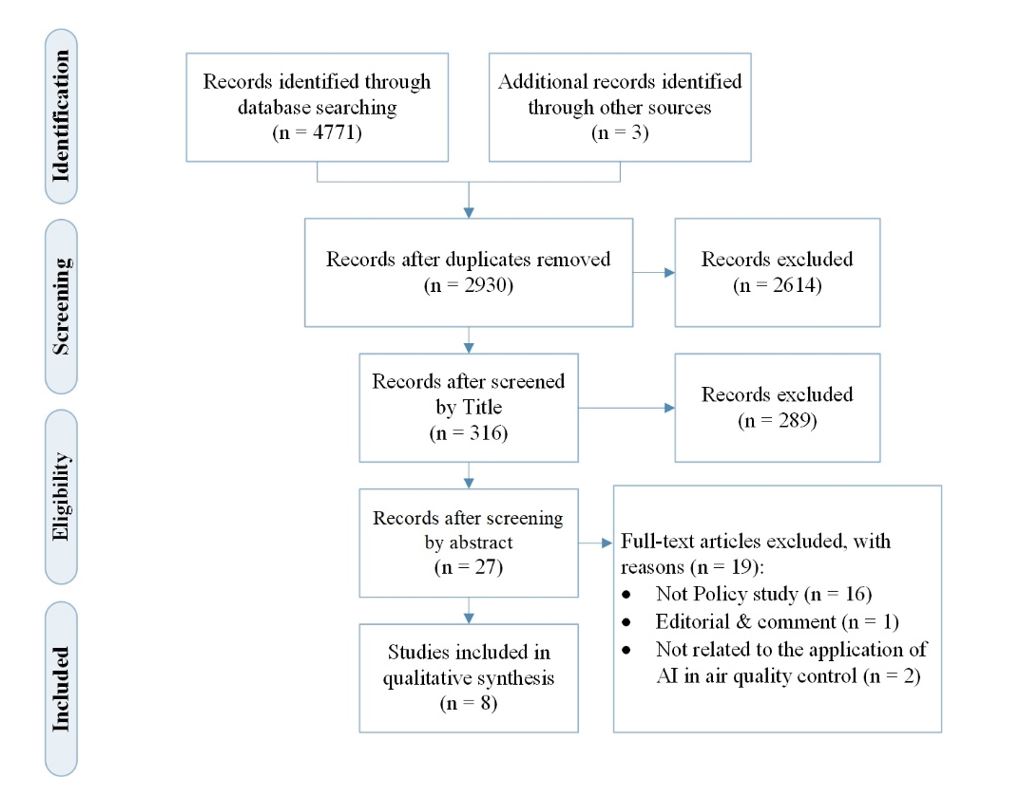
Figure 1: Screening process flowchart.
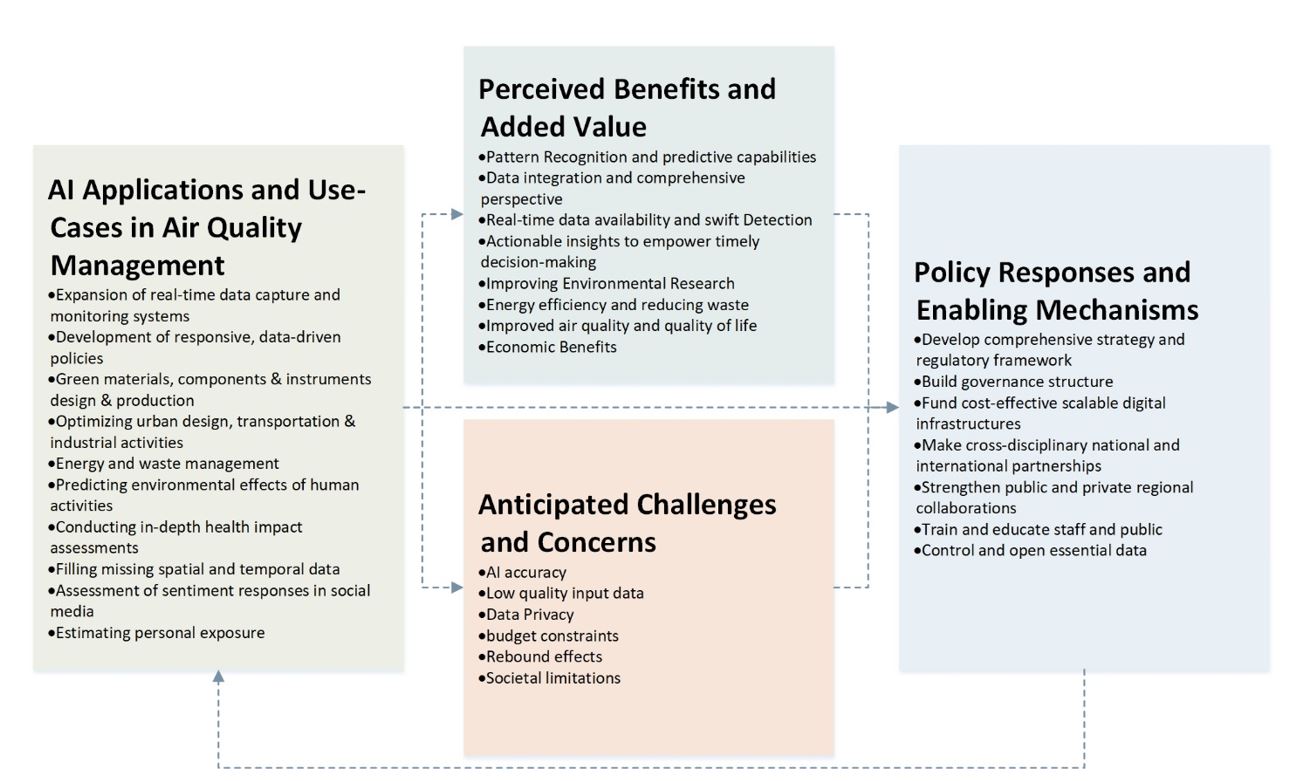
Figure 2: Applications, Consequences and Policy Responses Framework (Main themes and sub-themes).
Full-Text: (262 Views)
Artificial Intelligence in Addressing Air Pollution: A Scoping Review of Policies
Hossein Bouzarjomehri 1,3, Ali Asghar Ebrahimi 1*, Mohammad Hassan Ehrampoush 1, Mobina Ardani 2, Zahra Soltanianzadeh 1, Yasaman Herandi 1, Mohsen Khosravi 4, Seyed Masood Mousavi 5, Mohammad Ranjbar 3,5
1 Environmental Sciences and Technology Research Center, School of Public Health, Shahid Sadoughi University of Medical Sciences, Yazd, Iran.
2 Department of Occupational Health, School of Public Health, Shahid Sadoughi Univercity of Medical Sciences, Yazd, Iran.
3 National Center for Health Insurance Research, Tehran, Iran.
4 Social Determinants of Health Research Center, Birjand University of Medical Sciences, Birjand, Iran.
5 Department of Health Care Management, Health Policy and Management Research Center, School of Public Health, Shahid Sadoughi University of Medical Sciences, Yazd, Iran.
Hossein Bouzarjomehri 1,3, Ali Asghar Ebrahimi 1*, Mohammad Hassan Ehrampoush 1, Mobina Ardani 2, Zahra Soltanianzadeh 1, Yasaman Herandi 1, Mohsen Khosravi 4, Seyed Masood Mousavi 5, Mohammad Ranjbar 3,5
1 Environmental Sciences and Technology Research Center, School of Public Health, Shahid Sadoughi University of Medical Sciences, Yazd, Iran.
2 Department of Occupational Health, School of Public Health, Shahid Sadoughi Univercity of Medical Sciences, Yazd, Iran.
3 National Center for Health Insurance Research, Tehran, Iran.
4 Social Determinants of Health Research Center, Birjand University of Medical Sciences, Birjand, Iran.
5 Department of Health Care Management, Health Policy and Management Research Center, School of Public Health, Shahid Sadoughi University of Medical Sciences, Yazd, Iran.
| A R T I C L E I N F O | ABSTRACT | |
| SYSTEMATIC REVIEW | Introduction: Air pollution remains the leading environmental risk factor for human health. Although artificial intelligence (AI) has demonstrated strong technical potential for air quality monitoring and prediction, its integration into environmental policy and governance remains unclear. This study examines how AI is currently addressed in policy-oriented literature on air pollution management. Methods: A scoping review was conducted following Arksey and O’Malley’s framework and its extension by Levac et al. Systematic searches of major scientific databases and policy sources identified English-language documents published between 2015 and 2025 that addressed the use of AI in air pollution control from a policy, governance, or strategic perspective. Thematic analysis was used to synthesize the findings. Results: Eight policy-relevant documents met the inclusion criteria of this review. The analysis identified four core themes: applications of AI, perceived benefits, governance and ethical concerns, and policy strategies. AI applications have primarily been framed around real-time monitoring, predictive modeling, and data-driven policymaking. The reported benefits included improved accuracy, responsiveness, and decision support, whereas the key concerns were related to data quality, privacy, energy use, transparency, and institutional capacity. Policy strategies emphasized regulatory frameworks, digital infrastructure, capacity building, cross-sector collaboration, and international coordination. Conclusions: The limited number of policy-oriented studies highlights a significant governance gap between technical AI development and environmental policy-making. Integrating AI into air pollution management requires evidence-based, transparent, and accountable governance. Future research should focus on policy design, implementation, and evaluation to support the responsible and sustainable adoption of AI in environmental governance. |
|
Article History: Received: 15 November 2025 Accepted: 20 January 2026 |
||
*Corresponding Author: Ali Asghar Ebrahimi Email: ebrahimi20007@gmail.com Tel: +98 9132679641 |
||
Keywords: Artificial Intelligence, Air Pollution, Environmental Policy, Scoping Review, Public Health, Public Policy. |
Citation: Bouzarjomehri H, Ebrahimi AA, Ehrampoush MH, et al. Artificial Intelligence in Addressing Air Pollution: A Scoping Review of Policies. J Environ Health Sustain Dev. 2026; 11(1): 2891-903.
Introduction
Air pollution refers to the presence of chemical, physical, or biological substances in the atmosphere that degrade air quality and pose risks to human and ecosystem. Major pollutants include particulate matter (PM), ground-level ozone, sulfur and nitrogen oxides, carbon monoxide, volatile organic compounds, heavy metals, and polycyclic aromatic hydrocarbons 1-3.
Despite technological progress, global air quality remains poor. More than 99% of the world’s population is exposed to pollutant levels that exceed the World Health Organization (WHO) thresholds for PM2.5, nitrogen dioxide, ozone, and sulfur dioxide. Ambient air pollution continues to be the leading environmental health risk, causing nearly nine million premature deaths annually—approximately one in every six worldwide 4-6.
Recent advances in artificial intelligence (AI) and machine learning (ML) have opened new possibilities for managing air pollution. AI-based systems are increasingly used for monitoring, forecasting, and decision support, with the potential to inform data-driven and near–real-time environmental governance. Empirical evidence demonstrates that AI models can accurately predict fine particulate concentrations (e.g., PM2.5), thereby supporting region-specific pollution control strategies, with reported prediction accuracies exceeding 90% in countries such as India and China 7-10. Moreover, AI enhances computational efficiency, accelerates decision-making 11, and supports sustainable pollution control through the improved integration of complex environmental data 12-14.
These capabilities underline the potential of AI as a transformative tool for addressing global air pollution. However, realizing this potential requires deliberate planning, sound governance, and regulatory safeguards to ensure its responsible and equitable deployment. Therefore, the establishment of robust strategies and policy frameworks is widely recognized as an important enabling condition for the sustainable and effective integration of AI technologies in air quality management.
While previous reviews have extensively explored the technical applications of AI, such as modeling, prediction, and health impact analysis, comparatively few have explicitly addressed policy, strategic, or regulatory perspectives. For instance, a scientometric review of AI and air pollution research revealed strong growth in China and the United States, mainly focusing on machine learning, PM2.5 prediction, and low-cost sensors, but noted limited interdisciplinary and policy-related collaborations 15. Another systematic review examined AI-based methods for predicting the health impacts of air pollution, identifying research gaps, and proposing federated learning models linking pollution, socioeconomic factors, and health outcomes 16. A further review compared machine learning and deep learning approaches for pollutant forecasting, emphasizing spatiotemporal feature integration and calling for enhanced model interpretability and broader applications 17.
Despite these contributions, no previous study has systematically analyzed the policies, strategies, and governance mechanisms that guide AI adoption in air pollution management. Addressing this gap, the present scoping review aims to identify, categorize, and synthesize global policy-oriented literature to map existing approaches and identify patterns and gaps relevant to evidence-informed policymaking in this emerging domain.
Despite technological progress, global air quality remains poor. More than 99% of the world’s population is exposed to pollutant levels that exceed the World Health Organization (WHO) thresholds for PM2.5, nitrogen dioxide, ozone, and sulfur dioxide. Ambient air pollution continues to be the leading environmental health risk, causing nearly nine million premature deaths annually—approximately one in every six worldwide 4-6.
Recent advances in artificial intelligence (AI) and machine learning (ML) have opened new possibilities for managing air pollution. AI-based systems are increasingly used for monitoring, forecasting, and decision support, with the potential to inform data-driven and near–real-time environmental governance. Empirical evidence demonstrates that AI models can accurately predict fine particulate concentrations (e.g., PM2.5), thereby supporting region-specific pollution control strategies, with reported prediction accuracies exceeding 90% in countries such as India and China 7-10. Moreover, AI enhances computational efficiency, accelerates decision-making 11, and supports sustainable pollution control through the improved integration of complex environmental data 12-14.
These capabilities underline the potential of AI as a transformative tool for addressing global air pollution. However, realizing this potential requires deliberate planning, sound governance, and regulatory safeguards to ensure its responsible and equitable deployment. Therefore, the establishment of robust strategies and policy frameworks is widely recognized as an important enabling condition for the sustainable and effective integration of AI technologies in air quality management.
While previous reviews have extensively explored the technical applications of AI, such as modeling, prediction, and health impact analysis, comparatively few have explicitly addressed policy, strategic, or regulatory perspectives. For instance, a scientometric review of AI and air pollution research revealed strong growth in China and the United States, mainly focusing on machine learning, PM2.5 prediction, and low-cost sensors, but noted limited interdisciplinary and policy-related collaborations 15. Another systematic review examined AI-based methods for predicting the health impacts of air pollution, identifying research gaps, and proposing federated learning models linking pollution, socioeconomic factors, and health outcomes 16. A further review compared machine learning and deep learning approaches for pollutant forecasting, emphasizing spatiotemporal feature integration and calling for enhanced model interpretability and broader applications 17.
Despite these contributions, no previous study has systematically analyzed the policies, strategies, and governance mechanisms that guide AI adoption in air pollution management. Addressing this gap, the present scoping review aims to identify, categorize, and synthesize global policy-oriented literature to map existing approaches and identify patterns and gaps relevant to evidence-informed policymaking in this emerging domain.
Methods
This study employed a scoping review approach to identify, categorize, and synthesize policy documents, official reports, and scholarly literature related to the use of artificial intelligence (AI) in air pollution control and management. Scoping reviews are particularly suited to emerging multidisciplinary fields where knowledge is fragmented, enabling a comprehensive overview of the current landscape and research gaps 18.
Conceptual framework and review questions
This review followed the five-stage framework proposed by Arksey and O’Malley and later refined by Levac et al. 19, 20. The stages included: (1) identifying the research question, (2) identifying relevant studies, (3) study selection, (4) charting the data, and (5) collating, summarizing, and reporting the results.
The main research question was; “What policies, strategies, and mechanisms have been proposed for the use of AI technologies in air pollution control and reduction at national or international levels?”
Additional sub-questions were as follows:
The main research question was; “What policies, strategies, and mechanisms have been proposed for the use of AI technologies in air pollution control and reduction at national or international levels?”
Additional sub-questions were as follows:
- What are the existing applications of AI in the management of air pollution?
- What are the benefits associated with these applications?
- What challenges and barriers hinder their implementation?
Search strategy
A systematic search was conducted across major academic databases, including Scopus, Web of Science, PubMed, ProQuest, Ovid, and Google Scholar. To locate policy documents and official reports, targeted searches were conducted using Google and the websites of international and national environmental policy organizations. The search strings combined three conceptual groups: AI, air pollution, and policy. To enhance reproducibility, the complete search strings for all databases, including Boolean operators and field restrictions, are provided in the Supplementary File. Only English-language publications between 2015 and 2025 were included, reflecting the period during which AI-driven environmental governance gained policy relevance.
Inclusion and exclusion criteria
Eligible studies and documents explicitly addressed the application of AI in controlling air pollution and contained policy, institutional, or strategic dimensions (e.g., policy frameworks, regulatory analyses, and governance strategies). Technical or laboratory-based AI studies with no relevance to environmental policy were excluded.
During the screening process, records were excluded at the title and abstract stage if they focused solely on the technical or algorithmic aspects of AI without policy, governance, or regulatory relevance. Full-text screening further excluded studies that addressed environmental sustainability broadly without specific reference to air pollution management or that discussed AI conceptually without actionable policy implications. The selection process and reasons for exclusion at each stage are summarized in the PRISMA-ScR flowchart (Figure 1).
During the screening process, records were excluded at the title and abstract stage if they focused solely on the technical or algorithmic aspects of AI without policy, governance, or regulatory relevance. Full-text screening further excluded studies that addressed environmental sustainability broadly without specific reference to air pollution management or that discussed AI conceptually without actionable policy implications. The selection process and reasons for exclusion at each stage are summarized in the PRISMA-ScR flowchart (Figure 1).
Screening and selection
All retrieved records were imported into Endnote, and duplicates were removed. Screening was conducted by two authors in two sequential stages (title/abstract screening and full-text review) based on the predefined inclusion and exclusion criteria. The reasons for exclusion at the full-text stage were documented to ensure transparency and replicability. The selection process was performed in accordance with the PRISMA-ScR standards (Figure 1).
Data extraction and analysis
Data were analyzed through thematic analysis by two authors to identify themes and subthemes related to AI applications, benefits, concerns, and policy strategies. The final documents were coded and analyzed using MaxQDA software. The thematic analysis followed an iterative and inductive process. Initial open codes were generated directly from the data and then refined and grouped into higher-order themes through repeated review and comparison. The coding decisions were continuously reviewed to ensure internal consistency and transparency. An audit trail of the coding decisions was maintained throughout the analysis.
Results
The screening process resulted in the inclusion of eight documents, including peer-reviewed research articles and official policy reports. Figure 1 presents the screening process, and Table 1 lists the sources included in this review. Thematic analysis identified four overarching categories: applications of AI, perceived benefits, concerns and challenges, and policy responses or enabling mechanisms (Figure 2).
Table 1: Included documents
| Title | Authors | Source – Type | Yr. |
| Application of machine learning initiatives and intelligent perspectives for CO2 emissions reduction in construction | L. Farahzadi and M. Kioumarsi | Journal of Cleaner Production – Journal article | 2023 |
| Compliance and enforcement in a brave new (green) world: best practices and technologies for green governance | D. Omrow, M. Anagnostou, P. Cassey, S. J. Cooke, S. Jordan, A. E. Kirkwood | Facets – Journal article | 2024 |
| Development of Environmental Action Plans for Adaptation to Climate Change: A Perspective of Air Quality Management | H. S. Chen, K. I. Tam, Y. L. Zhao, L. Yuan, W. Y. Wang, M. R. S. Lin, et al. | Aerosol and Air Quality Research – Journal article | 2023 |
| Enhancing Environmental Resilience: Precision in Air Quality Monitoring through AI- Driven Real- Time Systems | A. Mahule, K. Roy, A. D. Sawarkar and S. Lachure | Artificial Intelligence for Air Quality Monitoring and Prediction – Book chapter | 2024 |
| Improving Air Quality Monitoring Solution for Environmental Governance on Cities and Industries | Asia-Pacific Economic Cooperation (APEC) | APEC Policy Partnership on Science, Technology and Innovation – Report | 2025 |
| Machine Learning Applications in Air Quality Management and Policies | A. Upadhyay, P. Sharma and S. Chowdhury | Artificial Intelligence for Air Quality Monitoring and Prediction – Book chapter | 2024 |
| Statement on integration and adoption of AI in air quality | D. O. Topping, A. C. Lewis, J. D. Allan, J. Barnes, S. Beevers, D. C. Carslaw, et al. | The government of Scottish, the Welsh, and the Northern Ireland – Report | 2024 |
| Urban design and pollution using AI: Implications for urban development in China | X. Zheng, Z. Ma and Z. Yuang | Heliyon – Journal article | 2024 |
Figure 1: Screening process flowchart.
Figure 2: Applications, Consequences and Policy Responses Framework (Main themes and sub-themes).
Applications of AI in Air Quality Management
The most frequent application of AI in air pollution management is real-time air quality monitoring and forecasting. Technical studies have highlighted AI’s strong capability in predicting pollutant dynamics, with the potential to support timely policy actions and evidence-informed environmental protection 21, 22.
However, AI’s role extends beyond monitoring and prediction. Several documents emphasize data-driven and evidence-informed policymaking, in which AI supports the allocation of financial and environmental resources, optimization of emission-reduction strategies, rapid evaluation of policy effectiveness, and automated regulatory decision-making 23-25. The ability to capture and process real-time data is fundamental for adaptive and flexible air quality governance, enabling dynamic regulations that adjust to pollution trends and new patterns. Data-driven policymaking enables more precise targeting of interventions in high-exposure areas and periods 25.
AI applications have also been reported in green products, materials, and process design, including the optimization of wind-turbine performance, predictive maintenance in solar power plants 24, and low-emission material innovation in construction and heavy industry 23. Other uses include supporting cleaner urban design, sustainable transport planning, waste management, and energy optimization through AI-assisted modeling 24, 25. AI can also anticipate the future environmental impacts of human activities and assess the health implications of air pollution exposure 25, 26.
Less frequently reported uses included data noise reduction, filling spatial and temporal gaps 26, sentiment analysis of social media 27, and AI-enabled personal gadgets and wearables for health risk estimation 27.
However, AI’s role extends beyond monitoring and prediction. Several documents emphasize data-driven and evidence-informed policymaking, in which AI supports the allocation of financial and environmental resources, optimization of emission-reduction strategies, rapid evaluation of policy effectiveness, and automated regulatory decision-making 23-25. The ability to capture and process real-time data is fundamental for adaptive and flexible air quality governance, enabling dynamic regulations that adjust to pollution trends and new patterns. Data-driven policymaking enables more precise targeting of interventions in high-exposure areas and periods 25.
AI applications have also been reported in green products, materials, and process design, including the optimization of wind-turbine performance, predictive maintenance in solar power plants 24, and low-emission material innovation in construction and heavy industry 23. Other uses include supporting cleaner urban design, sustainable transport planning, waste management, and energy optimization through AI-assisted modeling 24, 25. AI can also anticipate the future environmental impacts of human activities and assess the health implications of air pollution exposure 25, 26.
Less frequently reported uses included data noise reduction, filling spatial and temporal gaps 26, sentiment analysis of social media 27, and AI-enabled personal gadgets and wearables for health risk estimation 27.
Benefits and Added Value
AI has demonstrated substantial added value in environmental governance. The reported benefits include pattern recognition in large, heterogeneous datasets, integration of multi-source data, and improved predictive accuracy 22. AI facilitates access to real-time environmental information and supports rapid and evidence-based policy responses 22, 28. These systems also provide timely and actionable insights for stakeholders in public health, urban planning, and policy development, as well as early warnings to vulnerable populations 26. Enhanced data accessibility improves scientific research and supports long-term monitoring and evaluation 22.
At a broader scale, AI-driven approaches may contribute to reducing pollutant emissions and energy consumption, with potential benefits for air quality, public health and economic productivity 24, 25. These outcomes may lower healthcare costs, increase workforce efficiency, and foster green economic growth through new AI-based products and services.
At a broader scale, AI-driven approaches may contribute to reducing pollutant emissions and energy consumption, with potential benefits for air quality, public health and economic productivity 24, 25. These outcomes may lower healthcare costs, increase workforce efficiency, and foster green economic growth through new AI-based products and services.
Challenges and Concerns
However, numerous challenges persist. On a technical level, the accuracy of algorithms remains uncertain and depends heavily on data quality, completeness, and consistency 26. Many studies have emphasized the scarcity of reliable datasets, especially in developing regions 29. The deployment of AI technologies also requires substantial financial resources for infrastructure, sensors, and data maintenance 28.
Another major concern is data privacy and confidentiality issues. The collection of potentially sensitive data through Artificial Intelligence of Things (AIoT) sensors necessitates robust anonymization and secure data management protocols 22.
Environmental concerns have also been raised regarding AI’s carbon footprint, mainly due to the high energy demands of large-scale data centers and computing hardware 30. Over time, this could paradoxically increase pollution, echoing the Jevons paradox, in which technological efficiency leads to higher overall resource consumption. This paradox suggests that technological innovations that improve resource efficiency do not necessarily lead to conservation. As first noted by Jevons in the 19th century regarding coal use, similar rebound effects have reappeared in efficient appliances, vehicles, and even “green” cruise technologies, where higher efficiencies reduce costs, drive greater consumption, and ultimately increase CO₂ emissions. Ecologists argue that within an economic system centered on perpetual growth, technological gains may intensify rather than mitigate environmental harm, suggesting that technological redesign without broader systemic change may be insufficient 29.
From a governance perspective, several studies have cautioned against technocratic or techno-solutionist approaches, warning that overreliance on technology may obscure the social, ethical, and political dimensions of environmental problems. The uncritical deployment of AI and technological determinism could reinforce inequality by marginalizing vulnerable groups, including low-income workers, women, and Indigenous or minority communities, and constrain inclusive, participatory policymaking. Recognizing the social limits of technology is as vital as acknowledging its potential benefits. Effective environmental governance requires confronting social barriers, such as resistance to change, while advancing technical innovation 29.
Notably, ethical, governance, and environmental risks were synthesized from a smaller subset of governance- and policy-focused documents within the included evidence rather than being uniformly addressed across all reviewed sources.
Another major concern is data privacy and confidentiality issues. The collection of potentially sensitive data through Artificial Intelligence of Things (AIoT) sensors necessitates robust anonymization and secure data management protocols 22.
Environmental concerns have also been raised regarding AI’s carbon footprint, mainly due to the high energy demands of large-scale data centers and computing hardware 30. Over time, this could paradoxically increase pollution, echoing the Jevons paradox, in which technological efficiency leads to higher overall resource consumption. This paradox suggests that technological innovations that improve resource efficiency do not necessarily lead to conservation. As first noted by Jevons in the 19th century regarding coal use, similar rebound effects have reappeared in efficient appliances, vehicles, and even “green” cruise technologies, where higher efficiencies reduce costs, drive greater consumption, and ultimately increase CO₂ emissions. Ecologists argue that within an economic system centered on perpetual growth, technological gains may intensify rather than mitigate environmental harm, suggesting that technological redesign without broader systemic change may be insufficient 29.
From a governance perspective, several studies have cautioned against technocratic or techno-solutionist approaches, warning that overreliance on technology may obscure the social, ethical, and political dimensions of environmental problems. The uncritical deployment of AI and technological determinism could reinforce inequality by marginalizing vulnerable groups, including low-income workers, women, and Indigenous or minority communities, and constrain inclusive, participatory policymaking. Recognizing the social limits of technology is as vital as acknowledging its potential benefits. Effective environmental governance requires confronting social barriers, such as resistance to change, while advancing technical innovation 29.
Notably, ethical, governance, and environmental risks were synthesized from a smaller subset of governance- and policy-focused documents within the included evidence rather than being uniformly addressed across all reviewed sources.
Policy Responses and Enabling Mechanisms
In response to these concerns, several sources have argued that AI adoption should be guided by strategic, ethical, and inclusive policy frameworks. Scholars have emphasized the notion of “technologies of humility,” urging policymakers to acknowledge the limits of scientific control and focus on reflective, people-centered governance. “Technologies of humility” recognize the limits of scientific and technological solutions and emphasize the importance of knowing when not to rely solely on technology to solve problems. They encourage reframing environmental challenges to highlight their ethical dimensions and address human vulnerability to emerging technologies, their risks, and their benefits. Such reflective approaches to technology policy and practice stand in contrast to “technologies of hubris,” which view technology merely as a tool for exerting greater control over nature and the world 29.
Strong regulatory and governance frameworks are needed to ensure the transparency, accountability, and sustainability of AI systems. These include the mandatory reporting of energy use by AI applications and clear operational standards 27. Policy documents suggest the adoption of integrated digital management systems that combine AIoT, mobile sensors, and cloud computing to link environmental, transport, and public-health data streams 28.
One policy report recommends cross-sectoral advisory councils involving the government, academia, and industry as a coordination mechanism for AI adoption and implementation ecosystems 27. Sustainable AI governance also depends on affordable and scalable digital infrastructure, such as dense networks of low-cost air sensors supported by hybrid satellite–ground data integration 21, 28. Improving air quality management requires substantial gross domestic product (GDP) investment to expand monitoring networks. Financial barriers can be mitigated by complementing ground-based data with satellite data. However, satellite datasets often face spatial gaps due to cloud cover and retrieval issues, potentially causing inaccurate estimates, highlighting the need for AI-driven approaches to correct and complete these data deficiencies 26.
Some of the included policy reports emphasized the importance of international collaboration for data sharing, technology transfer, and alignment of standards, particularly given the transboundary nature of air pollution and AI development 27, 28. Partnerships between governments, universities, and the private sector —through joint PhD programs, exchange missions, or co-funded projects—can accelerate innovation.
Capacity building and local engagement are essential at the community level. Public education, participatory decision-making, and transparent data sharing strengthen trust and align policies with local environmental realities 22. Governments should collaborate with educational institutions and NGOs to enhance environmental literacy and civic engagement through the deployment of sensors and open data initiatives 27, 28. These partnerships facilitate knowledge exchange, technology transfer, and policy alignment. Skills related to the awareness, application, and interpretation of AI technologies for air quality must be developed. However, recruiting and retaining skilled staff in the public sector remains a major challenge, requiring incentives and collaboration with the private sector to reduce the costs. Targeted online training programs can also alleviate financial burdens 27.
Transparency and open data were consistently identified in the reviewed policy-oriented documents as enabling conditions for AI-driven air pollution management. From a governance perspective, transparency ensures public trust and provides sustained financial support. AI algorithms should be explainable and interpretable so that users and policymakers can clearly understand how the results are produced, ensuring accountability 22. Technologically, AI systems depend on large, accessible datasets for optimal performance; thus, governments should mandate the real-time disclosure of air quality data via open or cloud-based sharing platforms. This transparency enhances public health awareness, strengthens citizen participation, and supports data-informed policymaking. However, openness must be balanced with privacy; ethical and legal frameworks are needed to safeguard personal information and prevent misuse. Hence, governments must pursue transparency and effective data control in parallel. Maintaining this balance is crucial for the trustworthy and socially responsible integration of AI into air pollution management strategies.
Strong regulatory and governance frameworks are needed to ensure the transparency, accountability, and sustainability of AI systems. These include the mandatory reporting of energy use by AI applications and clear operational standards 27. Policy documents suggest the adoption of integrated digital management systems that combine AIoT, mobile sensors, and cloud computing to link environmental, transport, and public-health data streams 28.
One policy report recommends cross-sectoral advisory councils involving the government, academia, and industry as a coordination mechanism for AI adoption and implementation ecosystems 27. Sustainable AI governance also depends on affordable and scalable digital infrastructure, such as dense networks of low-cost air sensors supported by hybrid satellite–ground data integration 21, 28. Improving air quality management requires substantial gross domestic product (GDP) investment to expand monitoring networks. Financial barriers can be mitigated by complementing ground-based data with satellite data. However, satellite datasets often face spatial gaps due to cloud cover and retrieval issues, potentially causing inaccurate estimates, highlighting the need for AI-driven approaches to correct and complete these data deficiencies 26.
Some of the included policy reports emphasized the importance of international collaboration for data sharing, technology transfer, and alignment of standards, particularly given the transboundary nature of air pollution and AI development 27, 28. Partnerships between governments, universities, and the private sector —through joint PhD programs, exchange missions, or co-funded projects—can accelerate innovation.
Capacity building and local engagement are essential at the community level. Public education, participatory decision-making, and transparent data sharing strengthen trust and align policies with local environmental realities 22. Governments should collaborate with educational institutions and NGOs to enhance environmental literacy and civic engagement through the deployment of sensors and open data initiatives 27, 28. These partnerships facilitate knowledge exchange, technology transfer, and policy alignment. Skills related to the awareness, application, and interpretation of AI technologies for air quality must be developed. However, recruiting and retaining skilled staff in the public sector remains a major challenge, requiring incentives and collaboration with the private sector to reduce the costs. Targeted online training programs can also alleviate financial burdens 27.
Transparency and open data were consistently identified in the reviewed policy-oriented documents as enabling conditions for AI-driven air pollution management. From a governance perspective, transparency ensures public trust and provides sustained financial support. AI algorithms should be explainable and interpretable so that users and policymakers can clearly understand how the results are produced, ensuring accountability 22. Technologically, AI systems depend on large, accessible datasets for optimal performance; thus, governments should mandate the real-time disclosure of air quality data via open or cloud-based sharing platforms. This transparency enhances public health awareness, strengthens citizen participation, and supports data-informed policymaking. However, openness must be balanced with privacy; ethical and legal frameworks are needed to safeguard personal information and prevent misuse. Hence, governments must pursue transparency and effective data control in parallel. Maintaining this balance is crucial for the trustworthy and socially responsible integration of AI into air pollution management strategies.
Discussion
This scoping review identified eight policy-relevant documents addressing the use of artificial intelligence in air pollution control and management at the national and international levels. While this number may appear limited given the 10-year search window and global scope, it represents a key finding of this study rather than a methodological limitation. The exclusion criteria were intentionally strict to ensure a clear focus on policy-relevant evidence, which contributed to a smaller but conceptually coherent set of sources being included. The limited number of policy-oriented studies identified in this review indicates that the governance, regulatory, and strategic dimensions of AI in air pollution management have received substantially less attention than technical and engineering applications. Despite the rapid expansion of AI-driven air quality monitoring and prediction research, policy-level integration and guidance remain limited and fragmented. Identifying such gaps is a core objective of scoping reviews, particularly in emerging and interdisciplinary fields, and underscores the need for more policy-focused and governance-oriented research to support responsible and sustainable AI adoption in environmental management. Accordingly, the findings should be interpreted as indicative patterns within a limited but policy-relevant evidence base rather than as comprehensive or universally applicable conclusions.
Several methodological considerations emerged from the included policy-oriented sources that may influence their policy relevance. These include reliance on heterogeneous data sources, limited transparency regarding model validation practices, and contextual specificity that constrains generalizability across different governance settings. In several cases, AI applications were discussed at a conceptual or pilot level, with limited evidence of real-world deployment, long-term performance, or regulatory integration. These characteristics do not undermine the relevance of the findings but indicate that current policy discussions are often informed by emerging or exploratory evidence rather than mature, implementation-tested systems.
Another characteristic of the identified evidence base is its geographic concentration. The included policy-oriented documents were predominantly produced in high-income settings and by international or national institutions based in Europe, East Asia and the Asia-Pacific region. Notably, few policy documents originated from low- and middle-income countries, despite these regions bearing a disproportionate burden of air pollution-related health impact. This geographic skew highlights a potential bias in the available policy literature and limits the extent to which existing governance frameworks reflect diverse institutional capacities, regulatory contexts and socio-environmental conditions. Identifying such geographic gaps is consistent with the aims of scoping reviews and underscores the need for more policy-focused research and documentation from under-represented regions.
The findings indicate a strong emphasis on the application and advancement of AI technologies for air pollution control and management across the reviewed documents. This underscores the importance of enhancing AI use and capacity building as key policy strategies to strengthen environmental governance 21, 22, 28. Much of the reviewed literature stresses the gradual, data-driven integration of AI into real-time monitoring and decision-making systems to improve efficiency and policy responsiveness.
Beyond monitoring and prediction, AI applications span diverse areas, including real-time data analysis for rapid decision-making, evidence-based resource allocation, urban design and transport planning, renewable energy optimization, and low-emission product development 23-25. Innovative uses include social media sentiment analysis on air quality and wearable or personal AI-enabled devices for individual health monitoring 26, 27. Altogether, these findings suggest that AI can serve environmental policymaking across technical, social, and behavioral levels, creating an integrated framework for smart and adaptive air quality management 21, 22, 28.
Studies also highlight major benefits of AI adoption, such as improved accuracy and coverage through real-time sensor networks and AIoT-enabled micro-scale mapping 22, 26, 31-33. AI enhances data quality by detecting anomalies, correcting errors, and integrating multi-source datasets, facilitating evidence-based, data-driven policymaking 9, 17, 23, 25, 34. Deep learning models improve forecasting through the combined use of satellite, sensor, and ground data 22, 24. Cloud-based AI systems further enable scalable and cost-effective monitoring, particularly in resource-limited regions 35-37.
However, several challenges persist, including poor data quality, incomplete and non-transparent datasets, privacy concerns, and regulatory gaps 26, 29, 35, 38. The “black box” nature of many AI systems undermines their interpretability and policy acceptance 17, 39. High computational costs, limited infrastructure, and environmental impacts of energy use remain key barriers 30.
Social and governance-related issues also arise, particularly the risk of techno-solutionism approaches that downplay justice and inclusivity. As noted, without restructuring existing economic and policy systems, technological advancement alone cannot ensure sustainability 29. Thus, “technologies of humility” are needed—those that recognize their ethical, social, and ecological limits and guide reflective and human-centered innovation 29. Notably, ethical and governance risks were discussed in depth in only a limited number of documents, underscoring the uneven treatment of these dimensions in the current policy-oriented literature.
Equity, fairness, and data governance have emerged as important but underdeveloped dimensions in the reviewed policy-oriented literature. Several sources emphasize transparency, privacy protection, and ethical safeguards as prerequisites for trustworthy AI deployment; however, few explicitly address how AI-enabled air pollution policies may differentially affect vulnerable populations, exacerbate urban–rural disparities, or create unequal access to the benefits of data-driven environmental governance. Concerns related to algorithmic bias, uneven data coverage, and digital divides are primarily discussed at a conceptual level, with limited attention to implementation-stage equity assessments or distributive impacts. This gap suggests that while ethical principles are increasingly acknowledged in policy discourse, their operationalization in terms of social justice and environmental equity remains limited, underscoring an important area for future policy-focused research to address.
Importantly, these challenges are not discussed uniformly across the reviewed sources; policy reports tend to emphasize governance and coordination barriers, whereas academic studies more often focus on data quality and model performance, highlighting fragmentation in how risks are conceptualized across domains.
In response, reviewed sources propose several strategies: developing transparent, multilevel regulatory frameworks; establishing technical and ethical AI standards; creating interdepartmental governance bodies and advisory boards; and promoting international collaboration on data sharing, technology transfer, and joint research 27, 28. Investments in digital infrastructure and data literacy, along with specialized workforce training, are essential for effective AI implementation 22.
Rigorous data cleaning, feature optimization, and anomaly detection are vital for improving model accuracy 32-34. Automated calibration and advanced preprocessing strengthen dataset quality, while deploying low-cost AIoT-based sensors broadens the spatial and temporal coverage 40, 41. The integration of satellite, meteorological, and traffic data through standardized formats enriches AI models and improves predictive robustness 9, 42.
Transparency, open data, and public participation are consistently cited as essential for success 9. Open access to data, algorithmic disclosure, and educational engagement with local communities build trust and social acceptance while supporting adaptive policy-making 27, 28. Collaboration between research institutions, governments, and the private sector is critical for effective and equitable AI deployment 9, 15.
An important observation from this review is the limited attention given to policymaker engagement, regulatory adoption stages, and implementation outcomes in the identified literature. Most of the included documents focused on strategic visions, governance principles, or enabling conditions for AI adoption rather than empirical assessments of how policies are operationalized or evaluated in practice. Consequently, evidence on stakeholder engagement processes, stages of regulatory maturity, and real-world implementation outcomes remains scarce. This gap reflects the early and exploratory nature of AI governance in air pollution management and highlights a critical area for future policy-oriented and implementation-focused research in this field.
Beyond describing existing applications, the findings reveal a notable imbalance between the rapid technical development of AI tools and the comparatively slow evolution of governance, regulatory, and ethical frameworks. While most documents emphasize operational benefits, such as improved monitoring and prediction, far fewer critically address questions of accountability, social equity, or long-term sustainability. This suggests that current policy discourse often frames AI primarily as a technical solution, with comparatively less attention paid to its characterization as a socio-technical system requiring institutional and ethical oversight.
It should be noted that references to governance needs and policy directions in this review are not intended as prescriptive recommendations. Rather, they reflect an interpretive synthesis of themes, emphases, and gaps that have been recurrently identified within the limited policy-relevant evidence base. Although the reviewed documents differ in scope and intent, they can be broadly grouped into strategic policy statements, governance-oriented analytical frameworks, and implementation-focused technical–policy reports. Notably, none of the identified sources articulated clearly defined regulatory maturity levels or binding governance models for the deployment of AI in air pollution management. Comparative national policy approaches were largely absent, with most documents adopting either a global perspective or a single-country case framing. This absence suggests that, within the policy-relevant literature, AI governance in air pollution is still discussed primarily at a strategic or exploratory level rather than as a mature regulatory framework.
Future research should be structured along the policy cycle to address the gaps identified in this review. At the agenda-setting stage, studies are needed to examine how AI-driven air pollution risks are framed by policymakers and which actors influence prioritization. Comparative analyses of regulatory instruments, standards, and governance models for AI adoption are required during policy design. At the implementation stage, empirical research should assess institutional capacity, stakeholder engagement and operational challenges in deploying AI systems. Finally, evaluation-focused studies are needed to examine policy effectiveness, unintended consequences, equity impacts, and environmental tradeoffs. Structuring future research within this framework can support more coherent and evidence-based AI governance in air pollution management.
Several methodological considerations emerged from the included policy-oriented sources that may influence their policy relevance. These include reliance on heterogeneous data sources, limited transparency regarding model validation practices, and contextual specificity that constrains generalizability across different governance settings. In several cases, AI applications were discussed at a conceptual or pilot level, with limited evidence of real-world deployment, long-term performance, or regulatory integration. These characteristics do not undermine the relevance of the findings but indicate that current policy discussions are often informed by emerging or exploratory evidence rather than mature, implementation-tested systems.
Another characteristic of the identified evidence base is its geographic concentration. The included policy-oriented documents were predominantly produced in high-income settings and by international or national institutions based in Europe, East Asia and the Asia-Pacific region. Notably, few policy documents originated from low- and middle-income countries, despite these regions bearing a disproportionate burden of air pollution-related health impact. This geographic skew highlights a potential bias in the available policy literature and limits the extent to which existing governance frameworks reflect diverse institutional capacities, regulatory contexts and socio-environmental conditions. Identifying such geographic gaps is consistent with the aims of scoping reviews and underscores the need for more policy-focused research and documentation from under-represented regions.
The findings indicate a strong emphasis on the application and advancement of AI technologies for air pollution control and management across the reviewed documents. This underscores the importance of enhancing AI use and capacity building as key policy strategies to strengthen environmental governance 21, 22, 28. Much of the reviewed literature stresses the gradual, data-driven integration of AI into real-time monitoring and decision-making systems to improve efficiency and policy responsiveness.
Beyond monitoring and prediction, AI applications span diverse areas, including real-time data analysis for rapid decision-making, evidence-based resource allocation, urban design and transport planning, renewable energy optimization, and low-emission product development 23-25. Innovative uses include social media sentiment analysis on air quality and wearable or personal AI-enabled devices for individual health monitoring 26, 27. Altogether, these findings suggest that AI can serve environmental policymaking across technical, social, and behavioral levels, creating an integrated framework for smart and adaptive air quality management 21, 22, 28.
Studies also highlight major benefits of AI adoption, such as improved accuracy and coverage through real-time sensor networks and AIoT-enabled micro-scale mapping 22, 26, 31-33. AI enhances data quality by detecting anomalies, correcting errors, and integrating multi-source datasets, facilitating evidence-based, data-driven policymaking 9, 17, 23, 25, 34. Deep learning models improve forecasting through the combined use of satellite, sensor, and ground data 22, 24. Cloud-based AI systems further enable scalable and cost-effective monitoring, particularly in resource-limited regions 35-37.
However, several challenges persist, including poor data quality, incomplete and non-transparent datasets, privacy concerns, and regulatory gaps 26, 29, 35, 38. The “black box” nature of many AI systems undermines their interpretability and policy acceptance 17, 39. High computational costs, limited infrastructure, and environmental impacts of energy use remain key barriers 30.
Social and governance-related issues also arise, particularly the risk of techno-solutionism approaches that downplay justice and inclusivity. As noted, without restructuring existing economic and policy systems, technological advancement alone cannot ensure sustainability 29. Thus, “technologies of humility” are needed—those that recognize their ethical, social, and ecological limits and guide reflective and human-centered innovation 29. Notably, ethical and governance risks were discussed in depth in only a limited number of documents, underscoring the uneven treatment of these dimensions in the current policy-oriented literature.
Equity, fairness, and data governance have emerged as important but underdeveloped dimensions in the reviewed policy-oriented literature. Several sources emphasize transparency, privacy protection, and ethical safeguards as prerequisites for trustworthy AI deployment; however, few explicitly address how AI-enabled air pollution policies may differentially affect vulnerable populations, exacerbate urban–rural disparities, or create unequal access to the benefits of data-driven environmental governance. Concerns related to algorithmic bias, uneven data coverage, and digital divides are primarily discussed at a conceptual level, with limited attention to implementation-stage equity assessments or distributive impacts. This gap suggests that while ethical principles are increasingly acknowledged in policy discourse, their operationalization in terms of social justice and environmental equity remains limited, underscoring an important area for future policy-focused research to address.
Importantly, these challenges are not discussed uniformly across the reviewed sources; policy reports tend to emphasize governance and coordination barriers, whereas academic studies more often focus on data quality and model performance, highlighting fragmentation in how risks are conceptualized across domains.
In response, reviewed sources propose several strategies: developing transparent, multilevel regulatory frameworks; establishing technical and ethical AI standards; creating interdepartmental governance bodies and advisory boards; and promoting international collaboration on data sharing, technology transfer, and joint research 27, 28. Investments in digital infrastructure and data literacy, along with specialized workforce training, are essential for effective AI implementation 22.
Rigorous data cleaning, feature optimization, and anomaly detection are vital for improving model accuracy 32-34. Automated calibration and advanced preprocessing strengthen dataset quality, while deploying low-cost AIoT-based sensors broadens the spatial and temporal coverage 40, 41. The integration of satellite, meteorological, and traffic data through standardized formats enriches AI models and improves predictive robustness 9, 42.
Transparency, open data, and public participation are consistently cited as essential for success 9. Open access to data, algorithmic disclosure, and educational engagement with local communities build trust and social acceptance while supporting adaptive policy-making 27, 28. Collaboration between research institutions, governments, and the private sector is critical for effective and equitable AI deployment 9, 15.
An important observation from this review is the limited attention given to policymaker engagement, regulatory adoption stages, and implementation outcomes in the identified literature. Most of the included documents focused on strategic visions, governance principles, or enabling conditions for AI adoption rather than empirical assessments of how policies are operationalized or evaluated in practice. Consequently, evidence on stakeholder engagement processes, stages of regulatory maturity, and real-world implementation outcomes remains scarce. This gap reflects the early and exploratory nature of AI governance in air pollution management and highlights a critical area for future policy-oriented and implementation-focused research in this field.
Beyond describing existing applications, the findings reveal a notable imbalance between the rapid technical development of AI tools and the comparatively slow evolution of governance, regulatory, and ethical frameworks. While most documents emphasize operational benefits, such as improved monitoring and prediction, far fewer critically address questions of accountability, social equity, or long-term sustainability. This suggests that current policy discourse often frames AI primarily as a technical solution, with comparatively less attention paid to its characterization as a socio-technical system requiring institutional and ethical oversight.
It should be noted that references to governance needs and policy directions in this review are not intended as prescriptive recommendations. Rather, they reflect an interpretive synthesis of themes, emphases, and gaps that have been recurrently identified within the limited policy-relevant evidence base. Although the reviewed documents differ in scope and intent, they can be broadly grouped into strategic policy statements, governance-oriented analytical frameworks, and implementation-focused technical–policy reports. Notably, none of the identified sources articulated clearly defined regulatory maturity levels or binding governance models for the deployment of AI in air pollution management. Comparative national policy approaches were largely absent, with most documents adopting either a global perspective or a single-country case framing. This absence suggests that, within the policy-relevant literature, AI governance in air pollution is still discussed primarily at a strategic or exploratory level rather than as a mature regulatory framework.
Future research should be structured along the policy cycle to address the gaps identified in this review. At the agenda-setting stage, studies are needed to examine how AI-driven air pollution risks are framed by policymakers and which actors influence prioritization. Comparative analyses of regulatory instruments, standards, and governance models for AI adoption are required during policy design. At the implementation stage, empirical research should assess institutional capacity, stakeholder engagement and operational challenges in deploying AI systems. Finally, evaluation-focused studies are needed to examine policy effectiveness, unintended consequences, equity impacts, and environmental tradeoffs. Structuring future research within this framework can support more coherent and evidence-based AI governance in air pollution management.
Conclusions
This study synthesizes the existing policy-relevant literature on the use of artificial intelligence in air pollution management. Drawing on a limited but focused evidence base, this review offers an exploratory synthesis of how AI is currently framed within air pollution governance, rather than a comprehensive or generalizable assessment of global policy practice.
The findings indicate that although AI is frequently associated with capabilities such as real-time monitoring, predictive analytics, and data-informed decision-making, its integration into environmental governance remains uneven. Most existing documents emphasize technical potential, whereas regulatory, ethical, and institutional considerations receive comparatively limited and inconsistent attention.
The reviewed evidence highlights the importance of data governance, transparency, accountability, and institutional coordination as enabling conditions for the responsible adoption of AI in air quality management. Rather than prescribing specific policy models, this review underscores the need for adaptive and context-sensitive governance approaches that align technological innovation with broader environmental and social objectives.
These conclusions are derived from documented policy frameworks, strategic reports, and policy-oriented academic analyses included in this review rather than from experimental or implementation-level evaluations. Accordingly, the findings should be interpreted as an evidence-informed synthesis of current policy discourse and governance approaches, not as an assessment of empirical effectiveness or of real-world policy outcomes.
Overall, the primary contribution of this scoping review lies in identifying gaps, boundary conditions, and emerging themes in the current policy discourse. Future research should expand policy-oriented and interdisciplinary inquiries to support the development of more coherent, ethically grounded, and evidence-informed governance frameworks for AI-based air pollution management.
The findings indicate that although AI is frequently associated with capabilities such as real-time monitoring, predictive analytics, and data-informed decision-making, its integration into environmental governance remains uneven. Most existing documents emphasize technical potential, whereas regulatory, ethical, and institutional considerations receive comparatively limited and inconsistent attention.
The reviewed evidence highlights the importance of data governance, transparency, accountability, and institutional coordination as enabling conditions for the responsible adoption of AI in air quality management. Rather than prescribing specific policy models, this review underscores the need for adaptive and context-sensitive governance approaches that align technological innovation with broader environmental and social objectives.
These conclusions are derived from documented policy frameworks, strategic reports, and policy-oriented academic analyses included in this review rather than from experimental or implementation-level evaluations. Accordingly, the findings should be interpreted as an evidence-informed synthesis of current policy discourse and governance approaches, not as an assessment of empirical effectiveness or of real-world policy outcomes.
Overall, the primary contribution of this scoping review lies in identifying gaps, boundary conditions, and emerging themes in the current policy discourse. Future research should expand policy-oriented and interdisciplinary inquiries to support the development of more coherent, ethically grounded, and evidence-informed governance frameworks for AI-based air pollution management.
Limitations
This study had several limitations. First, the review identified a limited number of policy-oriented documents addressing the use of AI in air pollution management. This scarcity should not be interpreted as a lack of relevance but rather as evidence of a critical research and policy gap in this rapidly evolving field. Although numerous technical and modeling studies exist, policy, regulatory, and governance-focused analyses remain scarce. As this review intentionally focused on policy-relevant sources, the available evidence base was narrow and did not represent the full technical potential of AI applications. Second, most of the included documents were strategic or conceptual in nature, with limited empirical evidence on policy implementation, regulatory maturity, or measurable outcomes. Finally, the geographic representation was uneven, with a concentration of sources from high-income and technologically advanced regions, potentially limiting the transferability of the findings to low- and middle-income contexts.
Acknowledgments
The authors would like to express their appreciation to the Environmental Science and Technology Research Center, School of Public Health, Shahid Sadoughi University of Medical Sciences, Yazd, Iran, for their administrative and technical support throughout this research project. Additionally, the authors would like to thank ChatGPT (OpenAI) for its assistance with language editing and refinement of the English version of this manuscript. Support was limited to linguistic revision and translation improvement, conducted in full compliance with ethical publishing standards. The responsibility for the content, interpretation, and conclusions of this study remains solely with the authors.
Conflict of Interest
The authors declare no conflict of interest.
Funding
Funding: This work was supported by the Environmental Science and Technology Research Center, School of Public Health, Shahid Sadoughi University of Medical Sciences, Yazd, Iran [Project Code: 20285].
Ethical Considerations
The authors affirm that this study was conducted in full accordance with the ethical principles of research integrity and reporting. An ethical clearance with code IR.SSU.SPH.REC.1404.114 has been obtained from the Shahid Sadoughi University of Medical Sciences.
Authors’ Contributions
HB, MK, and YH were primarily responsible for the conceptualization, methodology design, data curation, formal analysis, and manuscript drafting. MR, AAE, and MHE contributed to supervision, project administration, and critical review of the manuscript. SMM, MA and ZS assisted with validation, methodological consultation, and revision of the final draft. All authors reviewed and approved the final version of the manuscript and agreed to be accountable for all aspects of the work.
This is an Open-Access article distributed in accordance with the terms of the Creative Commons Attribution (CC BY 4.0) license, which permits others to distribute, remix, adapt, and build upon this work for commercial use.
This is an Open-Access article distributed in accordance with the terms of the Creative Commons Attribution (CC BY 4.0) license, which permits others to distribute, remix, adapt, and build upon this work for commercial use.
References
1. Manisalidis I, Stavropoulou E, Stavropoulos A, et al. Environmental and health impacts of air pollution: a review. Front Public Health. 2020;8:14.
2. Bennett M, Nault I, Koehle M, et al. Air pollution and arrhythmias. Can J Cardiol. 2023;39(9): 1253-62.
3. Ghorani-Azam A, Riahi-Zanjani B, Balali-Mood M. Effects of air pollution on human health and practical measures for prevention in Iran. Journal of Research in Medical Sciences. 2016;21:65.
4. Fuller R, Landrigan PJ, Balakrishnan K, et al. Pollution and health: a progress update. Lancet Planet Health. 2022;6(6):e535-e47.
5. Rahman MM, Hasanuzzaman AB, Chisty MA, et al. Perceived-air pollution and self-reported health status: a study on air pollution-prone urban area of Bangladesh. Front Public Health. 2025; 13: 1382417.
6. World Health Organization. WHO unveils updated global database of air quality standards [Internet]. World Health Organization; 2025 .Available from: http://www.who.int/mediacentre/factsheets/fs391/en/.[cited Oct 14, 2025].
7. Pari P, Abbasi T, Abbasi SA. AI-based prediction of the improvement in air quality induced by emergency measures. J Environ Manage. 2024;351:119716.
8. Mubeen M, He S, Rahman MS, et al. Smart prediction and optimization of air quality index with artificial intelligence. Journal of Environmental Sciences. 2025;158:761-75.
9. Rautela KS, Goyal MK. Transforming air pollution management in India with AI and machine learning technologies. Sci Rep. 2024;14(1):20412.
10. Khosravi M, Mojtabaeian SM, Demiray EK, et al. a systematic review of the outcomes of utilization of artificial intelligence within the healthcare systems of the Middle East: a thematic analysis of findings. Health Sci Rep. 2024; 7(12): e70300.
11. Khosravi M, Izadi R, Aghamaleki Sarvestani M, et al. Performance of artificial intelligence large language models (Copilot and Gemini) compared to human experts in healthcare policy making: A mixed-methods cross-sectional study. Health Informatics J. 2025;31(3): 14604582251381269.
12. Liu F, Liang C. Examining the role of artificial intelligence in advancing pollution reduction strategies. MDE Manage Decis Econ. 2024;45(5):3068-79.
13. Lim JY, Teng SY, How BS, et al. Smart solutions for clean air: an AI-guided approach to sustainable industrial pollution control in coal-fired power plant. Environmental Pollution. 2023;335:122335.
14. Guo Z, Huang L, Yan J, et al. Artificial intelligence technology in environmental research and health: development and prospects. Environ Int. 2025;203:109788.
15. Guo Q, Ren M, Wu S, et al. Applications of artificial intelligence in the field of air pollution: a bibliometric analysis. Front Public Health. 2022;10:933665.
16. Neo EX, Hasikin K, Mokhtar MI, et al. Towards integrated air pollution monitoring and health impact assessment using federated learning: a systematic review. Front Public Health. 2022;10:851553.
17. Garbagna L, Babu Saheer L, Maktab Dar Oghaz M. AI-driven approaches for air pollution modelling: a comprehensive systematic review. Environmental Pollution. 2025;373:125937.
18. Peters MD, Godfrey CM, Khalil H, et al. Guidance for conducting systematic scoping reviews. JBI Evid Implement. 2015;13(3):141-6.
19. Arksey H, O'Malley L. Scoping studies: towards a methodological framework. Int J Soc Res Methodol. 2005;8(1):19-32.
20. Levac D, Colquhoun H, O'Brien KK. Scoping studies: advancing the methodology. Implement Sci. 2010;5(1):69.
21. Chen HS, Tam KI, Zhao YL, et al. Development of environmental action plans for adaptation to climate change: a perspective of air quality management. Aerosol Air Qual Res. 2023;23(10):220377.
22. Mahule A, Roy K, Sawarkar AD, et al. Enhancing environmental resilience: precision in air quality monitoring through ai- driven real- time systems. Artificial Intelligence for Air Quality Monitoring and Prediction. 2024: 48-74.
23. Farahzadi L, Kioumarsi M. Application of machine learning initiatives and intelligent perspectives for CO2 emissions reduction in construction. J Clean Prod. 2023;384: 135504.
24. Chu Z, Chen P, Zhang Z, et al. Other's shoes also fit well: AI technologies contribute to China's blue skies as well as carbon reduction. J Environ Manage. 2024;353: 120171.
25. Zheng X, Ma Z, Yuang Z. Urban design and pollution using AI: implications for urban development in China. Heliyon. 2024;10(18):e37735.
26. Upadhyay A, Sharma P, Chowdhury S. Machine learning applications in air quality management and policies. InArtificial intelligence for air quality monitoring and prediction: CRC Press; 2024.p. 147-64.
27. Topping DO, Lewis AC, Allan JD, et al. Statement on integration and adoption of AI in air quality. 2024.
28. APEC Policy Partnership on Science TaI. Improving Air Quality Monitoring Solution for Environmental Governance on Cities and Industries. 2025.
29. Omrow D, Anagnostou M, Cassey P, et al. Compliance and enforcement in a brave new (green) world: best practices and technologies for green governance. Facets. 2024;9:1-8.
30. Luers A, Koomey J, Masanet E, et al. Will AI accelerate or delay the race to net-zero emissions? Nature. 2024; 628(8009):718-20.
31. Liang L, Daniels J, Bailey C, et al. Integrating low-cost sensor monitoring, satellite mapping, and geospatial artificial intelligence for intra-urban air pollution predictions. Environmental Pollution. 2023;331:121832.
32. Neo EX, Hasikin K, Lai KW, et al. Artificial intelligence-assisted air quality monitoring for smart city management. PeerJ Comput Sci. 2023;9:e1306.
33. Rollo F, Bachechi C, Po L. Anomaly detection and repairing for improving air quality monitoring. Sensors (Basel). 2023;23(2):640.
34. Chadalavada S, Faust O, Salvi M, et al. Application of artificial intelligence in air pollution monitoring and forecasting: a systematic review. Environ Model Softw. 2025;185:106312.
35. Fadhil MJ, Gharghan SK, Saeed TR. Air pollution forecasting based on wireless communications: review. Environ Monit Assess. 2023;195(10):1152.
36. Cabral-Miranda W, Beloni C, Lora F, et al. Artificial intelligence platform to predict children's hospital care for respiratory disease using clinical, pollution, and climatic factors. J Glob Health. 2025;15:04207.
37. Cazzolla Gatti R, Velichevskaya A, Tateo A, et al. Machine learning reveals that prolonged exposure to air pollution is associated with SARS-CoV-2 mortality and infectivity in Italy. Environmental Pollution. 2020;267:115471.
38. Afoma UM, Singh S, Mishra AK, et al. Integrating artificial intelligence in environmental monitoring: a paradigm shift in data-driven sustainability: UM Afoma et al. Ecohealth. 2026; 23(1): 38-57.
39. Romano D, Novielli P, Diacono D, et al. Insights from explainable artificial intelligence of pollution and socioeconomic influences for respiratory cancer mortality in Italy. J Pers Med. 2024;14(4): 430.
40. Felici-Castell S, Segura-Garcia J, Perez-Solano JJ, et al. AI-iot low-cost pollution-monitoring sensor network to assist citizens with respiratory problems. Sensors (Basel). 2023;23(23):9585.
41. Ramadan MNA, Ali MAH, Khoo SY, et al. Real-time IOT-powered AI system for monitoring and forecasting of air pollution in industrial environment. Ecotoxicol Environ Saf. 2024; 283:116856.
42. Mottahedin P, Chahkandi B, Moezzi R, et al. Air quality prediction and control systems using machine learning and adaptive neuro-fuzzy inference system. Heliyon. 2024;10(21):e39783.
2. Bennett M, Nault I, Koehle M, et al. Air pollution and arrhythmias. Can J Cardiol. 2023;39(9): 1253-62.
3. Ghorani-Azam A, Riahi-Zanjani B, Balali-Mood M. Effects of air pollution on human health and practical measures for prevention in Iran. Journal of Research in Medical Sciences. 2016;21:65.
4. Fuller R, Landrigan PJ, Balakrishnan K, et al. Pollution and health: a progress update. Lancet Planet Health. 2022;6(6):e535-e47.
5. Rahman MM, Hasanuzzaman AB, Chisty MA, et al. Perceived-air pollution and self-reported health status: a study on air pollution-prone urban area of Bangladesh. Front Public Health. 2025; 13: 1382417.
6. World Health Organization. WHO unveils updated global database of air quality standards [Internet]. World Health Organization; 2025 .Available from: http://www.who.int/mediacentre/factsheets/fs391/en/.[cited Oct 14, 2025].
7. Pari P, Abbasi T, Abbasi SA. AI-based prediction of the improvement in air quality induced by emergency measures. J Environ Manage. 2024;351:119716.
8. Mubeen M, He S, Rahman MS, et al. Smart prediction and optimization of air quality index with artificial intelligence. Journal of Environmental Sciences. 2025;158:761-75.
9. Rautela KS, Goyal MK. Transforming air pollution management in India with AI and machine learning technologies. Sci Rep. 2024;14(1):20412.
10. Khosravi M, Mojtabaeian SM, Demiray EK, et al. a systematic review of the outcomes of utilization of artificial intelligence within the healthcare systems of the Middle East: a thematic analysis of findings. Health Sci Rep. 2024; 7(12): e70300.
11. Khosravi M, Izadi R, Aghamaleki Sarvestani M, et al. Performance of artificial intelligence large language models (Copilot and Gemini) compared to human experts in healthcare policy making: A mixed-methods cross-sectional study. Health Informatics J. 2025;31(3): 14604582251381269.
12. Liu F, Liang C. Examining the role of artificial intelligence in advancing pollution reduction strategies. MDE Manage Decis Econ. 2024;45(5):3068-79.
13. Lim JY, Teng SY, How BS, et al. Smart solutions for clean air: an AI-guided approach to sustainable industrial pollution control in coal-fired power plant. Environmental Pollution. 2023;335:122335.
14. Guo Z, Huang L, Yan J, et al. Artificial intelligence technology in environmental research and health: development and prospects. Environ Int. 2025;203:109788.
15. Guo Q, Ren M, Wu S, et al. Applications of artificial intelligence in the field of air pollution: a bibliometric analysis. Front Public Health. 2022;10:933665.
16. Neo EX, Hasikin K, Mokhtar MI, et al. Towards integrated air pollution monitoring and health impact assessment using federated learning: a systematic review. Front Public Health. 2022;10:851553.
17. Garbagna L, Babu Saheer L, Maktab Dar Oghaz M. AI-driven approaches for air pollution modelling: a comprehensive systematic review. Environmental Pollution. 2025;373:125937.
18. Peters MD, Godfrey CM, Khalil H, et al. Guidance for conducting systematic scoping reviews. JBI Evid Implement. 2015;13(3):141-6.
19. Arksey H, O'Malley L. Scoping studies: towards a methodological framework. Int J Soc Res Methodol. 2005;8(1):19-32.
20. Levac D, Colquhoun H, O'Brien KK. Scoping studies: advancing the methodology. Implement Sci. 2010;5(1):69.
21. Chen HS, Tam KI, Zhao YL, et al. Development of environmental action plans for adaptation to climate change: a perspective of air quality management. Aerosol Air Qual Res. 2023;23(10):220377.
22. Mahule A, Roy K, Sawarkar AD, et al. Enhancing environmental resilience: precision in air quality monitoring through ai- driven real- time systems. Artificial Intelligence for Air Quality Monitoring and Prediction. 2024: 48-74.
23. Farahzadi L, Kioumarsi M. Application of machine learning initiatives and intelligent perspectives for CO2 emissions reduction in construction. J Clean Prod. 2023;384: 135504.
24. Chu Z, Chen P, Zhang Z, et al. Other's shoes also fit well: AI technologies contribute to China's blue skies as well as carbon reduction. J Environ Manage. 2024;353: 120171.
25. Zheng X, Ma Z, Yuang Z. Urban design and pollution using AI: implications for urban development in China. Heliyon. 2024;10(18):e37735.
26. Upadhyay A, Sharma P, Chowdhury S. Machine learning applications in air quality management and policies. InArtificial intelligence for air quality monitoring and prediction: CRC Press; 2024.p. 147-64.
27. Topping DO, Lewis AC, Allan JD, et al. Statement on integration and adoption of AI in air quality. 2024.
28. APEC Policy Partnership on Science TaI. Improving Air Quality Monitoring Solution for Environmental Governance on Cities and Industries. 2025.
29. Omrow D, Anagnostou M, Cassey P, et al. Compliance and enforcement in a brave new (green) world: best practices and technologies for green governance. Facets. 2024;9:1-8.
30. Luers A, Koomey J, Masanet E, et al. Will AI accelerate or delay the race to net-zero emissions? Nature. 2024; 628(8009):718-20.
31. Liang L, Daniels J, Bailey C, et al. Integrating low-cost sensor monitoring, satellite mapping, and geospatial artificial intelligence for intra-urban air pollution predictions. Environmental Pollution. 2023;331:121832.
32. Neo EX, Hasikin K, Lai KW, et al. Artificial intelligence-assisted air quality monitoring for smart city management. PeerJ Comput Sci. 2023;9:e1306.
33. Rollo F, Bachechi C, Po L. Anomaly detection and repairing for improving air quality monitoring. Sensors (Basel). 2023;23(2):640.
34. Chadalavada S, Faust O, Salvi M, et al. Application of artificial intelligence in air pollution monitoring and forecasting: a systematic review. Environ Model Softw. 2025;185:106312.
35. Fadhil MJ, Gharghan SK, Saeed TR. Air pollution forecasting based on wireless communications: review. Environ Monit Assess. 2023;195(10):1152.
36. Cabral-Miranda W, Beloni C, Lora F, et al. Artificial intelligence platform to predict children's hospital care for respiratory disease using clinical, pollution, and climatic factors. J Glob Health. 2025;15:04207.
37. Cazzolla Gatti R, Velichevskaya A, Tateo A, et al. Machine learning reveals that prolonged exposure to air pollution is associated with SARS-CoV-2 mortality and infectivity in Italy. Environmental Pollution. 2020;267:115471.
38. Afoma UM, Singh S, Mishra AK, et al. Integrating artificial intelligence in environmental monitoring: a paradigm shift in data-driven sustainability: UM Afoma et al. Ecohealth. 2026; 23(1): 38-57.
39. Romano D, Novielli P, Diacono D, et al. Insights from explainable artificial intelligence of pollution and socioeconomic influences for respiratory cancer mortality in Italy. J Pers Med. 2024;14(4): 430.
40. Felici-Castell S, Segura-Garcia J, Perez-Solano JJ, et al. AI-iot low-cost pollution-monitoring sensor network to assist citizens with respiratory problems. Sensors (Basel). 2023;23(23):9585.
41. Ramadan MNA, Ali MAH, Khoo SY, et al. Real-time IOT-powered AI system for monitoring and forecasting of air pollution in industrial environment. Ecotoxicol Environ Saf. 2024; 283:116856.
42. Mottahedin P, Chahkandi B, Moezzi R, et al. Air quality prediction and control systems using machine learning and adaptive neuro-fuzzy inference system. Heliyon. 2024;10(21):e39783.
Type of Study: Systematic Review |
Subject:
Air and waste management
Received: 2025/11/15 | Accepted: 2026/01/20 | Published: 2026/03/23
Received: 2025/11/15 | Accepted: 2026/01/20 | Published: 2026/03/23
Send email to the article author
| Rights and permissions | |
 |
This work is licensed under a Creative Commons Attribution-NonCommercial 4.0 International License. |