
Volume 11, Issue 1 (March 2026)
J Environ Health Sustain Dev 2026, 11(1): 2881-2890 |
Back to browse issues page


Ethics code: IR.ACECR.JDM.REC.1401.047


Download citation:
BibTeX | RIS | EndNote | Medlars | ProCite | Reference Manager | RefWorks
Send citation to:


BibTeX | RIS | EndNote | Medlars | ProCite | Reference Manager | RefWorks
Send citation to:
Fallah Madvari R, Kamel Rastegar Qavi A, Sadri Esfahani A, Akhavan A, Kamali S. Examining the Impact of Sustainable Supply Chain Practices on HSE Outcomes in the Alloy Steel Industry Using Structural Equation Modeling. J Environ Health Sustain Dev 2026; 11 (1) :2881-2890
URL: http://jehsd.ssu.ac.ir/article-1-1013-en.html
URL: http://jehsd.ssu.ac.ir/article-1-1013-en.html
Rohollah Fallah Madvari 

 , Abolfazl Kamel Rastegar Qavi , Ali Sadri Esfahani , Afarin Akhavan , Sepideh Kamali *
, Abolfazl Kamel Rastegar Qavi , Ali Sadri Esfahani , Afarin Akhavan , Sepideh Kamali *
Department of Occupational Health, Esfarayen Faculty of Medical Sciences, Esfarayen, Iran
Keywords: Supply Chain Management, Occupational Health, Safety Management, Environmental Health, Sustainability.
Full-Text [PDF 533 kb]
(281 Downloads)
| Abstract (HTML) (839 Views)
Table 1: Reliability and Convergent Validity Assessment.
Table 2: Discriminant Validity.(Fornell-Larcker) Approach
Table 3: Hypothesis Testing Results.
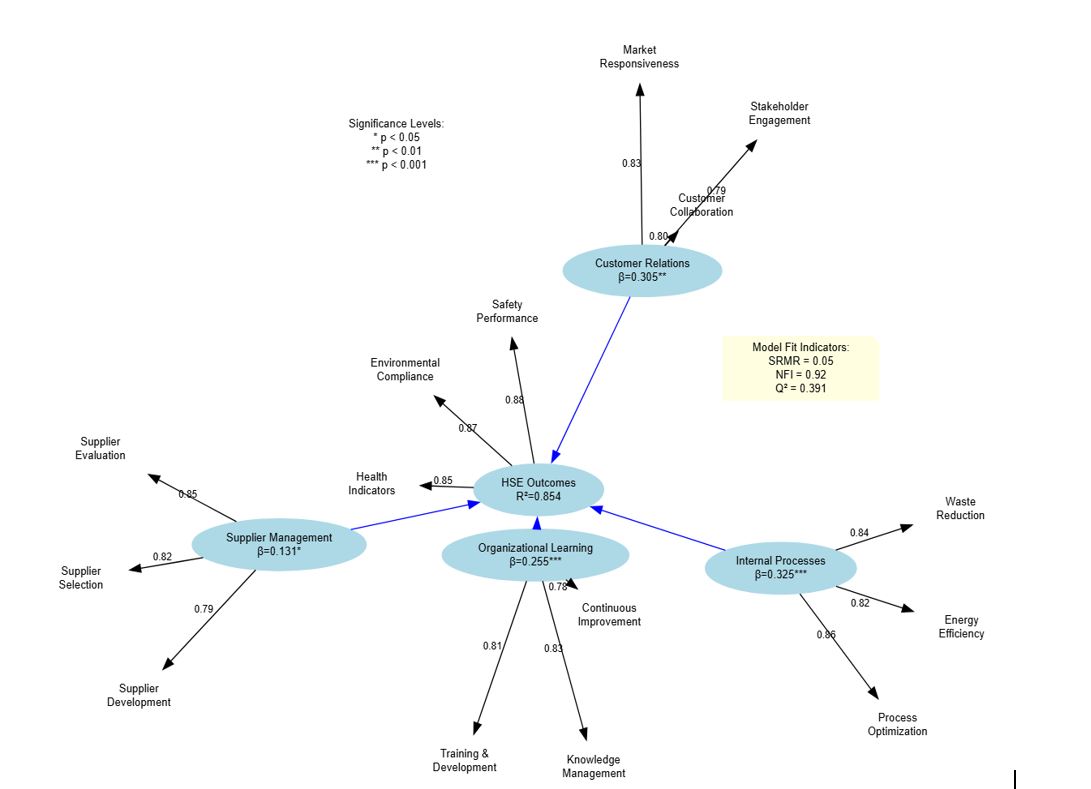
Figure 1: Structural Equation Modeling (SEM) Results of Sustainable Supply Chain Practices and HSE Outcomes Relationships.
Full-Text: (149 Views)
Examining the Impact of Sustainable Supply Chain Practices on HSE Outcomes in the Alloy Steel Industry Using Structural Equation Modeling
Rohollah Fallah Madvari 1, Abolfazl Kamel Rastegar Qavi 2, Ali Sadri Esfahani 2,
Afarin Akhavan 2, Sepideh Kamali *3
1 Department of Occupational Health Engineering, School of Public Health, Shahid Sadoughi University of Medical Sciences, Yazd, Iran.
2 Department of Industrial Engineering, Science and Arts University, Yazd, Iran.
3 Department of Occupational Health, Esfarayen Faculty of Medical Sciences, Esfarayen, Iran.
Citation: Fallah Madvari R, Kamel Rastegar Qavi A, Sadri Esfahani A, et al. Examining the Impact of Sustainable Supply Chain Practices on HSE Outcomes in the Alloy Steel Industry Using Structural Equation Modeling. J Environ Health Sustain Dev. 2026; 11(1): 2881-90.
Rohollah Fallah Madvari 1, Abolfazl Kamel Rastegar Qavi 2, Ali Sadri Esfahani 2,
Afarin Akhavan 2, Sepideh Kamali *3
1 Department of Occupational Health Engineering, School of Public Health, Shahid Sadoughi University of Medical Sciences, Yazd, Iran.
2 Department of Industrial Engineering, Science and Arts University, Yazd, Iran.
3 Department of Occupational Health, Esfarayen Faculty of Medical Sciences, Esfarayen, Iran.
| A R T I C L E I N F O | ABSTRACT | |
| ORIGINAL ARTICLE | Introduction: This study investigates the connection between sustainable supply chain practices and Health, Safety, and Environment (HSE) outcomes in the alloy steel industry using Structural Equation Modeling (SEM). Materials and Methods: A cross-sectional survey was conducted among 120 industry professionals, selected through purposive, non-random sampling to ensure their expertise in HSE and supply chain management. Data were collected using validated questionnaires measuring four dimensions of sustainable supply chain practices—supplier management, customer relationships, internal processes, and organizational learning—alongside HSE outcomes. Results: The data were analyzed using Partial Least Squares Structural Equation Modeling (PLS-SEM) with SmartPLS software, selected for its suitability in modeling complex constructs with moderate sample sizes. The measurement model demonstrated acceptable reliability (Cronbach's alpha > 0.7) and satisfactory convergent and discriminant validity. The findings from the structural model indicated that all four dimensions of sustainable supply chain practices had a significant and positive impact on HSE outcomes (path coefficients = 0.131–0.325, p < 0.05), with internal processes showing the strongest influence. The model exhibited high explanatory power (R² = 0.854). Conclusion: These findings suggest that aligning sustainable supply chain practices—particularly internal process optimization—with HSE objectives can substantially enhance the sustainable performance of the alloy steel industry. However, the findings should be interpreted with caution due to the cross-sectional design, and depended on self-reported data, and use of purposive, non-random sampling, which may limit causal inference and generalizability. |
|
| Article History: Received: 13 November 2025 Accepted: 20 February 2026 |
||
| *Corresponding Author: Sepideh Kamali Email: sepide.kamali.19@gmail.com Tel: +98 9153867996 |
||
| Keywords: Supply Chain Management, Occupational Health, Safety Management, Environmental Health, Sustainability. |
||
Abbreviations
|
Introduction
The pursuit of sustainable development has become a central paradigm in global industrial policies. This shift is driven by stricter environmental regulations, stakeholder pressures, and the recognition that long-term economic viability depends on ecological preservation and social responsibility 1, 2. Industries are moving from profit-centric models to triple-bottom-line approaches (economic, environmental, and social), integrating sustainability into their core operations 3. In high-risk sectors such as alloy steel production, where processes involve significant environmental impacts and occupational hazards, adopting sustainable practices is essential for competitive survival 4.
The alloy steel industry is critical for industrial infrastructure, providing materials for the construction, automotive, and manufacturing sectors 5. Its operations are energy-intensive, consume substantial resources, and can cause environmental degradation through emissions, wastewater, and industrial waste 6. These challenges necessitate robust Health, Safety, and Environment (HSE) management systems to mitigate occupational hazards and reduce ecological footprints 7. Traditional HSE approaches have focused on compliance. In contrast, modern strategies emphasize proactive and integrated systems aligned with organizational objectives 8.
Supply chain management has also evolved significantly. It is no longer purely logistical but a strategic lever for sustainability 9. Sustainable supply chain practices coordinate activities from raw material extraction to end-of-life product management to reduce environmental impact. They focus on environmental protection, social equity and economic viability 10. Practices such as green procurement, ethical sourcing, energy-efficient production, waste reduction, and reverse logistics create closed-loop systems that minimize negative impacts and maximize value creation 11. Integrating sustainability into supply chains reduces costs, mitigates risks, enhances brand reputation, and improves stakeholder relations 12.
Despite their importance, the connection between sustainable supply chain management and HSE outcomes remains underexplored 13. Some studies examine supply chain effects on operational performance 14, while others have investigated HSE determinants 15. Few, however, empirically test the links between specific supply chain dimensions and HSE indicators. This gap is especially pronounced in heavy industries, where synergies could be substantial 16.
Although this study focuses on environmental and safety aspects, worker health—both physical and mental—should not be overlooked. Improvements in sustainability and safety practices can enhance overall well-being by reducing hazards and promoting healthier working environments 17.
The theoretical foundation based on the Natural Resource-Based View (NRBV) and stakeholder theory 18. NRBV suggests that firms that develop capabilities in pollution prevention and product stewardship can achieve competitive advantages 19. Stakeholder theory highlights that addressing the concerns of employees, communities, regulators, and customers improves organizational outcomes 20. In supply chains, sustainable practices reduce risks, improve resource efficiency, and foster continuous improvement 21. However, the mechanisms through which supplier management, internal processes, customer relations, and organizational learning affect HSE outcomes remain unclear 22. Grasping these relationships is essential for creating focused interventions. Previous research has often examined these areas separately, limiting managerial decision-making 23.
This study fills these gaps by creating a conceptual model that links sustainable supply chain practices to HSE outcomes in alloy steel. Using Structural Equation Modeling (SEM), this study analyzes how supplier management, internal processes, customer relations, and organizational learning affect HSE efficiency. This study adds to the literature by offering empirical evidence in a high-risk industrial context, identifying key supply chain dimensions, and offering insights for the development of integrated management systems. Iran’s alloy steel sector is an appropriate context owing to its economic importance, environmental challenges, and ongoing HSE improvements. Focusing on this industry allows the generation of relevant findings and contributes to broader discussions on sustainability management in industrial settings.
Materials and Methods
Research Approach and Subjects
This applied, descriptive, cross-sectional investigation was undertaken in the alloy steel sector in Yazd City, Iran. The study population comprised experts, supervisors, and managers directly involved in supply chain management and health, safety, and environmental (HSE) operations. Participants were selected using purposive sampling to ensure that they had sufficient domain-specific expertise. The inclusion criteria for expert selection included at least 5 years of applicable proficiency in the supply chain and HSE areas, as well as an appropriate job position that allowed them to have substantial involvement in supply chain and HSE decision-making.
A total of 120 respondents participated in this study. The sufficiency of the sample size was evaluated based on multiple criteria relevant to Structural Equation Modeling based on the Partial Least Squares approach (PLS-SEM). First, according to the 10-times guidline, the sample size exceeded ten times the maximum number of structural paths directed at any latent construct in the model. Second, a statistical power analysis was conducted in line with the recommendations by Mastana 24 indicating that a minimum sample size of approximately 100 is sufficient to detect medium effect sizes (f² = 0.15) at a significance level of 0.05 with a statistical power of 0.80 in PLS-SEM models of comparable complexity. Therefore, the final sample size of 120 respondents was considered adequate for robust parameter estimation and hypothesis testing 25.
Measurement Instruments
Data were collected using two validated questionnaires:
Sustainable Supply Chain Practices Questionnaire: Adapted from Zhang et al. 26, this 31-item instrument measures four dimensions assessed using a 5-point Likert scale (1=Strongly Disagree to 5=Strongly Agree):
Common Method Bias Assessment
Harman’s single-factor test was performed to evaluate common method bias (CMB). The findings show that no single factor explains most of the variance, implying that common method bias is unlikely to significantly affect the results. However, as with all self-reported cross-sectional survey studies, the possibility of common method variance cannot be completely ruled out.
Analytical Approach
The study employed Partial Least Squares Structural Equation Modeling (PLS-SEM) using SmartPLS 3.0 to analyze the data. The analysis was conducted in two phases:
Descriptive Statistics and Data Screening
Before the main analysis, an initial data screening was carried out to verify data quality and its appropriateness for Structural Equation Modeling. The dataset comprising 120 complete responses showed no missing data. The data met the assumptions for PLS-SEM, with no significant issues detected regarding multivariate normality, skewness, or kurtosis.
Measurement Model Analysis
Reliability and Convergent Validity
The measurement model demonstrated excellent psychometric properties, as summarized in Table 1. All constructs exceeded the recommended thresholds for reliability, with Cronbach's alpha values ranging from 0.757 to 0.950 and composite reliability values from 0.847 to 0.959, all well above the 0.70 benchmark [10]. Convergent validity was established through Average Variance Extracted (AVE) values, all exceeding the 0.50 threshold, indicating that the constructs
explain more than half of the variance in their indicators.
The pursuit of sustainable development has become a central paradigm in global industrial policies. This shift is driven by stricter environmental regulations, stakeholder pressures, and the recognition that long-term economic viability depends on ecological preservation and social responsibility 1, 2. Industries are moving from profit-centric models to triple-bottom-line approaches (economic, environmental, and social), integrating sustainability into their core operations 3. In high-risk sectors such as alloy steel production, where processes involve significant environmental impacts and occupational hazards, adopting sustainable practices is essential for competitive survival 4.
The alloy steel industry is critical for industrial infrastructure, providing materials for the construction, automotive, and manufacturing sectors 5. Its operations are energy-intensive, consume substantial resources, and can cause environmental degradation through emissions, wastewater, and industrial waste 6. These challenges necessitate robust Health, Safety, and Environment (HSE) management systems to mitigate occupational hazards and reduce ecological footprints 7. Traditional HSE approaches have focused on compliance. In contrast, modern strategies emphasize proactive and integrated systems aligned with organizational objectives 8.
Supply chain management has also evolved significantly. It is no longer purely logistical but a strategic lever for sustainability 9. Sustainable supply chain practices coordinate activities from raw material extraction to end-of-life product management to reduce environmental impact. They focus on environmental protection, social equity and economic viability 10. Practices such as green procurement, ethical sourcing, energy-efficient production, waste reduction, and reverse logistics create closed-loop systems that minimize negative impacts and maximize value creation 11. Integrating sustainability into supply chains reduces costs, mitigates risks, enhances brand reputation, and improves stakeholder relations 12.
Despite their importance, the connection between sustainable supply chain management and HSE outcomes remains underexplored 13. Some studies examine supply chain effects on operational performance 14, while others have investigated HSE determinants 15. Few, however, empirically test the links between specific supply chain dimensions and HSE indicators. This gap is especially pronounced in heavy industries, where synergies could be substantial 16.
Although this study focuses on environmental and safety aspects, worker health—both physical and mental—should not be overlooked. Improvements in sustainability and safety practices can enhance overall well-being by reducing hazards and promoting healthier working environments 17.
The theoretical foundation based on the Natural Resource-Based View (NRBV) and stakeholder theory 18. NRBV suggests that firms that develop capabilities in pollution prevention and product stewardship can achieve competitive advantages 19. Stakeholder theory highlights that addressing the concerns of employees, communities, regulators, and customers improves organizational outcomes 20. In supply chains, sustainable practices reduce risks, improve resource efficiency, and foster continuous improvement 21. However, the mechanisms through which supplier management, internal processes, customer relations, and organizational learning affect HSE outcomes remain unclear 22. Grasping these relationships is essential for creating focused interventions. Previous research has often examined these areas separately, limiting managerial decision-making 23.
This study fills these gaps by creating a conceptual model that links sustainable supply chain practices to HSE outcomes in alloy steel. Using Structural Equation Modeling (SEM), this study analyzes how supplier management, internal processes, customer relations, and organizational learning affect HSE efficiency. This study adds to the literature by offering empirical evidence in a high-risk industrial context, identifying key supply chain dimensions, and offering insights for the development of integrated management systems. Iran’s alloy steel sector is an appropriate context owing to its economic importance, environmental challenges, and ongoing HSE improvements. Focusing on this industry allows the generation of relevant findings and contributes to broader discussions on sustainability management in industrial settings.
Materials and Methods
Research Approach and Subjects
This applied, descriptive, cross-sectional investigation was undertaken in the alloy steel sector in Yazd City, Iran. The study population comprised experts, supervisors, and managers directly involved in supply chain management and health, safety, and environmental (HSE) operations. Participants were selected using purposive sampling to ensure that they had sufficient domain-specific expertise. The inclusion criteria for expert selection included at least 5 years of applicable proficiency in the supply chain and HSE areas, as well as an appropriate job position that allowed them to have substantial involvement in supply chain and HSE decision-making.
A total of 120 respondents participated in this study. The sufficiency of the sample size was evaluated based on multiple criteria relevant to Structural Equation Modeling based on the Partial Least Squares approach (PLS-SEM). First, according to the 10-times guidline, the sample size exceeded ten times the maximum number of structural paths directed at any latent construct in the model. Second, a statistical power analysis was conducted in line with the recommendations by Mastana 24 indicating that a minimum sample size of approximately 100 is sufficient to detect medium effect sizes (f² = 0.15) at a significance level of 0.05 with a statistical power of 0.80 in PLS-SEM models of comparable complexity. Therefore, the final sample size of 120 respondents was considered adequate for robust parameter estimation and hypothesis testing 25.
Measurement Instruments
Data were collected using two validated questionnaires:
Sustainable Supply Chain Practices Questionnaire: Adapted from Zhang et al. 26, this 31-item instrument measures four dimensions assessed using a 5-point Likert scale (1=Strongly Disagree to 5=Strongly Agree):
- Supplier management (8 items)
- Customer relations (7 items)
- Internal sustainable processes (9 items)
- Organizational learning (7 items)
Common Method Bias Assessment
Harman’s single-factor test was performed to evaluate common method bias (CMB). The findings show that no single factor explains most of the variance, implying that common method bias is unlikely to significantly affect the results. However, as with all self-reported cross-sectional survey studies, the possibility of common method variance cannot be completely ruled out.
Analytical Approach
The study employed Partial Least Squares Structural Equation Modeling (PLS-SEM) using SmartPLS 3.0 to analyze the data. The analysis was conducted in two phases:
- Measurement model Evaluation : This involved assessing reliability (Cronbach’s alpha, composite reliability), convergent validity (average variance extracted, factor loadings), and discriminant validity (Fornell-Larcker criterion).
- Structural model Evaluation: The proposed relationships were tested using path coefficients significance levels (via bootstrapping with 5000 samples), and model fit indicators (R², Q², SRMR).
Descriptive Statistics and Data Screening
Before the main analysis, an initial data screening was carried out to verify data quality and its appropriateness for Structural Equation Modeling. The dataset comprising 120 complete responses showed no missing data. The data met the assumptions for PLS-SEM, with no significant issues detected regarding multivariate normality, skewness, or kurtosis.
Measurement Model Analysis
Reliability and Convergent Validity
The measurement model demonstrated excellent psychometric properties, as summarized in Table 1. All constructs exceeded the recommended thresholds for reliability, with Cronbach's alpha values ranging from 0.757 to 0.950 and composite reliability values from 0.847 to 0.959, all well above the 0.70 benchmark [10]. Convergent validity was established through Average Variance Extracted (AVE) values, all exceeding the 0.50 threshold, indicating that the constructs
explain more than half of the variance in their indicators.
Table 1: Reliability and Convergent Validity Assessment.
| Construct | Cronbach's Alpha | Composite Reliability | AVE |
| HSE Outcomes | 0.950 | 0.959 | 0.510 |
| Supplier Management | 0.846 | 0.892 | 0.570 |
| Organizational Learning | 0.782 | 0.863 | 0.606 |
| Internal Processes | 0.894 | 0.919 | 0.524 |
| Customer Relations | 0.757 | 0.847 | 0.520 |
Factor Loadings and Indicator Reliability
All standardized factor loadings exceeded
the recommended value of 0.70, demonstrating adequate reliability. The lowest loading
observed was 0.714, and most loadings were above 0.80, indicating strong relationships between the indicators and their respective constructs.
Evaluation of Discriminant Validity Discriminant validity was evaluated using the Fornell–Larcker criterion. As presented in Table 2, the square root of the average variance extracted (AVE) for each construct was greater than its correlations with the other constructs, thereby indicating satisfactory discriminant validity according to this criterion. Given the conceptual proximity of sustainability-related constructs, these results should be interpreted with theoretical distinctions.
All standardized factor loadings exceeded
the recommended value of 0.70, demonstrating adequate reliability. The lowest loading
observed was 0.714, and most loadings were above 0.80, indicating strong relationships between the indicators and their respective constructs.
Evaluation of Discriminant Validity Discriminant validity was evaluated using the Fornell–Larcker criterion. As presented in Table 2, the square root of the average variance extracted (AVE) for each construct was greater than its correlations with the other constructs, thereby indicating satisfactory discriminant validity according to this criterion. Given the conceptual proximity of sustainability-related constructs, these results should be interpreted with theoretical distinctions.
Table 2: Discriminant Validity.(Fornell-Larcker) Approach
| Construct | HSE Outcomes |
Supplier Mgmt |
Org Learning |
Internal Processes |
Customer Relations |
| HSE Outcomes | 0.714 | ||||
| Supplier Management | 0.709 | 0.755 | |||
| Organizational Learning | 0.634 | 0.667 | 0.778 | ||
| Internal Processes | 0.661 | 0.704 | 0.709 | 0.724 | |
| Customer Relations | 0.646 | 0.752 | 0.770 | 0.705 | 0.721 |
Structural Model Assessment
Collinearity Assessment
Prior to analyzing the structural relationships, the variance inflation factor (VIF) values were evaluated to check for collinearity. All VIF values fell between 1.85 and 2.43, well under the conservative cutoff of 3.3, suggesting that collinearity did not pose a problem in the structural model.
Coefficient of Determination (R²)
The structural model yielded an R² value of 0.854 for the HSE outcomes, indicating a high proportion of explained variance. This high R² may reflect the conceptual closeness of sustainable supply chain practices and HSE-related constructs in high-risk industrial environments, where process, safety, and environmental management systems are inherently interrelated.
Effect Sizes (f²)
Effect sizes (f²) were computed to evaluate the relative influence of each predictor variable. The findings indicated that internal processes had the strongest effect (f² = 0.185), followed by customer relations (f² = 0.162), organizational learning (f² = 0.143), and supplier management (f² = 0.045). According to Cohen's guidelines, internal processes, customer relations, and organizational learning showed medium to large effects, while supplier management showed a small effect.
Predictive Relevance (Q²)
The model's predictive capability was evaluated using the Stone-Geisser Q² value obtained through the blindfolding procedure. The Q² value for HSE outcomes was 0.391, which is considerably greater than zero, indicating the model possesses strong predictive relevance.
Hypothesis Testing Results
The path coefficients and hypothesis-testing results are presented in Table 3. All four hypotheses were supported at significance levels of p < 0.05 or better. To assess path significance, a bootstrapping approach with 5,000 subsamples was conducted.
Collinearity Assessment
Prior to analyzing the structural relationships, the variance inflation factor (VIF) values were evaluated to check for collinearity. All VIF values fell between 1.85 and 2.43, well under the conservative cutoff of 3.3, suggesting that collinearity did not pose a problem in the structural model.
Coefficient of Determination (R²)
The structural model yielded an R² value of 0.854 for the HSE outcomes, indicating a high proportion of explained variance. This high R² may reflect the conceptual closeness of sustainable supply chain practices and HSE-related constructs in high-risk industrial environments, where process, safety, and environmental management systems are inherently interrelated.
Effect Sizes (f²)
Effect sizes (f²) were computed to evaluate the relative influence of each predictor variable. The findings indicated that internal processes had the strongest effect (f² = 0.185), followed by customer relations (f² = 0.162), organizational learning (f² = 0.143), and supplier management (f² = 0.045). According to Cohen's guidelines, internal processes, customer relations, and organizational learning showed medium to large effects, while supplier management showed a small effect.
Predictive Relevance (Q²)
The model's predictive capability was evaluated using the Stone-Geisser Q² value obtained through the blindfolding procedure. The Q² value for HSE outcomes was 0.391, which is considerably greater than zero, indicating the model possesses strong predictive relevance.
Hypothesis Testing Results
The path coefficients and hypothesis-testing results are presented in Table 3. All four hypotheses were supported at significance levels of p < 0.05 or better. To assess path significance, a bootstrapping approach with 5,000 subsamples was conducted.
Table 3: Hypothesis Testing Results.
| Hypothesis | Relationship | Path Coefficient |
t-value | p-value | 95% Confidence Interval |
| H1 | Supplier Management → HSE Outcomes | 0.131 | 2.595 | 0.011 | [0.031, 0.231] |
| H2 | Organizational Learning → HSE Outcomes | 0.255 | 3.285 | 0.001 | [0.102, 0.408] |
| H3 | Internal Processes → HSE Outcomes | 0.325 | 4.189 | 0.000 | [0.174, 0.476] |
| H4 | Customer Relations → HSE Outcomes | 0.305 | 2.729 | 0.007 | [0.083, 0.527] |
Specific Path Analysis
- H1: Supplier management showed a positive and significant effect on HSE outcomes (β = 0.131, p < 0.05), although this was the weakest relationship among the four dimensions.
- H2: Organizational learning has a strong positive effect (β = 0.255, p < 0.001), indicating its importance in enhancing HSE performance.
- H3: Internal sustainable processes exhibited the strongest effect (β = 0.325, p < 0.001), highlighting the critical role of internal operational excellence in achieving sustainability.
- H4: Customer relations showed a substantial positive influence (β = 0.305, p < 0.01), emphasizing the significance of external stakeholder relationships.
Figure 1: Structural Equation Modeling (SEM) Results of Sustainable Supply Chain Practices and HSE Outcomes Relationships.
As shown in Figure 1, the structural model revealed significant positive relationships between all four sustainable supply chain practice dimensions and HSE outcomes. Internal sustainable processes demonstrated the strongest effect (β = 0.325, p < 0.001), followed by customer relations (β = 0.305, p < 0.01), organizational learning (β = 0.255, p < 0.001), and supplier management (β = 0.131, p < 0.05). The measurement model showed strong psychometric properties, with all factor loadings exceeding 0.70.
Model Fit Indices
The overall fit of the model was evaluated using various fit indices. The Standardized Root Mean Square Residual (SRMR) was 0.05, which is below the recommended threshold of 0.08, indicating a strong model fit according to current PLS-SEM standards. The Normed Fit Index (NFI) was 0.92, surpassing the widely accepted threshold of 0.90, thereby confirming the model’s validity. Furthermore, the model demonstrated a good approximate fit, as reflected by the RMS_theta value of 0.12, which is deemed acceptable for PLS-SEM models according to recent methodological recommendations.
Discussion
This study offers strong empirical evidence that sustainable supply chain practices (SSCP) significantly enhance HSE outcomes in the alloy steel sector. These outcomes support and build upon existing literature on the synergistic benefits of integrating sustainability principles into supply chain operations while addressing critical gaps in the literature regarding specific mechanistic pathways 15, 28. The strongest relationship was observed between internal sustainable processes and HSE outcomes (β = 0.325, p < 0.001), indicating that optimizing internal operations for sustainability inherently creates safer and more controlled work environments 29.The implementation of waste minimization protocols, energy efficiency measures, and process standardization not only reduces environmental impacts but also eliminates workplace hazards at their source 30, 31.
The significant effect of organizational learning (β = 0.255, p < 0.001) highlights the critical role of knowledge management systems and safety culture in mediating the relationship between sustainability initiatives and HSE outcomes 32, 33.Customer relations also emerged as a significant factor (β = 0.305, p < 0.01), reflecting the growing influence of market mechanisms and stakeholder pressure on HSE performance 34-36. Supplier management, while demonstrating the smallest effect size (β = 0.131, p < 0.05), still affirmed the importance of supply chain integration for HSE outcomes, emphasizing that HSE risks extend beyond organizational boundaries 37. The high explanatory power of the model (R² = 0.854) indicates that SSCP collectively account for the majority of the variance in HSE outcomes 38, 39. From a theoretical perspective, the findings validate the links between SSCM and HSE, extend the Natural Resource-Based View, and support stakeholder theory by quantifying how external pressures translate into improved HSE outcomes 40.
The results offer several clear, industry-specific recommendations for managers and practitioners in the alloy-steel sector. First, managers should prioritize the integration of HSE objectives into core internal processes, such as production planning, equipment maintenance, and process control. Investments in internal sustainability initiatives, including energy-efficient technologies, waste minimization programs, and standardized operating procedures, serve as dual-purpose strategies that enhance environmental performance while simultaneously reducing workplace hazards 41, 42.
Second, the adoption of advanced process technologies and automation can improve energy efficiency and reduce manual intervention in high-risk operations, directly enhancing safety outcomes. For instance, implementing closed-loop water systems can conserve resources while limiting worker exposure to hazardous effluents 43. Third, cultivating organizational learning mechanisms, such as near-miss reporting systems, cross-functional safety committees, and digital platforms for sharing best practices, strengthens hazard identification, preventive action implementation, and adaptive risk responses 44.
Fourth, customer engagement and stakeholder management should be leveraged as tools to drive HSE improvements. Alloy steel companies serving automotive or construction clients may experience pressure to comply with sustainability standards (e.g., ISO 14001 and ISO 45001), which incentivizes investment in HSE infrastructure 45, 46. Finally, firms should consider supplier development programs and joint risk assessments to ensure that HSE standards are maintained across the supply chain, as supplier incidents can disrupt operations and affect organizational reputation 47, 48.
Despite these contributions, this study has several limitations. First, sampling constraints arise from the purposive, non-random sampling method used, which could restrict the broader applicability of the results beyond Iran’s alloy steel sector. Second, the study relied on self-reported questionnaire data, which introduced potential bias and may have inflated the observed relationships between SSCP and HSE outcomes. Third, the cross-sectional study design restricts the capacity to determine causal connections between sustainable practices and HSE performance.
Subsequent research needs to address these limitations by employing longitudinal designs to assess causality, using objective HSE performance indicators to reduce self-report bias, and applying probability-based sampling across diverse industries and geographical locations. Additionally, more stringent approaches to assessing discriminant validity (e.g., the HTMT ratio) and multi-source data collection are recommended to strengthen construct validity.
Conclusion
From a theoretical perspective, this study adds to the literature by empirically confirming the link between sustainable supply chain practices and HSE outcomes, utilizing a well-established PLS-SEM methodology suited for exploratory analysis. It extends the Natural Resource-Based View by demonstrating how sustainable capabilities simultaneously enhance safety and environmental performance.
Practically, the findings provide managers in the alloy steel industry with a validated framework for improving HSE outcomes through targeted supply chain interventions. The strong effect of internal processes suggests that organizations should prioritize operational optimization and waste reduction initiatives. Moreover, investments in employee training, customer collaboration, and supplier development can yield significant HSE improvements.
Acknowledgments
The authors thank the alloy steel industry professionals for their cooperation.
Conflicts of Interest
None declared.
Funding
Supported by the Department of Industrial Engineering, Science and Arts University, Yazd (Grant No. 2912149).
Ethical Considerations
This study was conducted in accordance with the ethical standards of the ACECR Research Ethics Committee. Informed consent was obtained from all participants, and confidentiality of data was maintained throughout the research.
Code of Ethics
Approved by the ACECR Research Ethics Committee (IR.ACECR.JDM.REC.1401.047).
Authors' Contributions
All authors contributed to drafting and revising the manuscript and approved the final version. Rohollah Fallah Madvari: Conceptualization, methodology, analysis, writing, Abolfazl Kamel Rastegar Qavi: Data collection, literature review, editing, Ali Sadri Esfahani & Afarin Akhavan: Statistical analysis, supervision and Sepideh Kamali: Project administration, funding, validation.
This article is published under the Creative Commons Attribution (CC BY 4.0) license, allowing others to distribute, remix, adapt, and build upon the work, including for commercial purposes.
References
1. Kastelli I, Mamica L, Lee K. New perspectives and issues in industrial policy for sustainable development: from developmental and entrepreneurial to environmental state. Rev Evol Polit Econ. 2023;4(1): 1-25.
2. Ma F, Wang H, Tzachor A, et al. The disparities and development trajectories of nations in achieving the sustainable development goals. Nat Commun. 2025;16(1):1107.
3. Aransyah MF, Hermanto B, Muftiadi A, et al. Exploring sustainability oriented innovations in tourism: insights from ecological modernization, diffusion of innovations, and the triple bottom line. Cogent Soc Sci.2025;11(1):2447396.
4. Godbole P, Meshram P, Jawadand S, et al. A critical analysis of industrial slags, their hazard potential and remediation with reference to Sustainable Development Goals (SDGs). Discover Civil Engineering. 2025;2(1):117.
5. Berladir K, Mital’ová Z, Ivanov V. Materials for the Automotive Industry. Springer Nature Switzerland, Imprint: Springer; 2026.
6. Wang D, Gong X, Gong H, et al. Do steel industrial policies make a difference? LCA-based quantification of environmental impacts and cost benefits from steel production in China. J Clean Prod. 2025;528:146736.
7. Wang L, Long Z, Gu T, et al. Emerging pollutants as chemical additives in the petroleum industry: a review of functional uses, environmental challenges and sustainable control strategies. Sustainability. 2025;17(19):8559.
8. Adio SA, Ajirotutu RO, Olayiwola RK, et al. Engineering a safer future: how HSE innovation is transforming infrastructure and sustainability. International Journal of Frontline in Engineering and Industrial Revolution. 2025; 2(2): 28-42.
9. Montoya-Torres JR, Muñoz-Villamizar A, Mejia-Argueta C, et al. Mapping research in logistics and supply chain management during COVID-19 pandemic. International Journal of Logistics Research and Applications. 2023;26(4):421-41.
10. Wang J, Lim MK, Wang C, et al. Comprehensive analysis of sustainable logistics and supply chain based on bibliometrics: overview, trends, challenges, and opportunities. International Journal of Logistics Research and Applications. 2023;26(10):1285-314.
11. Jawaad M, Hasan T, Amir A, et al. Exploring the impact of green human resource management on firm sustainable performance: roles of green supply chain management and firm size. Journal of Management & Organization. 2024;30(3):673-95.
12. Vyas PG, Raj R, Sen P, et al. Sustainable Practices in Logistics and Supply Chain Management Enhancing Organizational Reputation: A Thematic Review. 2025:199-227.
13. Arif J, Samadhiya A, Naz F, et al. Exploring the application of ICTs in decarbonizing the agriculture supply chain: a literature review and research agenda. Heliyon. 2024;10(8).
14. Kumar A, Shrivastav SK, Shrivastava AK, et al. Sustainable supply chain management, performance measurement, and management: a review. Sustainability. 2023;15(6):5290.
15. Nai H, Mei Q, Liu S, et al. Effect of green supply chain collaboration on the HSE performance of manufacturing SMEs. Financ Res Lett. 2024;68:106013.
16. Arshed N, Hameed K, Saher A. An empirical analysis of supply chain competitiveness and cleaner production. Sage Open. 2022;12(4):21582440221130297.
17. Amoadu M, Ansah EW, Sarfo JO. Influence of psychosocial safety climate on occupational health and safety: a scoping review. BMC Public Health. 2023;23(1):1344.
18. Negrão KR, Gomes SC, Carvalho MC, et al. Strategic management for sustainability. Revista de Administração Contemporânea. 2024; 28(06): e240221.
19. Sherren K, Thondhlana G, Jackson-Smith D. Opening Windows: Embracing New Perspectives and Practices in Natural Resource Social Sciences. 2024.
20. Awa HO, Etim W, Ogbonda E. Stakeholders, stakeholder theory and corporate social responsibility (CSR). International Journal of Corporate Social Responsibility. 2024;9(1):11.
21. Makprang K, Review F. Sustainability in supply chains: strategies and practices for a greener future. RMUTT Global Business Accounting and Finance Review. 2024;8(1):85-108.
22. Suprapto VH, Pujawan IN, Dewi RS, et al. Effects of human performance improvement and operational learning on organizational safety culture and occupational safety and health management performance. Int J Occup Saf Ergon. 2022;28(4):2455-67.
23. Blanc F, Ottimofiore G, Myers K. From OSH regulation to safety results: using behavioral insights and a “supply chain” approach to improve outcomes–The experience of the health and safety Executive. Saf Sci. 2022;145:105491.
24. Mastana AS, Sciences S. A primer on partial least squares structural equation modeling (PLS-SEM). Wisdom Journal of Humanities and Social Sciences. 2025;2(1 (January)):62-4.
25. Sarstedt M, Ringle CM, Hair JF. Partial least squares structural equation modeling. InHandbook of market research. Cham: Springer International Publishing; 2021. p. 587-632.
26. Zhang F, Chen J, Zhu L. How does environmental dynamism impact green process innovation? a supply chain cooperation perspective. IEEE Trans Eng Manag. 2021; 70(2): 509-22.
27. Sørensen OH, Bjørner J, Holtermann A, et al. Measuring societal impact of research—Developing and validating an impact instrument for occupational health and safety. Res Eval. 2022; 31(1):118-31.
28. Zhang B, Zhao S, Fan X, et al. Green supply chain integration, supply chain agility and green innovation performance: Evidence from Chinese manufacturing enterprises. Front Environ Sci. 2022; 10:1045414.
29. Li X, Li Y, Li G, et al. Sustainable supply chain management practices and performance: the moderating effect of stakeholder pressure. Humanit Soc Sci Commun. 2025;12(1):1-12.
30. Junejo I, Sohu JM, Alwadi BM, et al. Green supply chain management and SMEs sustainable performance in developing country: role of green knowledge sharing, green innovation and big data-driven supply chain. Discov Sustain. 2025;6(1):342.
31. Singh RK, Mishra R, He Q, et al. Sustainable supply Chain and environmental collaboration in the supply Chain management: agenda for future research and implications. Bus Strategy Environ. 2025; 34(5):5487-513.
32. Olaleye BR, Mosleh SF. Greening sustainable supply Chain performance: the moderating and mediating influence of green value co-creation and green innovation. Adm Sci. 2025;15(5):183.
33. Agyabeng‐Mensah Y, Oloruntoba R, Earnest J, et al. Sustainable supply Chain management and performance outcomes: supply Chain practice view and mediated moderation perspectives. Bus Strategy Environ. 2025 ;34(7):8237-58.
34. Rodrigo D, Gliga G, Diffley S, et al. A practice-based view to supply chain sustainability learning: a systematic literature review. Journal of Purchasing and Supply Management. 2025: 101060.
35. Ho HX, Nguyen PD, Nguyen-Phuong KT. Fostering sustainable supply chain performance: a mixed-method approach of the moderated mediation model involving learning orientation, innovation, agility, and environmental complexity. Supply Chain Management: An International Journal. 2026; 31(1):122-42.
36. Abir AS, Bhuiyan IA, Arani M, et al., editors. Multi-objective optimization for sustainable closed-loop supply chain network under demand uncertainty: A genetic algorithm. In2020 International Conference on Data Analytics for Business and Industry: Way Towards a Sustainable Economy (ICDABI); 2020: IEEE.
37. Siems E, Seuring S, Schilling L. Stakeholder roles in sustainable supply chain management: a literature review. J Bus Econ. 2022;93(4):747-75.
38. Anumula SK. Design-based supply Chain operations research model: fostering resilience and sustainability in modern supply Chains. arXiv preprint arXiv:2511.01878. 2025.
39. Khaleghi M, Khaleghi N, Sheykhivand S, et al. Developing a multi-task ensemble geometric deep network for supply Chain sustainability and risk management. arXiv preprint arXiv:2510.26203. 2025.
40. Bag S, Telukdarie A, Pretorius JC, et al. Industry 4.0 and supply chain sustainability: framework and future research directions. Benchmarking: An International Journal. 2021; 28(5): 1410-50.
41. Arda OA, Montabon F, Tatoglu E, et al. Toward a holistic understanding of sustainability in corporations: resource-based view of sustainable supply chain management. Supply Chain Management: An International Journal. 2023; 28(2): 193-208.
42. Mosteanu NR, Faccia A, Ansari A, et al. Sustainability integration in supply chain management through systematic literature review. Calitatea. 2020;21(176):117-23.
43. Khan MT, Idrees MD, Rauf M, et al. Green supply chain management practices’ impact on operational performance with the mediation of technological innovation. Sustainability. 2022; 14(6): 3362.
44. Kazancoglu Y, Ozkan-Ozen YD, Sagnak M, et al. Framework for a sustainable supply chain to overcome risks in transition to a circular economy through Industry 4.0. Production Planning & Control. 2023;34(10):902-17.
45. Gera R, Yadav R, Khera G, et al. A systematic literature review of supply chain management practices and performance. Mater Today Proc. 2022; 69:624-32.
46. Tsai FM, Kurrahman T, Chiu AS, et al. Optimization techniques for green supply chain practice challenges: a systematic hybrid approach. Engineering Optimization. 2025;57(1):19-43.
47. Li L, Li W. The promoting effect of green technology innovations on sustainable supply chain development: evidence from China’s transport sector. Sustainability. 2022;14(8):4673.
48. Bu X, Dang WV, Wang J, et al. Environmental orientation, green supply chain management, and firm performance: empirical evidence from Chinese small and medium-sized enterprises. Int J Environ Res Public Health. 2020;17(4):1199.
Model Fit Indices
The overall fit of the model was evaluated using various fit indices. The Standardized Root Mean Square Residual (SRMR) was 0.05, which is below the recommended threshold of 0.08, indicating a strong model fit according to current PLS-SEM standards. The Normed Fit Index (NFI) was 0.92, surpassing the widely accepted threshold of 0.90, thereby confirming the model’s validity. Furthermore, the model demonstrated a good approximate fit, as reflected by the RMS_theta value of 0.12, which is deemed acceptable for PLS-SEM models according to recent methodological recommendations.
Discussion
This study offers strong empirical evidence that sustainable supply chain practices (SSCP) significantly enhance HSE outcomes in the alloy steel sector. These outcomes support and build upon existing literature on the synergistic benefits of integrating sustainability principles into supply chain operations while addressing critical gaps in the literature regarding specific mechanistic pathways 15, 28. The strongest relationship was observed between internal sustainable processes and HSE outcomes (β = 0.325, p < 0.001), indicating that optimizing internal operations for sustainability inherently creates safer and more controlled work environments 29.The implementation of waste minimization protocols, energy efficiency measures, and process standardization not only reduces environmental impacts but also eliminates workplace hazards at their source 30, 31.
The significant effect of organizational learning (β = 0.255, p < 0.001) highlights the critical role of knowledge management systems and safety culture in mediating the relationship between sustainability initiatives and HSE outcomes 32, 33.Customer relations also emerged as a significant factor (β = 0.305, p < 0.01), reflecting the growing influence of market mechanisms and stakeholder pressure on HSE performance 34-36. Supplier management, while demonstrating the smallest effect size (β = 0.131, p < 0.05), still affirmed the importance of supply chain integration for HSE outcomes, emphasizing that HSE risks extend beyond organizational boundaries 37. The high explanatory power of the model (R² = 0.854) indicates that SSCP collectively account for the majority of the variance in HSE outcomes 38, 39. From a theoretical perspective, the findings validate the links between SSCM and HSE, extend the Natural Resource-Based View, and support stakeholder theory by quantifying how external pressures translate into improved HSE outcomes 40.
The results offer several clear, industry-specific recommendations for managers and practitioners in the alloy-steel sector. First, managers should prioritize the integration of HSE objectives into core internal processes, such as production planning, equipment maintenance, and process control. Investments in internal sustainability initiatives, including energy-efficient technologies, waste minimization programs, and standardized operating procedures, serve as dual-purpose strategies that enhance environmental performance while simultaneously reducing workplace hazards 41, 42.
Second, the adoption of advanced process technologies and automation can improve energy efficiency and reduce manual intervention in high-risk operations, directly enhancing safety outcomes. For instance, implementing closed-loop water systems can conserve resources while limiting worker exposure to hazardous effluents 43. Third, cultivating organizational learning mechanisms, such as near-miss reporting systems, cross-functional safety committees, and digital platforms for sharing best practices, strengthens hazard identification, preventive action implementation, and adaptive risk responses 44.
Fourth, customer engagement and stakeholder management should be leveraged as tools to drive HSE improvements. Alloy steel companies serving automotive or construction clients may experience pressure to comply with sustainability standards (e.g., ISO 14001 and ISO 45001), which incentivizes investment in HSE infrastructure 45, 46. Finally, firms should consider supplier development programs and joint risk assessments to ensure that HSE standards are maintained across the supply chain, as supplier incidents can disrupt operations and affect organizational reputation 47, 48.
Despite these contributions, this study has several limitations. First, sampling constraints arise from the purposive, non-random sampling method used, which could restrict the broader applicability of the results beyond Iran’s alloy steel sector. Second, the study relied on self-reported questionnaire data, which introduced potential bias and may have inflated the observed relationships between SSCP and HSE outcomes. Third, the cross-sectional study design restricts the capacity to determine causal connections between sustainable practices and HSE performance.
Subsequent research needs to address these limitations by employing longitudinal designs to assess causality, using objective HSE performance indicators to reduce self-report bias, and applying probability-based sampling across diverse industries and geographical locations. Additionally, more stringent approaches to assessing discriminant validity (e.g., the HTMT ratio) and multi-source data collection are recommended to strengthen construct validity.
Conclusion
From a theoretical perspective, this study adds to the literature by empirically confirming the link between sustainable supply chain practices and HSE outcomes, utilizing a well-established PLS-SEM methodology suited for exploratory analysis. It extends the Natural Resource-Based View by demonstrating how sustainable capabilities simultaneously enhance safety and environmental performance.
Practically, the findings provide managers in the alloy steel industry with a validated framework for improving HSE outcomes through targeted supply chain interventions. The strong effect of internal processes suggests that organizations should prioritize operational optimization and waste reduction initiatives. Moreover, investments in employee training, customer collaboration, and supplier development can yield significant HSE improvements.
Acknowledgments
The authors thank the alloy steel industry professionals for their cooperation.
Conflicts of Interest
None declared.
Funding
Supported by the Department of Industrial Engineering, Science and Arts University, Yazd (Grant No. 2912149).
Ethical Considerations
This study was conducted in accordance with the ethical standards of the ACECR Research Ethics Committee. Informed consent was obtained from all participants, and confidentiality of data was maintained throughout the research.
Code of Ethics
Approved by the ACECR Research Ethics Committee (IR.ACECR.JDM.REC.1401.047).
Authors' Contributions
All authors contributed to drafting and revising the manuscript and approved the final version. Rohollah Fallah Madvari: Conceptualization, methodology, analysis, writing, Abolfazl Kamel Rastegar Qavi: Data collection, literature review, editing, Ali Sadri Esfahani & Afarin Akhavan: Statistical analysis, supervision and Sepideh Kamali: Project administration, funding, validation.
This article is published under the Creative Commons Attribution (CC BY 4.0) license, allowing others to distribute, remix, adapt, and build upon the work, including for commercial purposes.
References
1. Kastelli I, Mamica L, Lee K. New perspectives and issues in industrial policy for sustainable development: from developmental and entrepreneurial to environmental state. Rev Evol Polit Econ. 2023;4(1): 1-25.
2. Ma F, Wang H, Tzachor A, et al. The disparities and development trajectories of nations in achieving the sustainable development goals. Nat Commun. 2025;16(1):1107.
3. Aransyah MF, Hermanto B, Muftiadi A, et al. Exploring sustainability oriented innovations in tourism: insights from ecological modernization, diffusion of innovations, and the triple bottom line. Cogent Soc Sci.2025;11(1):2447396.
4. Godbole P, Meshram P, Jawadand S, et al. A critical analysis of industrial slags, their hazard potential and remediation with reference to Sustainable Development Goals (SDGs). Discover Civil Engineering. 2025;2(1):117.
5. Berladir K, Mital’ová Z, Ivanov V. Materials for the Automotive Industry. Springer Nature Switzerland, Imprint: Springer; 2026.
6. Wang D, Gong X, Gong H, et al. Do steel industrial policies make a difference? LCA-based quantification of environmental impacts and cost benefits from steel production in China. J Clean Prod. 2025;528:146736.
7. Wang L, Long Z, Gu T, et al. Emerging pollutants as chemical additives in the petroleum industry: a review of functional uses, environmental challenges and sustainable control strategies. Sustainability. 2025;17(19):8559.
8. Adio SA, Ajirotutu RO, Olayiwola RK, et al. Engineering a safer future: how HSE innovation is transforming infrastructure and sustainability. International Journal of Frontline in Engineering and Industrial Revolution. 2025; 2(2): 28-42.
9. Montoya-Torres JR, Muñoz-Villamizar A, Mejia-Argueta C, et al. Mapping research in logistics and supply chain management during COVID-19 pandemic. International Journal of Logistics Research and Applications. 2023;26(4):421-41.
10. Wang J, Lim MK, Wang C, et al. Comprehensive analysis of sustainable logistics and supply chain based on bibliometrics: overview, trends, challenges, and opportunities. International Journal of Logistics Research and Applications. 2023;26(10):1285-314.
11. Jawaad M, Hasan T, Amir A, et al. Exploring the impact of green human resource management on firm sustainable performance: roles of green supply chain management and firm size. Journal of Management & Organization. 2024;30(3):673-95.
12. Vyas PG, Raj R, Sen P, et al. Sustainable Practices in Logistics and Supply Chain Management Enhancing Organizational Reputation: A Thematic Review. 2025:199-227.
13. Arif J, Samadhiya A, Naz F, et al. Exploring the application of ICTs in decarbonizing the agriculture supply chain: a literature review and research agenda. Heliyon. 2024;10(8).
14. Kumar A, Shrivastav SK, Shrivastava AK, et al. Sustainable supply chain management, performance measurement, and management: a review. Sustainability. 2023;15(6):5290.
15. Nai H, Mei Q, Liu S, et al. Effect of green supply chain collaboration on the HSE performance of manufacturing SMEs. Financ Res Lett. 2024;68:106013.
16. Arshed N, Hameed K, Saher A. An empirical analysis of supply chain competitiveness and cleaner production. Sage Open. 2022;12(4):21582440221130297.
17. Amoadu M, Ansah EW, Sarfo JO. Influence of psychosocial safety climate on occupational health and safety: a scoping review. BMC Public Health. 2023;23(1):1344.
18. Negrão KR, Gomes SC, Carvalho MC, et al. Strategic management for sustainability. Revista de Administração Contemporânea. 2024; 28(06): e240221.
19. Sherren K, Thondhlana G, Jackson-Smith D. Opening Windows: Embracing New Perspectives and Practices in Natural Resource Social Sciences. 2024.
20. Awa HO, Etim W, Ogbonda E. Stakeholders, stakeholder theory and corporate social responsibility (CSR). International Journal of Corporate Social Responsibility. 2024;9(1):11.
21. Makprang K, Review F. Sustainability in supply chains: strategies and practices for a greener future. RMUTT Global Business Accounting and Finance Review. 2024;8(1):85-108.
22. Suprapto VH, Pujawan IN, Dewi RS, et al. Effects of human performance improvement and operational learning on organizational safety culture and occupational safety and health management performance. Int J Occup Saf Ergon. 2022;28(4):2455-67.
23. Blanc F, Ottimofiore G, Myers K. From OSH regulation to safety results: using behavioral insights and a “supply chain” approach to improve outcomes–The experience of the health and safety Executive. Saf Sci. 2022;145:105491.
24. Mastana AS, Sciences S. A primer on partial least squares structural equation modeling (PLS-SEM). Wisdom Journal of Humanities and Social Sciences. 2025;2(1 (January)):62-4.
25. Sarstedt M, Ringle CM, Hair JF. Partial least squares structural equation modeling. InHandbook of market research. Cham: Springer International Publishing; 2021. p. 587-632.
26. Zhang F, Chen J, Zhu L. How does environmental dynamism impact green process innovation? a supply chain cooperation perspective. IEEE Trans Eng Manag. 2021; 70(2): 509-22.
27. Sørensen OH, Bjørner J, Holtermann A, et al. Measuring societal impact of research—Developing and validating an impact instrument for occupational health and safety. Res Eval. 2022; 31(1):118-31.
28. Zhang B, Zhao S, Fan X, et al. Green supply chain integration, supply chain agility and green innovation performance: Evidence from Chinese manufacturing enterprises. Front Environ Sci. 2022; 10:1045414.
29. Li X, Li Y, Li G, et al. Sustainable supply chain management practices and performance: the moderating effect of stakeholder pressure. Humanit Soc Sci Commun. 2025;12(1):1-12.
30. Junejo I, Sohu JM, Alwadi BM, et al. Green supply chain management and SMEs sustainable performance in developing country: role of green knowledge sharing, green innovation and big data-driven supply chain. Discov Sustain. 2025;6(1):342.
31. Singh RK, Mishra R, He Q, et al. Sustainable supply Chain and environmental collaboration in the supply Chain management: agenda for future research and implications. Bus Strategy Environ. 2025; 34(5):5487-513.
32. Olaleye BR, Mosleh SF. Greening sustainable supply Chain performance: the moderating and mediating influence of green value co-creation and green innovation. Adm Sci. 2025;15(5):183.
33. Agyabeng‐Mensah Y, Oloruntoba R, Earnest J, et al. Sustainable supply Chain management and performance outcomes: supply Chain practice view and mediated moderation perspectives. Bus Strategy Environ. 2025 ;34(7):8237-58.
34. Rodrigo D, Gliga G, Diffley S, et al. A practice-based view to supply chain sustainability learning: a systematic literature review. Journal of Purchasing and Supply Management. 2025: 101060.
35. Ho HX, Nguyen PD, Nguyen-Phuong KT. Fostering sustainable supply chain performance: a mixed-method approach of the moderated mediation model involving learning orientation, innovation, agility, and environmental complexity. Supply Chain Management: An International Journal. 2026; 31(1):122-42.
36. Abir AS, Bhuiyan IA, Arani M, et al., editors. Multi-objective optimization for sustainable closed-loop supply chain network under demand uncertainty: A genetic algorithm. In2020 International Conference on Data Analytics for Business and Industry: Way Towards a Sustainable Economy (ICDABI); 2020: IEEE.
37. Siems E, Seuring S, Schilling L. Stakeholder roles in sustainable supply chain management: a literature review. J Bus Econ. 2022;93(4):747-75.
38. Anumula SK. Design-based supply Chain operations research model: fostering resilience and sustainability in modern supply Chains. arXiv preprint arXiv:2511.01878. 2025.
39. Khaleghi M, Khaleghi N, Sheykhivand S, et al. Developing a multi-task ensemble geometric deep network for supply Chain sustainability and risk management. arXiv preprint arXiv:2510.26203. 2025.
40. Bag S, Telukdarie A, Pretorius JC, et al. Industry 4.0 and supply chain sustainability: framework and future research directions. Benchmarking: An International Journal. 2021; 28(5): 1410-50.
41. Arda OA, Montabon F, Tatoglu E, et al. Toward a holistic understanding of sustainability in corporations: resource-based view of sustainable supply chain management. Supply Chain Management: An International Journal. 2023; 28(2): 193-208.
42. Mosteanu NR, Faccia A, Ansari A, et al. Sustainability integration in supply chain management through systematic literature review. Calitatea. 2020;21(176):117-23.
43. Khan MT, Idrees MD, Rauf M, et al. Green supply chain management practices’ impact on operational performance with the mediation of technological innovation. Sustainability. 2022; 14(6): 3362.
44. Kazancoglu Y, Ozkan-Ozen YD, Sagnak M, et al. Framework for a sustainable supply chain to overcome risks in transition to a circular economy through Industry 4.0. Production Planning & Control. 2023;34(10):902-17.
45. Gera R, Yadav R, Khera G, et al. A systematic literature review of supply chain management practices and performance. Mater Today Proc. 2022; 69:624-32.
46. Tsai FM, Kurrahman T, Chiu AS, et al. Optimization techniques for green supply chain practice challenges: a systematic hybrid approach. Engineering Optimization. 2025;57(1):19-43.
47. Li L, Li W. The promoting effect of green technology innovations on sustainable supply chain development: evidence from China’s transport sector. Sustainability. 2022;14(8):4673.
48. Bu X, Dang WV, Wang J, et al. Environmental orientation, green supply chain management, and firm performance: empirical evidence from Chinese small and medium-sized enterprises. Int J Environ Res Public Health. 2020;17(4):1199.
Type of Study: Original articles |
Subject:
Health Safety and Environment (HSE)
Received: 2025/11/13 | Accepted: 2026/02/20 | Published: 2026/03/23
Received: 2025/11/13 | Accepted: 2026/02/20 | Published: 2026/03/23
Send email to the article author
| Rights and permissions | |
 |
This work is licensed under a Creative Commons Attribution-NonCommercial 4.0 International License. |